
Orchid Care
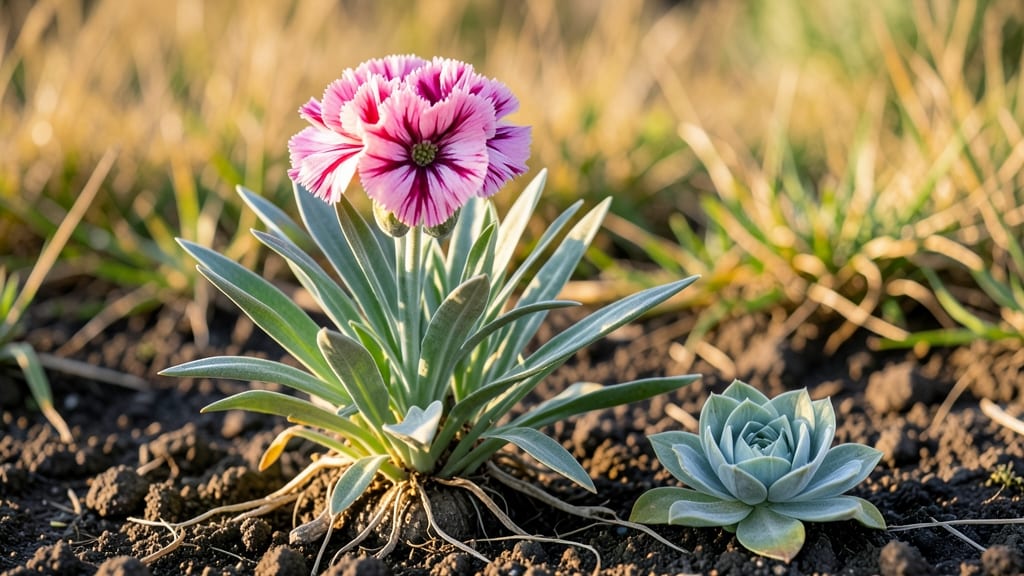
Carnations behave as annuals in most climates because cold winters kill their foliage, but they're actually perennials in warmer zones (USDA 7-11), regrowing from their roots each spring with proper winter protection.
This distinction comes down to temperature sensitivity. 🌱 In colder regions, carnations' tops freeze back to the ground, but their root systems often survive if protected. The key difference lies in their dormancy response—where winters stay above 20°F, they'll naturally return year after year.
I've seen gardeners in Zone 8 successfully grow the same plants for 3+ years by using thick mulch and microclimate shelters during frost periods.
What's fascinating is how this affects blooming patterns. In perennial zones, carnations often produce their best flowers in their second year, while annuals in colder climates typically bloom heavily their first season before dying.
The trade-off? Perennial carnations require more winter prep but reward you with established plants that need less spring care.
💡 In This Article
- How Climate Affects Carnations’ Annual vs. Perennial Growth
- Extending Carnations’ Lifespan: Perennial Care Tips for Cold Regions
How climate affects carnations’ annual vs. perennial growth
The carnation's annual or perennial nature boils down to its response to temperature extremes. In colder climates (USDA zones 1-6), carnations (Dianthus caryophyllus) behave like annuals because their tops freeze back to the ground when temperatures drop below 20°F for extended periods.
The plant's foliage dies, but the roots often survive if protected, creating a false impression of annual behavior. This is because carnations are native to Mediterranean climates where winters are mild, and their natural growth cycle includes summer dormancy rather than winter dieback.
What triggers this difference is the plant's cold acclimation process. Carnations can tolerate brief cold snaps down to 15°F if hardened off properly, but prolonged exposure to freezing temperatures kills the above-ground growth. The root crown, however, remains viable in soil temperatures above 32°F.
In warmer zones (USDA 7-11), where winters rarely drop below 25°F, carnations naturally enter a dormant state rather than dying completely, allowing them to regrow each spring. This is why they're classified as perennials in these regions.
The science behind this involves the plant's abscission layer formation—a specialized tissue that develops at the base of stems when temperatures drop, effectively sealing off the plant's connection to its roots. In cold climates, this layer forms aggressively, causing the foliage to drop entirely.
In warmer zones, the layer forms more slowly, allowing the plant to survive winter with minimal damage. 🌡️ This biological mechanism explains why carnations can be both annuals and perennials depending on location.
Another key factor is the plant's photoperiod sensitivity. Carnations are short-day plants, meaning they flower in response to shorter daylight hours. In colder regions, the combination of shorter days and freezing temperatures creates an environment where the plant can't complete its growth cycle before winter kills it.
In warmer zones, the milder winters allow the plant to maintain its growth cycle year after year, reinforcing its perennial nature.
Consider this comparison: In Zone 5, where winters frequently drop below 0°F, carnations typically live only one season unless protected. In Zone 9, where winters rarely go below 30°F, the same variety can return for multiple years.
This zone-dependent behavior is why gardeners often see carnations sold as annuals in northern nurseries but as perennials in southern catalogs.
The root system plays a crucial role too. Carnations develop a fibrous root network that can extend up to 12 inches deep, storing carbohydrates during dormancy.
In cold climates, this stored energy often isn't enough to support regrowth without protection, while in warmer zones, the milder winters allow the roots to maintain their energy reserves. This biological adaptation explains why some gardeners in marginal zones (like Zone 6) can successfully overwinter carnations with proper mulching techniques.