
Plants
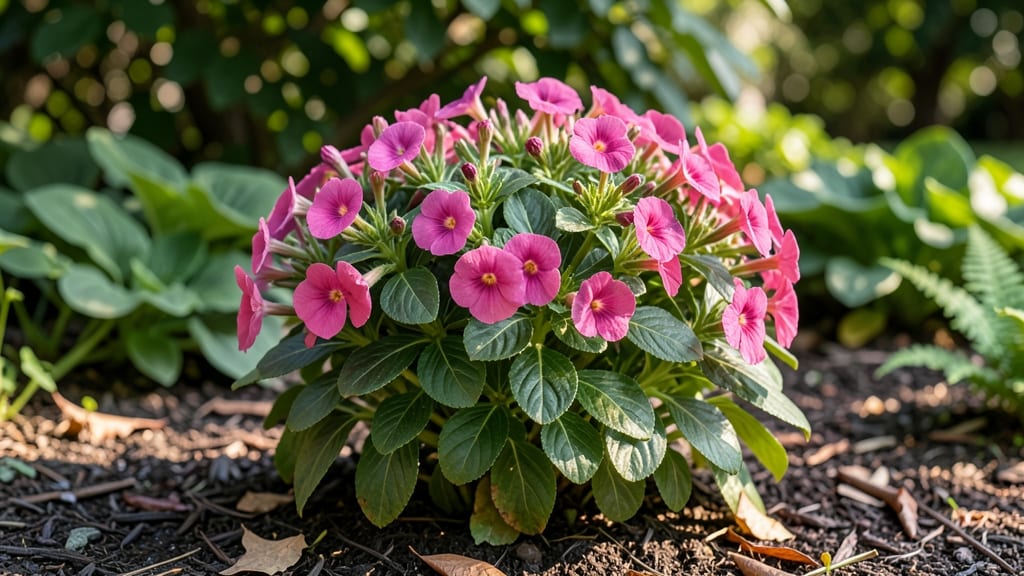
Impatiens are not true perennials in most climates, as they die back to the ground after frost and do not regrow from the same roots annually. In USDA Zones 10-11, they may persist year-round, but in cooler regions, they’re grown as annuals or tender perennials requiring replanting each spring.
Impatiens are actually tender perennials with tropical origins, which means they can't survive freezing temperatures. 🌱 When frost hits, their leaves and stems turn black and crispy, but the roots often remain alive underground until spring.
The key difference between annuals and these plants is that their roots can sometimes regrow if protected, though they rarely come back with the same vigor. In colder zones, gardeners treat them like annuals for simplicity, replanting fresh starts each spring to enjoy their vibrant blooms.
If you're in a cooler climate, you can try overwintering impatiens by digging up container-grown plants before the first frost and moving them to a cooler indoor spot. Some gardeners even keep them alive through winter with careful light and temperature control, though this requires extra effort.
The trade-off is worth it for those who love their cheerful flowers—just be prepared for the annual replanting ritual!
💡 In This Article
- Why Impatiens Die Back in Cold Climates
- How to Extend Impatiens’ Lifespan in Cooler Regions
Why impatiens die back in cold climates
Impatiens trace their origins to tropical regions of Southeast Asia and East Africa, where temperatures rarely drop below 50°F. This tropical heritage explains their extreme frost sensitivity—when nighttime temperatures fall below 32°F, their delicate cells begin to rupture.
The plant's thin, waxy leaves lack the protective cuticle found in cold-hardy species, making them prone to frost damage within minutes of exposure. 🌡️ The stems contain minimal starch reserves, so they can't sustain energy loss during cold snaps like true perennials.
Here's what happens at the cellular level: frost causes ice crystals to form in the plant's vascular system, physically damaging the xylem and phloem tissues that transport water and nutrients.
Even a light frost (30°F) can trigger irreversible damage to impatiens' foliage, though the roots may survive if insulated by mulch or soil. The plant's shallow root system—typically only 6-12 inches deep—offers little protection against temperature fluctuations at the soil surface.
What most gardeners don't realize is that impatiens' dieback isn't just about temperature—it's about the speed of temperature change. These plants thrive in stable 70-80°F conditions and struggle with rapid drops, which is why they fare better in containers where you can move them indoors.
The root zone's ability to maintain 55°F or above is critical for survival through winter months. Without this protection, the roots often enter a state of dormancy or die back completely.
Interestingly, impatiens exhibit a survival mechanism called "cold acclimation," where they can tolerate brief exposures to 35°F if gradually hardened off. However, this only works for established plants with strong root systems—not young seedlings.
The key difference between annual treatment and perennial behavior lies in this root system's resilience: while true perennials like hostas can regrow from dormant root crowns, impatiens typically require new growth from seed or cuttings.
Consider this comparison: in USDA Zone 5 (-20°F winters), impatiens will always die back completely, while in Zone 10 (30°F winters), they may persist year-round with minimal stress. The 20°F threshold marks the critical difference between annual and perennial behavior in these plants.
This explains why gardeners in cooler zones often treat them as annuals—it's not just preference, but biological reality.
For those curious about the science, impatiens belong to the Balsaminaceae family, which lacks the cold-resistant enzymes (like antifreeze proteins) found in hardy perennials. Their metabolic processes simply can't handle prolonged exposure to freezing temperatures, making them more akin to tropical houseplants than garden perennials. 🌿