
Orchid Care
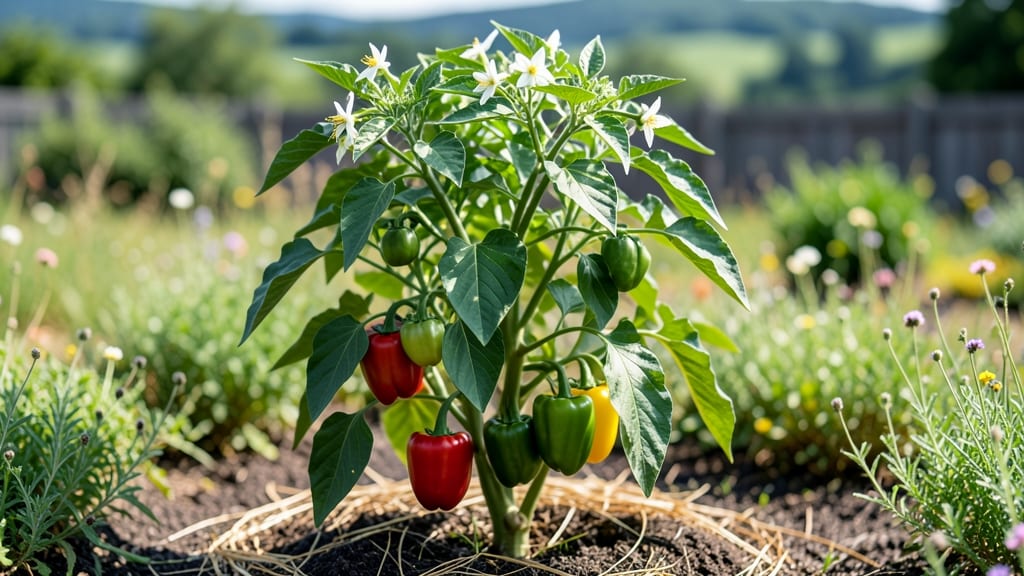
Whether bell peppers are annuals or perennials depends on your climate: they act as annuals in most home gardens because they die after fruiting in one season, but can become perennials in frost-free zones (10-12) with proper winter care and mulching.
Bell peppers behave like annuals because their tropical origins make them highly sensitive to frost, which damages their shallow root systems and tender stems. 🌱 In colder regions, the plant simply can't survive winter's chill, so gardeners replant each spring.
However, in warm climates where temperatures never dip below 50°F, these plants can live multiple years if you protect them with thick mulch and prune back growth after harvest. The key difference lies in their ability to regenerate roots and foliage after seasonal stress.
For gardeners in zones 10-12, the perennial approach requires more effort but yields bigger rewards. I've found that cutting back plants by one-third after fruiting and applying 4-6 inches of straw mulch creates an insulating barrier that preserves root health through mild winters.
This mimics their natural tropical behavior where they continue growing year-round without dormancy.
💡 In This Article
- Why Bell Peppers Die After One Season in Cold Climates
- Extending Bell Pepper Lifespan in Warm Zones
Why bell peppers die after one season in cold climates
Bell peppers originate from tropical regions where temperatures stay consistently warm, making them extremely frost-sensitive. Their shallow root systems—typically spreading only 12-18 inches deep—lack the depth to access warmer soil layers during cold snaps.
When temperatures drop below 50°F, the plant's cellular structure begins to break down, particularly in the stems and leaves, which contain delicate vascular tissues. This frost damage disrupts nutrient transport, causing the plant to wilt and eventually die, even if roots remain intact temporarily.
The plant's response to cold is triggered by a biological process called cold acclimation failure. Unlike true perennials (such as asparagus or rhubarb), bell peppers cannot harden their tissues to withstand freezing.
Their leaves contain high moisture content, which freezes and ruptures cell walls at 32°F or lower. 🌱 Even a light frost can cause irreversible damage, turning vibrant green foliage brown within hours.
In contrast, perennial vegetables like artichokes develop thicker, woody stems that insulate against cold, allowing them to regenerate in spring.
Another critical factor is the plant's energy allocation. Bell peppers prioritize fruit production over root and stem resilience. Once they begin flowering and fruiting, their metabolic focus shifts entirely to reproductive growth, leaving little energy to strengthen structures for winter survival.
This biological trade-off explains why even mature plants in colder zones cannot persist beyond their first fruiting cycle without human intervention.
Gardeners often observe that bell pepper plants may look healthy until the first frost, then collapse suddenly. This rapid decline happens because the plant's protective mechanisms—like abscisic acid production—are insufficient for cold resistance.
True perennials, however, can enter dormancy, shedding leaves but preserving underground energy reserves. Bell peppers lack this adaptive strategy, making them dependent on warm climates for perennial behavior.
For comparison, consider the difference between a bell pepper and a tomato. While both are frost-sensitive, tomatoes can sometimes recover from light frosts if the damage isn't severe, whereas bell peppers rarely do. This highlights their specialized tropical adaptation: maximizing fruit production in warm conditions rather than surviving harsh winters.
The science behind this limitation lies in their genetic makeup. Bell peppers (Capsicum annuum) evolved in Central and South America's equatorial regions, where temperatures rarely drop below 60°F.
Their inability to adapt to colder climates is a direct result of this evolutionary history, making them annuals by default in most gardening zones.