
Flowers
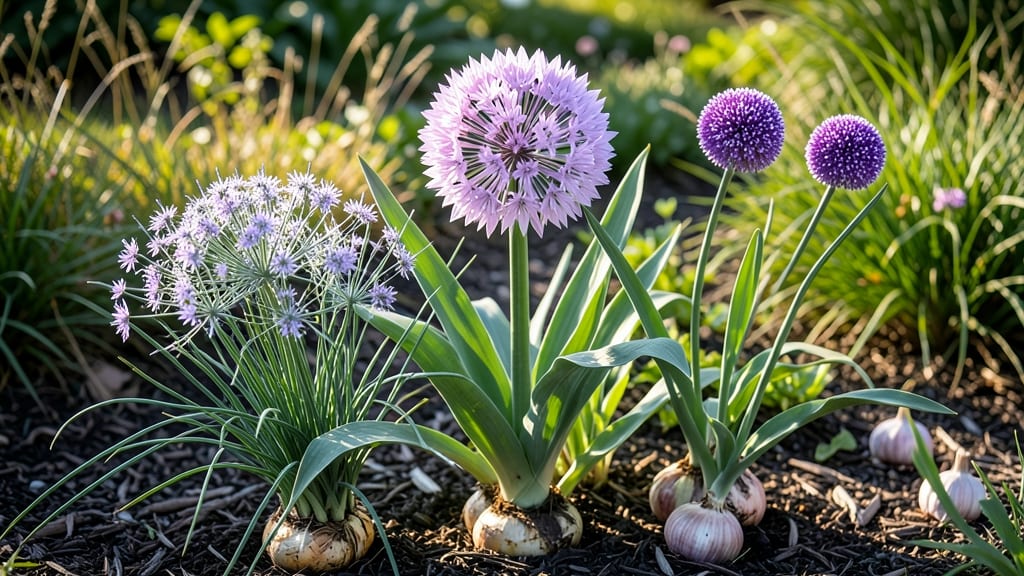
Alliums are perennials in most climates, though they may die back completely after flowering, tricking gardeners into thinking they’re annuals. Their underground bulbs or rhizomes persist year-round, regrowing from the ground in spring.
Most gardeners assume alliums like garlic chives or ornamental onions are annuals because they seem to vanish after blooming. 🌱 The truth is their storage organs—bulbs or rhizomes—stay alive underground, storing energy for next year's growth.
This natural dormancy cycle is why they often resprout in spring, sometimes even before you notice their absence. Understanding this process helps you avoid needlessly replanting every season.
What's fascinating is how different allium varieties handle this cycle. Some, like Allium giganteum, may look completely dead after flowering but still produce new shoots from their bulbs. Others, such as Allium schubertii, form dense clumps that slowly expand over years.
The key to their longevity lies in proper care during dormancy—keeping the soil slightly moist but well-drained ensures their bulbs don't dry out or rot over winter.
💡 In This Article
- Why Alliums Appear Dead After Flowering
- Caring for Alliums Through Seasonal Dieback
Why alliums appear dead after flowering
Alliums enter a natural dormancy phase after flowering, triggered by a combination of photoperiod changes and internal biological clocks. When day lengths shorten in late summer, the plant's apical meristem (growth tip) stops producing new leaves and flowers.
Instead, energy shifts underground to the bulb or rhizome, where starch reserves begin accumulating at rates of up to 20% dry weight per week during peak storage. This process mirrors what happens in onions or garlic, though alliums often show more dramatic above-ground dieback.
The dramatic foliage collapse you see isn't death—it's a survival strategy. In species like Allium cristophii, the entire plant may brown and appear crispy, but the bulb remains alive 1-2 inches below soil.
This underground storage organ can survive -10°F to 15°F temperatures, thanks to natural antifreeze proteins that protect cell membranes.
The bulb's papery outer layers act like insulation, preventing moisture loss during dormancy. 🌱 What's counterintuitive is that some alliums actually need this "death" phase to trigger next year's growth—similar to how deciduous trees must lose leaves to prepare for spring.
Not all alliums behave identically in their dormancy. Ornamental alliums like Allium 'Globemaster' may retain some basal leaves after flowering, while others like Allium sphaerocephalon completely defoliate.
The key difference lies in their native climates: Mediterranean species often have more pronounced dieback, while those from temperate zones may show gradual decline. This variation explains why gardeners sometimes see "annual" behavior—what they're actually witnessing is the plant's adaptive response to local growing conditions.
Here's what happens at the cellular level: As photosynthesis slows, the plant redirects sugars to the bulb's quiescent center cells, which remain metabolically active but non-dividing. These cells contain specialized proteins that prevent ice crystal formation, allowing the bulb to survive freeze-thaw cycles.
The process is remarkably similar to how lily bulbs or tulip corms overwinter, though alliums typically have a shorter dormancy period of 2-4 months compared to 6-8 months for tulips.
The timing of this dormancy varies by species. Early bloomers like Allium moly may enter dormancy by early July, while late-season varieties like Allium giganteum might not fully die back until September. This staggered timing explains why some alliums appear to "come back to life" earlier than others in spring.
The underground bulb remains viable for 3-5 years if conditions are ideal, though vigor naturally declines after 2-3 years without division.
What most gardeners miss is the subtle regrowth signs: a single 1-inch shoot emerging from the soil in early spring, or the faint green tinge at the bulb's base. These early indicators show the plant's internal clock has already reset, preparing for new growth.
The bulb's meristematic cells begin dividing again when soil temperatures reach 45-50°F, typically 4-6 weeks before you'd expect to see full foliage. 💫