
Orchid Care
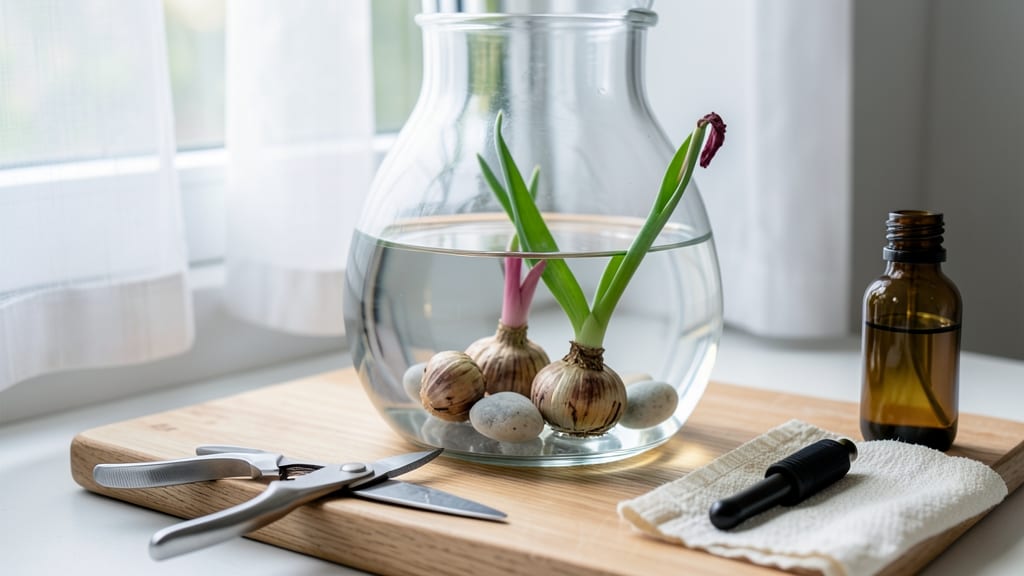
After tulip bulbs flower in water, let the foliage yellow naturally before removing it, then plant bulbs in well-draining soil with 6-8 inches of depth. Fertilize lightly and water moderately to encourage regrowth for next season’s blooms.
Once your tulips bloom in water, their foliage continues storing vital nutrients back into the bulb for next year's growth. 🌱 Skipping this step weakens the bulb, often leading to poor or no reblooming.
I’ve found that patience here pays off—waiting until leaves turn completely yellow ensures the bulb has fully recharged. After replanting, focus on consistent moisture without overwatering, as soggy soil can rot bulbs before they’ve had a chance to establish roots.
For best results, choose a sunny spot with well-draining soil—tulips hate sitting in wet conditions. A light application of bulb-specific fertilizer after planting gives them a gentle nutrient boost without overwhelming them. In my experience, bulbs replanted this way often return with even more vibrant blooms the following spring.
💡 In This Article
- Why Proper Tulip Bulb Care After Water Blooming Matters
- Step-by-Step Guide to Replanting Water-Grown Tulip Bulbs
Why proper tulip bulb care after water blooming matters
Tulip bulbs store energy in their leaves long after the flowers fade.
When you force tulips to bloom in water, they’re essentially drawing from their own reserves, which means the foliage becomes even more critical for replenishing those nutrients. 🌱 The leaves perform photosynthesis, converting sunlight into sugars that travel down to the bulb, where they’re stored as starch—a form of energy for next year’s growth.
Without this process, the bulb can weaken, leading to smaller blooms or no flowers at all the following season.
Here’s the science: tulip bulbs enter a natural dormancy after flowering, but they need 6-8 weeks of healthy leaf growth to fully recharge. If you cut the foliage too soon, the bulb misses out on this vital nutrient replenishment.
Studies show bulbs that lose all their leaves before turning yellow can lose up to 50% of their stored energy, drastically reducing their ability to bloom again. The key is patience—wait until the leaves turn completely yellow and crispy before trimming them back.
Timing also affects bulb health. Planting too early or too late can disrupt the bulb’s dormancy cycle. Tulips thrive when replanted in fall (September-October), giving them time to establish roots before winter. The cooler temperatures trigger bulb dormancy, while the spring warmth signals regrowth.
If you replant too late, the bulb may not have enough time to root before the next growing season, leading to poor survival rates.
Another critical factor is soil quality. Tulips prefer well-draining soil with a pH between 6.0 and 7.0. Poor drainage can cause bulb rot, while acidic or alkaline soil can inhibit nutrient uptake.
Amending the soil with compost or a bulb-specific fertilizer at planting time gives the bulb a nutrient boost without overwhelming it, setting the stage for stronger growth next spring.
What most people don’t realize is how much the bulb’s future blooms depend on this post-flowering care. A well-nourished bulb can produce 2-3 times more flowers the following year compared to one that was neglected.
The foliage isn’t just "dead weight"—it’s the bulb’s lifeline for reblooming. 🌸 By giving it the time and conditions it needs, you’re essentially investing in next year’s garden performance.
Consider this: a single tulip bulb can live for 5-10 years if cared for properly, producing stunning blooms each season. But skip the foliage stage, and you might see just one or two weak blooms before the bulb declines.
The effort you put into this step now directly impacts the beauty and longevity of your tulips in the years to come.