
Flowers
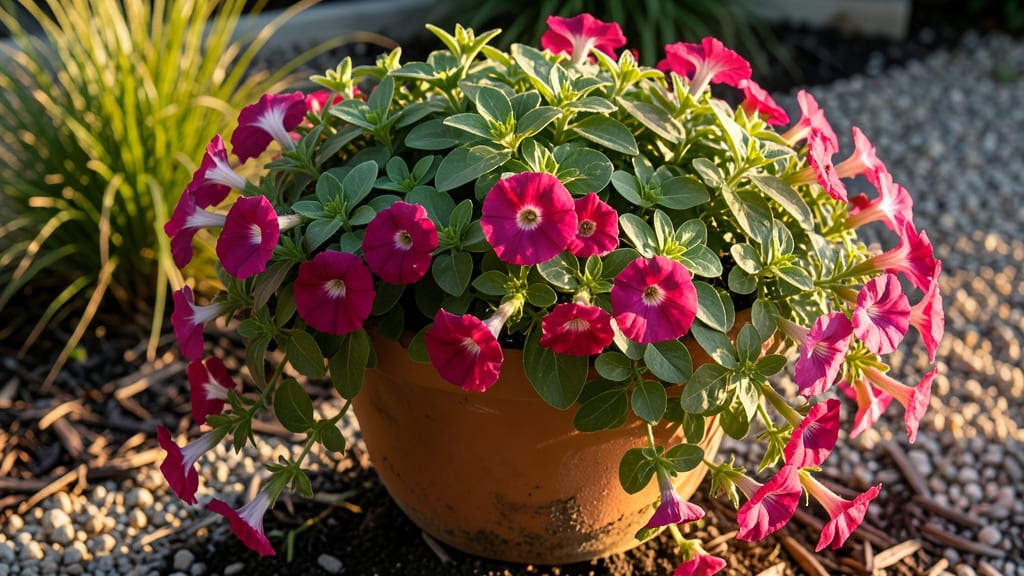
Determining whether wave petunias are annuals or perennials depends on your climate: they act as annuals in most regions, dying back after frost but often self-seeding prolifically. In warm zones (USDA 9-11), they may persist as perennials with winter protection, though harsh winters typically kill them without extra care.
Wave petunias thrive as annuals in cooler climates because their tender stems can't withstand freezing temperatures. 🌱 The good news is that their seeds often germinate naturally the following spring, giving you free plants with minimal effort.
In milder regions, you can sometimes coax them to return year after year by providing winter mulch or moving containers indoors. This makes them behave more like perennials, though they still need protection from extreme cold.
What sets wave petunias apart is their ability to bounce back through self-seeding, even when they die back completely. This trait makes them low-maintenance favorites for gardeners who want continuous color without replanting every year.
The key difference between annual and perennial behavior comes down to temperature resilience—not just whether they survive winter, but how easily they recover.
💡 In This Article
- Why Wave Petunias Die Back in Cold Climates
- Extending Wave Petunias’ Lifespan in Cold Zones
Why wave petunias die back in cold climates
Wave petunias belong to the Petunia × hybrida family, specifically bred for their trailing growth habit and disease resistance. The key reason they die back in cold climates lies in their tender stems, which lack the woody structure of perennials like salvia or lavender.
When temperatures drop below 28°F (-2°C), cellular damage occurs almost instantly, causing the stems to blacken and collapse. This sensitivity is why they behave as annuals in USDA zones 5-8, where winter lows often fall below this threshold.
The botanical mechanism involves freezing-induced dehydration. As ice crystals form in the plant's vascular system, they disrupt water flow and rupture cell walls. Wave petunias lack the protective layers of bark or deep root systems that help perennials like heuchera survive winter.
Their shallow root systems (6-12 inches deep) also make them vulnerable to soil heaving during freeze-thaw cycles, which can uproot them entirely. 🌡️ Unlike hardy geraniums that store energy in their roots for regrowth, wave petunias have no such survival strategy.
Comparing wave petunias to other petunia varieties reveals why they're particularly vulnerable. Grandiflora petunias, for example, have slightly thicker stems but still die back in cold climates. However, supertunia varieties often have better disease resistance that indirectly helps them survive longer in marginal conditions.
The real difference comes down to their growth habit—wave petunias prioritize vine length over stem thickness, making them more susceptible to wind and cold damage when unprotected.
What most gardeners don't realize is how quickly the damage occurs. A single 24-hour exposure to 25°F (-4°C) can kill wave petunias, while temperatures above 32°F (0°C) may only cause dormancy. This explains why they often survive in USDA zone 9 winters but fail in zone 8.
The plant's entire above-ground structure becomes a liability in cold weather, which is why self-seeding becomes their primary survival strategy rather than returning from roots.
One fascinating adaptation is their seed production timing. Wave petunias often set seed before dying back, ensuring the next generation's survival. These seeds can remain dormant in the soil for 2-3 years under ideal conditions, waiting for warmer temperatures to germinate.
This biological trick explains why you might see volunteer plants appearing years after your original planting, even when you didn't intentionally reseed. 🌱
The cold sensitivity extends to their foliage too. The broad leaves, while attractive, have a high surface area that loses heat rapidly. When combined with their shallow roots, this creates a perfect storm of vulnerability during cold snaps.
Even a light frost can cause leaf burn, which weakens the plant's ability to photosynthesize and store energy for winter survival.