
Plants
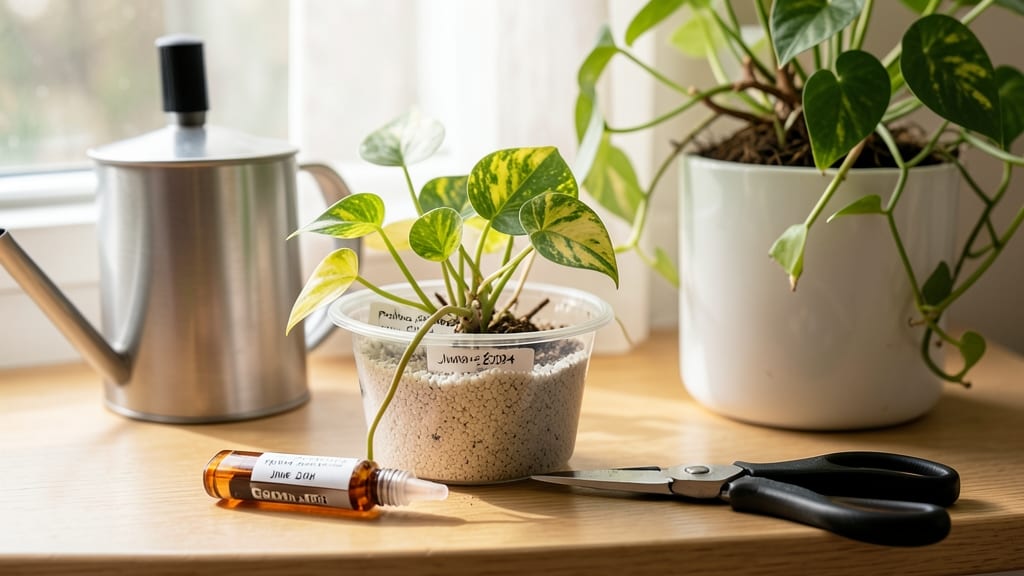
Watering plants treated with rooting hormone means maintaining damp—not soggy—soil while avoiding wet cuttings, which dilutes the hormone. Use a fine mist daily and shield from direct sunlight for the first week to support root development without stressing new growth.
Rooting hormones contain auxins that stimulate cell division in stem tissues, but these compounds need moisture to activate. 🌱 When you keep the soil evenly damp, you create the perfect environment for enzymatic reactions that trigger root formation.
Overwatering, however, can suffocate roots by cutting off oxygen, while underwatering halts the hormone's effectiveness. I've found that gel-based hormones work best with slightly drier conditions than powders, which need more consistent moisture to prevent clumping.
For best results, water the soil around your cuttings—never directly on the hormone-coated ends. A spray bottle with a fine mist setting gives you precise control, and placing cuttings under a humidity dome helps maintain that critical moisture balance.
After the first week, you can gradually reduce misting as roots establish, but always keep an eye out for mold or yellowing leaves, which signal overwatering.
💡 In This Article
- How Rooting Hormone and Water Work Together for Plant Growth
- Step-by-Step Watering Schedule for Rooting Hormone Success
How rooting hormone and water work together for plant growth
Rooting hormones contain synthetic auxins—plant hormones that mimic natural indole-3-butyric acid (IBA)—which trigger cell elongation and division at the cutting's base. But here's the science: these auxins need moisture to activate enzymes that break down cell walls, allowing roots to emerge.
Think of it like a chemical handshake—auxins signal cells to divide, but water is the catalyst that makes it happen. Without proper hydration, the hormone sits dormant, while too much water can suffocate cells by displacing oxygen in the soil pores.
The type of hormone you use changes the watering game. Powder-based hormones need consistent moisture to prevent clumping and ensure even distribution, while gel formulations hold water better, making them ideal for slightly drier conditions.
I've seen gel hormones work wonders with succulents, where overwatering is a constant risk. The key is maintaining 60-70% humidity around cuttings—the sweet spot where roots grow without fungal growth taking over.
Water also plays a critical role in nutrient transport. Once roots begin forming, they need moisture to absorb minerals from the soil, but the early stages are all about creating the right environment. Direct water on hormone-coated ends washes away the auxins, effectively canceling their effect.
Instead, aim for 0.5-1 millimeter of water per application—just enough to dampen the soil without creating puddles. This precision keeps the hormone active while preventing rot.
Temperature matters too—optimal rooting occurs between 65-75°F. At cooler temps, enzymatic reactions slow down, delaying root growth. That's why I always use a humidity dome with a small fan for gentle airflow—it maintains warmth while preventing condensation buildup.
The dome creates a microclimate where moisture levels stay ideal without the risk of fungal infections that plague overwatered cuttings.
What most people don't realize is how quickly problems arise when watering goes wrong. Overwatering triggers anaerobic conditions where roots suffocate, turning brown and mushy within 24-48 hours. Underwatering causes the hormone to dry out, leaving cuttings with weak, stunted roots.
The visual difference is striking—healthy roots are white and fibrous, while stressed roots appear black and slimy. A simple finger test (inserting your finger 1 inch deep into the soil) tells you everything you need to know about moisture levels.
For best results, I recommend a two-phase watering approach: First, water the soil thoroughly before applying hormone to establish initial moisture. Then, switch to light misting every 2-3 days to maintain dampness without oversaturating. This balance is what turns good cuttings into thriving new plants. 🌱