
Watering
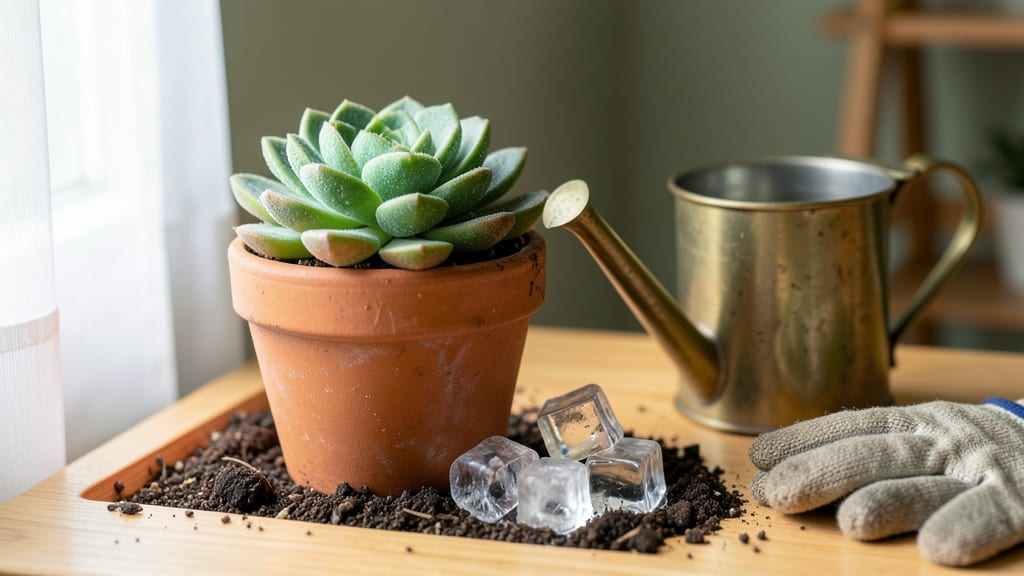
Watering plants with ice cubes provides slow hydration without over-saturating soil, ideal for delicate seedlings or drought-sensitive varieties like succulents, but risks root damage if overused or in poorly draining pots.
This method works because ice melts gradually, releasing moisture at a rate that matches how plants naturally absorb water from rainfall. 🌱 For container plants, this technique helps maintain consistent moisture levels without creating soggy soil conditions that suffocate roots.
I've seen it work wonders with ferns and herbs, but it's not suitable for heavy drinkers like tomatoes or peppers that need frequent deep watering. Always monitor your plants' response—if the soil stays damp for more than a day, switch to a different method.
One key advantage is the temperature control—cool water helps prevent shock to roots, especially in hot climates. However, this approach has limits: it's best for small pots and shallow-rooted plants. For larger containers or plants with extensive root systems, traditional watering methods will still be more effective.
💡 In This Article
- How Ice Cube Watering Benefits Root Systems
- Best Plants and Pots for Ice Cube Hydration
How ice cube watering benefits root systems
The science behind ice cube watering lies in its ability to release moisture at a controlled rate—similar to how nature delivers hydration during gentle rainfall.
When ice melts, it gradually seeps into the soil at 0.5-1 milliliter per hour per cube, creating a slow, even moisture distribution that prevents sudden saturation.
This mimics the natural absorption process where roots gradually uptake water without becoming waterlogged, reducing the risk of root rot that often occurs with traditional watering methods.
This method also maintains cooler soil temperatures, which is particularly beneficial in hot climates where soil can reach 120°F+ in direct sunlight. The gradual cooling effect extends the active root zone deeper into the soil, encouraging healthier growth.
Additionally, the slow release minimizes surface evaporation, ensuring more water reaches the roots rather than dissipating into the air. 🌿 For comparison, a standard watering can delivers 10-20 milliliters per second, which can overwhelm small pots and cause runoff.
The controlled moisture also creates an ideal environment for beneficial microorganisms in the soil. These microbes thrive in consistently moist (not soggy) conditions, helping break down organic matter and make nutrients more accessible to plants.
This is especially valuable for delicate seedlings or plants with shallow root systems, like basil or lettuce, where sudden water surges can disrupt their fragile root networks.
However, this method isn't without its limitations. In pots without drainage holes, ice cubes can create localized water pockets that trap excess moisture. Terracotta pots, which breathe better than plastic, are ideal for this technique because they allow excess water to evaporate through their porous walls.
Plastic pots, on the other hand, can trap moisture longer, increasing the risk of fungal issues if overused.
Another key benefit is the reduction of fungal spores in the soil. Traditional watering can splash spores from the surface into the root zone, while ice cube watering delivers moisture directly to the soil without disturbance.
This makes it particularly effective for plants prone to powdery mildew, like ferns or orchids, where fungal prevention is critical.
For best results, use 1-2 ice cubes per inch of pot diameter and place them near the base of the plant rather than on top. This ensures the roots receive the most benefit while minimizing surface evaporation.
The gradual release means you can water less frequently—typically every 3-5 days depending on your climate—while still maintaining optimal moisture levels.