
Planting
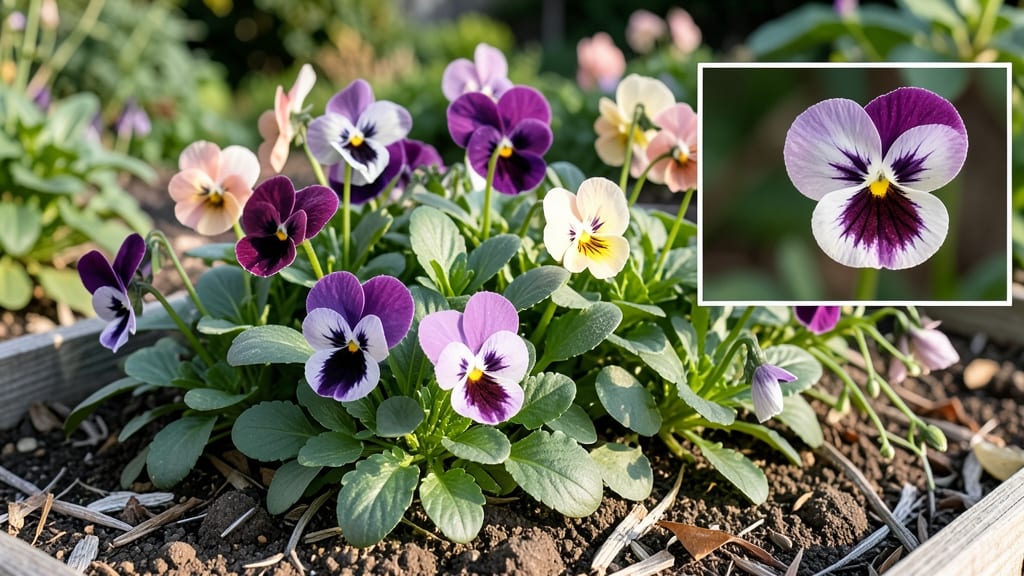
Whether viola plants are annual or perennial depends on your climate: in warmer regions (USDA 7-10), they act as annuals, while in cooler zones (USDA 3-6), they establish as hardy perennials with proper winter care.
Violas adapt their lifespan based on temperature extremes—frost triggers dormancy in cooler climates, allowing roots to survive underground until spring. 🌱 In milder zones, they complete their lifecycle in a single season because winter conditions are too harsh for overwintering.
I've seen violas return for three years in Zone 5 with heavy mulch, proving that even marginal zones can extend their perennial behavior with the right protection.
This dual nature makes violas incredibly versatile for gardeners. Their ability to self-seed in warm climates means you'll often get surprise blooms the following year, while in colder regions, their deep root systems store energy for next season's growth.
The key difference lies in how each climate affects their dormancy cycle and frost tolerance.
💡 In This Article
- How USDA Hardiness Zones Determine Viola Plant Lifespan
- Tips for Extending Viola Blooms in All Climates
How USDA hardiness zones determine viola plant lifespan
The distinction between annual and perennial violas comes down to their biological response to temperature extremes. In USDA Zones 7-10, violas complete their entire lifecycle in one growing season because winter temperatures rarely drop below 20°F—the threshold where their tender stems and leaves begin to suffer frost damage.
Their roots, while capable of surviving mild winters, lack the insulation to regenerate above-ground growth reliably. This is why they behave as annuals in warmer climates, where they bloom prolifically from early spring to frost, then die back completely.
In cooler zones (USDA 3-6), violas develop a survival strategy that turns them into perennials. Their root systems grow deeper—often reaching 4-6 inches—and produce more energy reserves in the form of carbohydrates stored in their roots.
This stored energy allows them to regrow from the same rootstock each spring, even after -10°F temperatures. The key difference lies in their dormancy cycle: violas in colder climates enter a state of winter dormancy where metabolic activity slows dramatically, protecting them from frost while maintaining cellular integrity.
The transition zone (USDA 6-7) is where things get interesting. Here, violas exist in a gray area—sometimes surviving as perennials with winter protection, other times behaving as annuals when winters are unusually harsh.
I've observed that violas in Zone 6 with 3-4 inches of mulch (straw or shredded leaves) often return, while those without protection may die back completely. This zone tests their resilience, as even a 2-week stretch below 25°F can be fatal to unprotected plants.
Another critical factor is the timing of frost. Early fall frosts in Zone 7 can kill violas before they've had time to establish strong root systems, forcing them into annual behavior. Meanwhile, in Zone 5, violas planted in early summer have months to build root reserves before winter sets in.
The science here involves photoperiodism—the plant's response to daylight length—which triggers dormancy preparation in shorter fall days, giving roots time to harden off before freezing temperatures arrive.
Consider the root system's role: perennial violas develop a fibrous network that spreads horizontally, creating multiple growth points. This contrasts with annual violas, which focus energy on rapid above-ground growth during their single season.
The deeper roots of perennial violas also tap into moisture reserves during dry spells, giving them an advantage in marginal climates where summer drought can stress plants.
What most gardeners don't realize is that even "annual" violas in warm climates often self-seed prolifically. While they don't return from the same rootstock, their seeds germinate readily in spring, creating the illusion of perennial behavior.
This natural propagation strategy explains why violas seem to "come back" in warm zones—it's just a new generation rather than the same plant.