
Orchid Care
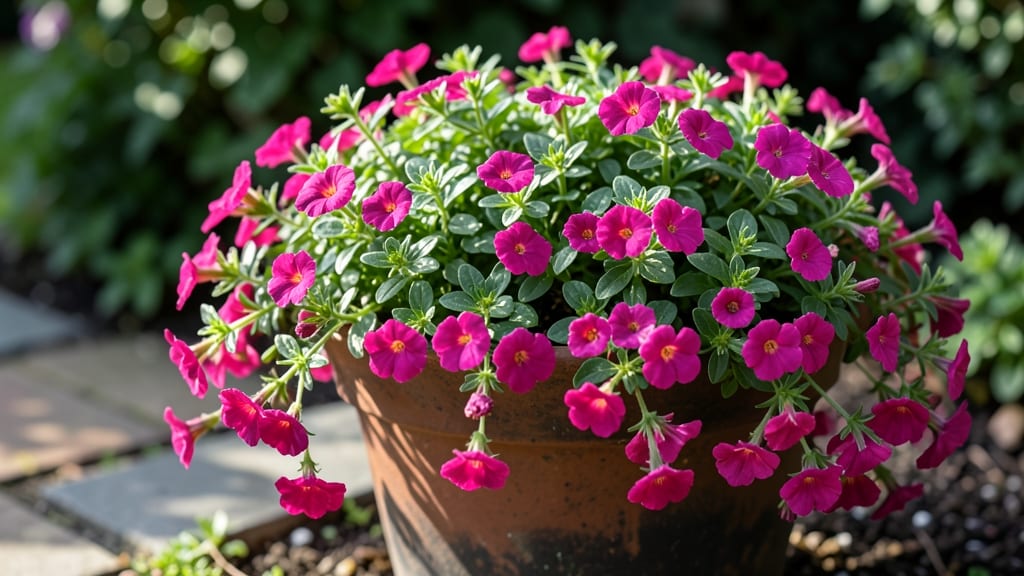
Determining whether Calibrachoa Superbells act as annuals or perennials depends on your hardiness zone: they're annuals in most regions but function as tender perennials in USDA Zones 10-11, where they may regrow from roots during mild winters. Freezes below 30°F will kill them back each year, even in warmer climates.
These vibrant trailing plants thrive as annuals in most gardens because their tropical origins make them extremely frost-sensitive. 🌱 In Zones 10-11, their perennial nature shines through as they often survive winters if protected from extreme cold.
The key difference lies in temperature tolerance—while they'll regrow from roots in mild winters, a single hard freeze will reset their growth cycle everywhere else.
For gardeners in colder zones, the secret to extending their lifespan lies in strategic overwintering techniques like taking cuttings before frost or growing them in containers that can be moved indoors. This approach transforms what would normally be a one-season plant into a multi-year favorite with minimal effort.
💡 In This Article
- Why Calibrachoa Superbells Die Back in Cold Climates
- Extending Calibrachoa Superbells Lifespan in Cold Regions
Why Calibrachoa Superbells die back in cold climates
Calibrachoa Superbells trace their origins to the tropical and subtropical regions of South America, where temperatures rarely drop below 50°F and humidity stays consistently high. This genetic heritage explains their extreme frost sensitivity—any exposure to 32°F or below triggers cellular damage in their tender stems and leaves.
The plants' shallow root systems (typically 6-12 inches deep) offer little protection against cold soil temperatures, which can drop 10°F colder than air temperatures at ground level.
The plant's growth cycle relies on warm-season photosynthesis, which shuts down completely when nighttime temperatures fall below 55°F for more than 3-5 days.
This physiological response explains why even in USDA Zones 10-11, where winters rarely drop below 40°F, Superbells often die back to the ground during occasional cold snaps.
The key difference in warmer zones is that their roots remain viable, allowing regrowth when temperatures rebound—something that doesn't happen in colder climates where roots freeze solid.
What makes this particularly challenging for gardeners is how quickly frost damage occurs. Superbells can show visible signs of cold stress (like blackened leaves or glassy stems) within 12-24 hours of temperatures reaching 35°F.
Unlike hardy perennials that gradually acclimate to cooler weather, these plants lack any cold-hardening mechanisms. Their tropical DNA means they simply weren't evolutionarily equipped to handle anything beyond light frosts (28-32°F for brief periods).
Comparing Superbells to more cold-tolerant plants like petunias (which can handle 28°F for short periods) highlights their delicate nature. While petunias might survive a single light frost, Superbells typically show irreversible damage at 30°F.
This sensitivity extends to their flowering mechanism too—cold temperatures below 50°F disrupt pollinator activity, causing buds to drop rather than open, which is why you often see mass bud loss during cool spring nights even in warmer climates.
The plant's survival strategy in their native habitat involves rapid growth during warm seasons and complete dormancy during dry periods—not cold tolerance.
This explains why gardeners in Zones 10-11 sometimes see regrowth from roots: the plants aren't truly perennial in the traditional sense, but their roots can persist in frost-free conditions until warm weather returns. In colder zones, these roots simply don't survive the winter's freeze-thaw cycles.
Understanding this biological limitation helps explain why Superbells are classified as annuals in most gardening contexts. Their entire life cycle—from seed germination to flower production—is compressed into a single growing season in temperate climates.
Even in their native tropical environments, they wouldn't persist through cold winters, which is why they've never developed cold tolerance mechanisms like woody stems or deep root systems found in true perennials.