
Orchid Care
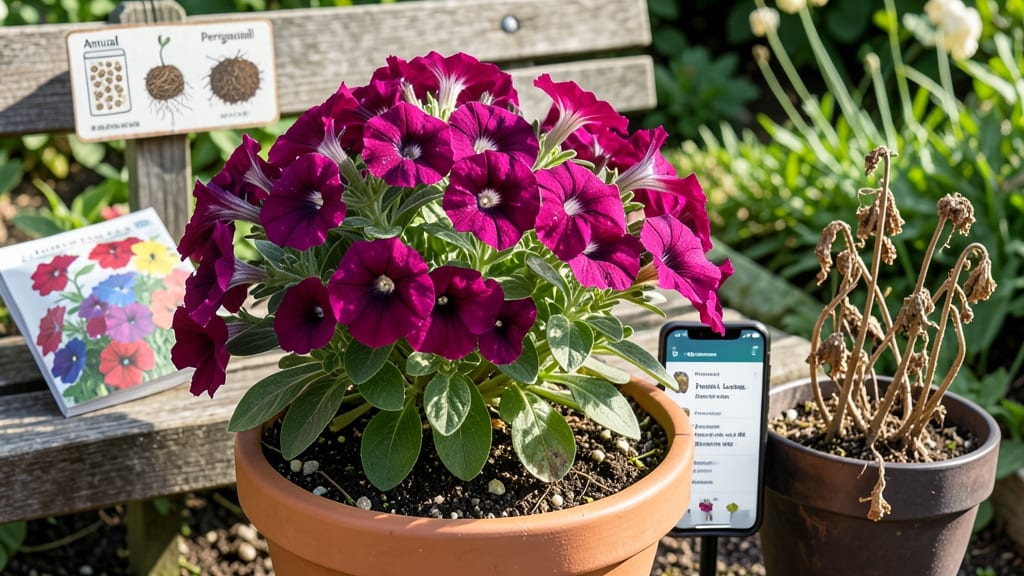
Whether petunias are annuals or perennials depends on your climate: they die back in freezing temperatures but may return in frost-free zones like USDA Hardiness Zone 10 or warmer.
This distinction comes down to cold sensitivity—petunias originate from South America and simply can't tolerate frost. 🌱 When temperatures drop below 30°F, their cells rupture, killing the plant entirely. However, in warmer regions, some varieties survive winter and regrow from roots, acting like perennials.
I've seen gardeners in Zone 10 treat them as both, depending on how much winter protection they provide.
What's interesting is how this affects gardening strategies. In colder climates, you'll need to replant each spring, while in milder areas, you might get lucky with self-seeding or protected overwintering.
The key is understanding your local frost dates—planting too early in chilly zones risks losing your investment before summer even arrives.
💡 In This Article
- Why Petunias Die in Cold Weather
- Extending Petunia Blooms as Annuals
Why petunias die in cold weather
Petunias originate from the Andes Mountains, where they evolved to thrive in warm, frost-free conditions. Their inability to survive freezing temperatures stems from cellular damage caused by ice crystal formation.
When temperatures drop below 30°F (-1°C), water inside petunia cells freezes and expands, rupturing cell walls and killing the plant. This process is called cryodamage, and it occurs even in young plants that appear healthy.
The damage isn't just limited to foliage—roots also suffer. Petunia roots contain high moisture content that freezes solid, causing irreversible structural breakdown. In contrast, cold-hardy perennials like lavender have specialized cells that prevent ice formation.
What's fascinating is how quickly petunias respond: within 24-48 hours of frost exposure, you'll see wilting and browning as the damage spreads systemically.
This cold sensitivity explains why petunias behave as annuals in most US regions. Even in USDA Zone 9, where winters are mild, petunias rarely survive unprotected. The threshold for perennial behavior shifts dramatically in Zone 10, where average winter lows stay above 40°F (4°C).
In these areas, gardeners often report petunias returning year after year from dormant roots, though growth may be slower in the first spring after overwintering.
What most gardeners don't realize is how humidity plays a role. Petunias are more frost-sensitive in dry conditions because their cells become dehydrated first. When humidity exceeds 70%, the freezing process occurs more gradually, giving cells slightly more time to adjust.
This is why coastal gardeners in Zone 10 sometimes see better overwintering success than inland growers with similar temperature profiles.
There's also a genetic variation factor. Some modern hybrid petunias have been bred for slightly improved cold tolerance, but none can survive prolonged exposure to 20°F (-7°C) or below. The classic 'Wave' series might handle a brief 28°F (-2°C) dip better than heirloom varieties, but the difference is marginal.
For true perennial behavior, you'd need to provide winter protection like thick mulch or greenhouse conditions, even in mild climates.
The science behind this cold sensitivity involves a complex interplay of cell membrane composition and antioxidant defenses. Petunias lack the specialized proteins that help perennials repair frost damage, making them particularly vulnerable.
Understanding these mechanisms helps explain why petunias thrive as annuals in most gardens—it's not just about temperature, but the fundamental biological limits of their species.