
Orchid Care
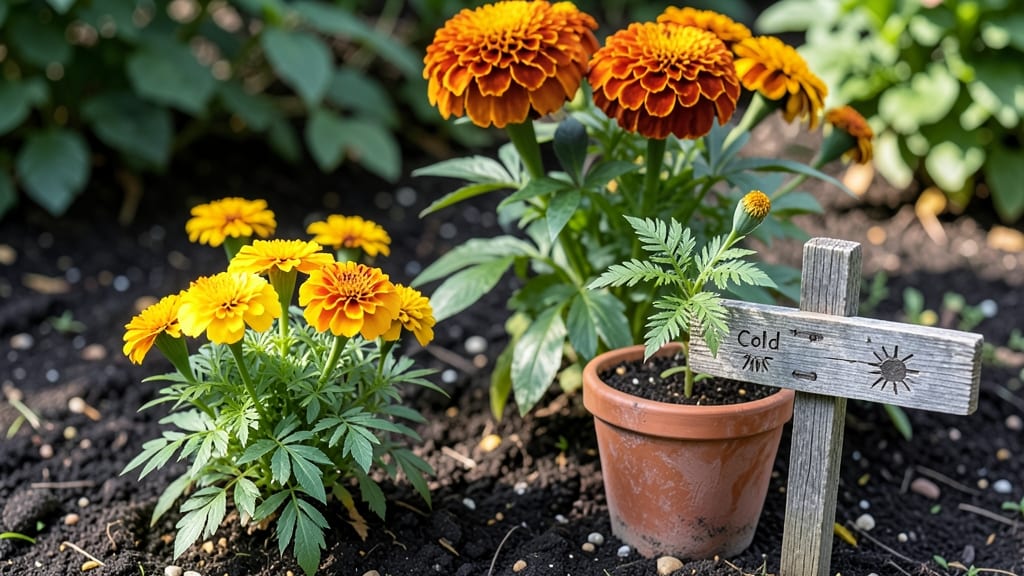
Marigolds are annuals or perennials depending on your climate—most grow as annuals in colder regions, but in Zones 9–11, they regrow from roots each year after winter dieback. Frost or freezing temperatures will kill them back in colder areas.
Whether marigolds act as annuals or perennials comes down to your local climate and how cold your winters get.
In Zones 9–11, their tough root systems survive winter dormancy, sending up new growth in spring—this is why they're considered short-lived perennials there. 🌱 Outside those zones, though, frost or temperatures below 25°F will kill the plants entirely, forcing gardeners to replant each year.
The key difference lies in their resilience: while the roots may persist in mild climates, above-ground parts always suffer damage in colder areas.
This behavior explains why marigolds are so popular—they're easy to grow annually almost anywhere, but in warmer regions, they offer the bonus of returning year after year with minimal effort. The trade-off? In colder climates, you'll need to treat them like annuals, replanting fresh seeds each spring for continuous blooms.
💡 In This Article
- Marigold Hardiness Zones and Winter Survival
- Extending Marigold Lifespan: Planting and Care Tips
Marigold hardiness Zones and winter survival
The dividing line between marigolds acting as annuals or perennials hinges on 25°F—this temperature threshold determines whether their roots survive winter dormancy. In Zones 9–11, where winters rarely drop below 25°F, marigolds develop a robust root system that persists through mild winters.
These roots can remain viable for 2-3 years, allowing new shoots to emerge each spring, which is why they're classified as short-lived perennials in these regions. 🌱
In contrast, marigolds grown in Zones 8 and colder face a different fate. When temperatures fall below 25°F, the entire above-ground plant—leaves, stems, and flowers—succumbs to frost damage. While the roots may survive briefly, they typically don't regenerate effectively in colder climates.
This is why gardeners in Zones 1–8 treat marigolds as annuals, replanting seeds each spring for consistent blooms. The root system's resilience is the key difference: in warm zones, it's strong enough to sustain regrowth, while in colder zones, it's simply not enough to overcome winter stress.
What's fascinating is how marigolds adapt their growth strategy based on climate. In perennial zones, they allocate more energy to root development during their first growing season, creating a storage reserve for winter. By spring, these roots can sprout new growth within 2-4 weeks after temperatures stabilize above 50°F.
In annual zones, they focus energy on rapid above-ground growth and flowering, prioritizing immediate visual impact over long-term survival. This adaptation explains why marigolds thrive so reliably as annuals almost anywhere.
Here's what happens biologically: marigolds undergo a process called "winter dormancy" in mild climates. Their cells produce protective proteins and sugars that act like antifreeze, preventing ice crystal formation in root tissues. This is similar to how some trees survive winter—except marigolds lack the woody structure to insulate against cold.
In colder zones, this natural protection isn't enough to prevent complete dieback, making them dependent on annual replanting. 💫
The visual difference between perennial and annual marigold behavior is striking.
In Zone 10 gardens, you'll often see marigolds returning to the same spots year after year with minimal care, while in Zone 6, last year's marigold patch will look completely dead by winter—only to be replaced with fresh plants in spring.
This contrast helps explain why marigolds are both beloved and low-maintenance: their growth habits adapt perfectly to their environment, whether that means coming back year after year or providing instant seasonal color.
For gardeners curious about pushing marigolds into perennial behavior in colder zones, the challenge lies in protecting those critical root systems. While it's possible to overwinter marigolds in containers or with heavy mulching in Zones 7–8, the success rate drops significantly compared to their natural perennial behavior in Zones 9–11.
The root system's ability to regenerate depends on maintaining soil temperatures above 40°F throughout winter—a feat that's difficult but not impossible with proper insulation techniques.