
Orchid Care
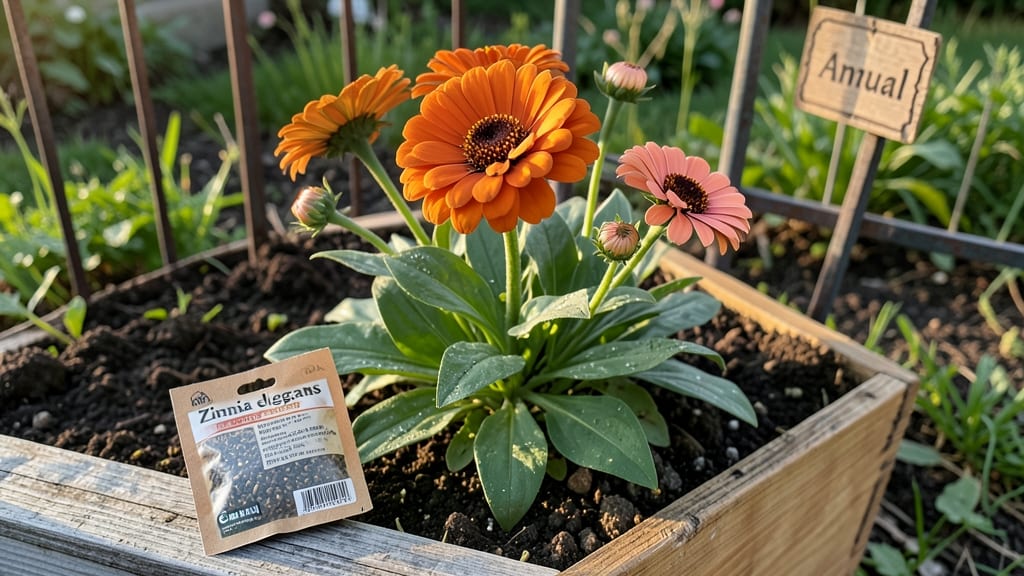
Whether zinnias are annuals or perennials depends on your climate: they're annuals in most regions but can act as perennials in USDA Zones 9-11 where winters rarely drop below freezing. Their lifespan hinges on cold hardiness, not the plant itself.
Most zinnias won't survive freezing temperatures because their tender stems and shallow roots can't withstand frost. 🌱 In colder zones, they complete their life cycle in one season, producing vibrant blooms before dying back.
However, in warmer climates like Southern California or Florida, some varieties naturally regrow each year from their root systems, making them act like perennials.
This difference comes down to biology: zinnias evolved in tropical and subtropical regions, so their survival strategies are adapted to mild winters rather than harsh freezes.
The key to extending their life in colder areas lies in selecting cold-tolerant varieties or using protective growing techniques like containers that can be moved indoors during winter.
💡 In This Article
- Why Zinnias Die in Cold Climates: Freeze Sensitivity Explained
- Extending Zinnia Life: Overwintering Hacks for Cold Zones
Why zinnias die in cold climates: freeze sensitivity explained
Zinnias meet their end in cold climates primarily because their biological structure isn't built for frost. Their stems contain high moisture levels—around 85-90% water content—which freezes and ruptures cell walls at temperatures below 28°F.
This is why you'll see stems blacken and collapse after even light frost, a process called freeze-thaw damage. 🌱 Unlike hardy perennials like coneflowers, which have thick, woody stems and deep taproots, zinnias rely on delicate, fibrous roots that can't penetrate frozen soil.
The real vulnerability lies in their shallow root systems, typically only 12-18 inches deep. When temperatures drop below 32°F, the ground freezes from the surface downward, cutting off the plant's water and nutrient supply.
This triggers a cascade effect: the plant can't photosynthesize (since leaves freeze), can't absorb water (roots are inactive), and eventually dehydrates from within. Even a single night below 30°F can be fatal for most varieties.
What makes this especially tricky is how zinnias respond to temperature changes. Unlike true perennials that enter dormancy, zinnias lack the ability to shut down metabolic processes effectively. Their leaves continue to transpire (lose water) even in cold weather, while their roots can't compensate.
This mismatch between water loss and uptake creates a deadly cycle. 💫 For comparison, consider coneflowers, which can survive -20°F winters—they've evolved to store energy reserves in their roots and produce insulating foliage.
Another critical factor is the timing of frost relative to the plant's life cycle. Zinnias grown from seed take 60-70 days to mature, and if frost hits before they've completed their reproductive cycle (flowering and seed production), the entire plant dies without passing on its genetics.
This is why gardeners in colder zones often treat zinnias as annuals—they simply don't have time to adapt to winter conditions.
The science behind this sensitivity involves the plant's cell membrane composition. Zinnias have high levels of unsaturated fats in their cell membranes, which remain fluid at warm temperatures but become brittle in cold, leading to membrane rupture.
Hardy perennials, by contrast, have membranes rich in saturated fats that maintain flexibility even in freezing conditions. This fundamental difference explains why zinnias thrive in tropical climates but struggle in temperate zones.
Visual clues can help you spot freeze damage early: look for silver-gray or brown discoloration on leaves, which indicates ice crystal formation within the cells. The stems will feel mushy when touched, a sign of internal cell collapse.
If you notice these symptoms, it's already too late to save the plant—prevention through protective measures is your best defense. 🔥