
Flowers
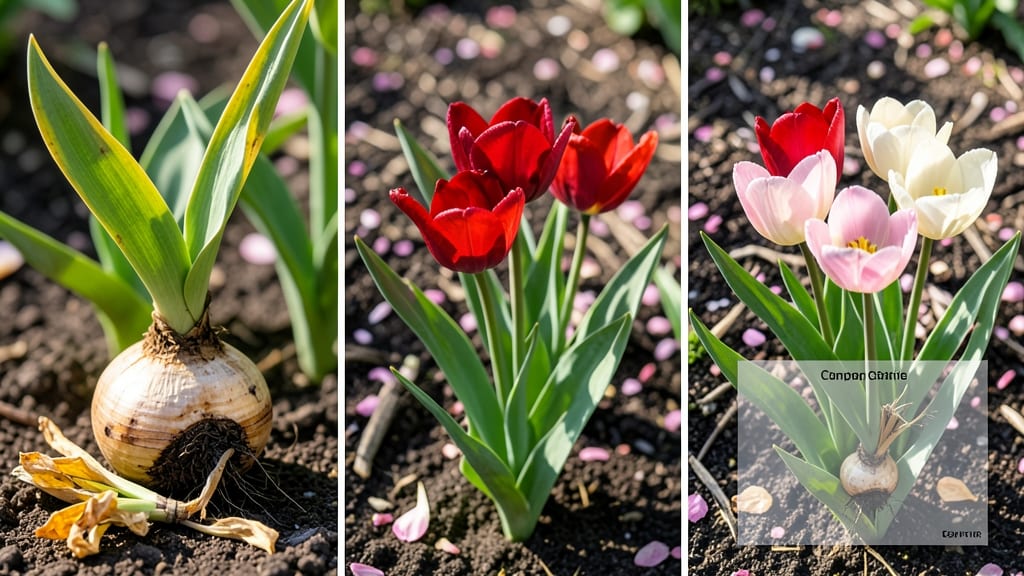
Tulips are perennial plants that regrow each year, but their foliage dies back after blooming, making them appear annual. Proper care—like leaving dead leaves and fertilizing—helps them thrive for multiple seasons in the right climate zones (3-7).
Tulips are actually hardy perennials that store energy in their bulbs underground, allowing them to return year after year. 🌱 The key is understanding their natural cycle—after blooming, the leaves continue photosynthesizing to feed the bulb for next season.
Many gardeners mistakenly remove the foliage too soon, thinking the plant is dead, which weakens the bulb. In warmer climates (zones 8+), tulips may struggle to rebloom reliably, which is why they seem annual in those areas. The secret to long-term success lies in patience and proper post-bloom care.
For best results, wait until the leaves turn completely brown before cutting them back. This ensures the bulb has enough stored energy for next year's growth. I've found that adding a balanced fertilizer in early fall helps strengthen the bulbs, while mulching in winter protects them from extreme cold.
Darwin hybrid tulips tend to be the most reliable perennials, often reblooming for 5-7 years with proper care.
💡 In This Article
- Why Tulips Die Back After Blooming
- How to Extend Tulip Lifespan as a Perennial
Why tulips die back after blooming
Tulips follow a natural biological cycle where their above-ground parts die back after flowering to conserve energy for next year's growth. The real work happens underground: tulip bulbs store carbohydrates and nutrients during the growing season, then rely on the leaves to continue photosynthesizing even after the flowers fade.
This process can take 6-8 weeks—if you cut the leaves too soon, the bulb starves and won't bloom again. 🌱
The misconception that tulips are annuals stems from their dramatic foliage dieback, which can be shocking to gardeners unfamiliar with bulb biology. In reality, these plants are perennials that enter a dormant phase. Cold temperatures (below 50°F) trigger this dormancy, allowing the bulb to rest and recharge.
Warmer climates (zones 8+) disrupt this cycle, as tulips struggle to develop the necessary dormancy period, often resulting in poor reblooming.
Species tulips like Tulipa tarda or Tulipa clusiana naturally die back more gradually compared to hybrid varieties, which may collapse faster post-bloom. The leaves' yellowing and browning indicate they're still working—removing them prematurely cuts off the bulb's food supply.
Think of it like a plant's savings account: the leaves are the last deposit before winter. 💰
Another critical factor is the bulb's energy reserves. A mature tulip bulb contains about 10-15% starch by weight, which fuels both the current year's bloom and next year's growth.
When gardeners prune too aggressively, they're essentially robbing the bulb of its retirement fund. This is why Darwin hybrids—known for their robust bulbs—often outlast other varieties in perennial gardens.
Climate plays a surprising role in this cycle. In colder regions (zones 3-6), tulips naturally experience the required 60-90 days of dormancy each winter. But in milder zones, bulbs may sprout too early or fail to develop proper dormancy, leading to weak or no blooms.
This is why many gardeners in warm climates treat tulips as annuals—they simply don't get the chance to establish themselves as perennials. 🌡️
The key takeaway is that tulips' dieback isn't a sign of death—it's an essential part of their survival strategy. The leaves' continued presence, even when wilted, is nature's way of ensuring the bulb has enough energy to push through the soil again next spring.
This biological adaptation explains why proper post-bloom care can turn a seemingly annual plant into a reliable perennial. 🌿