
Flowers
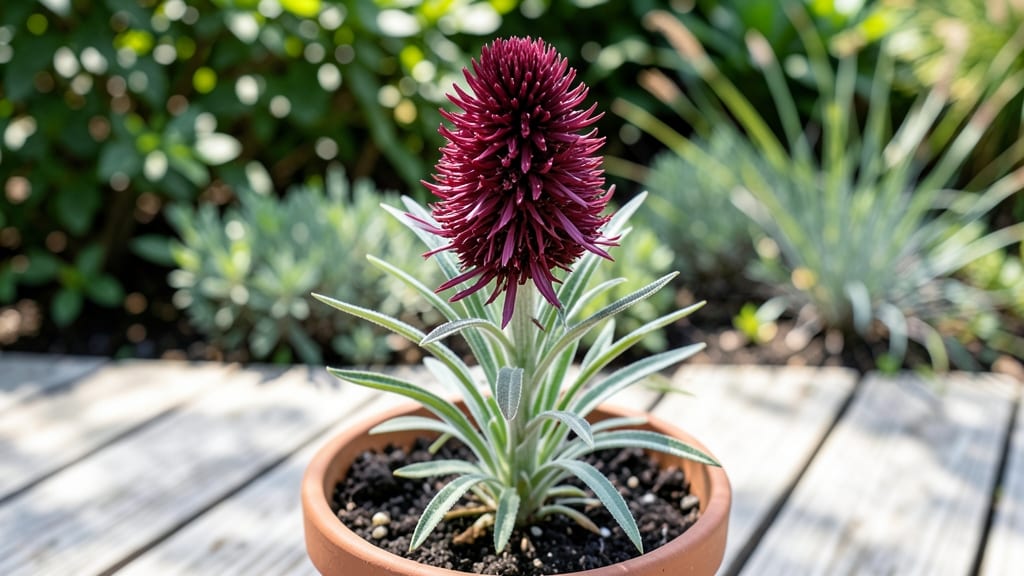
Whether straw flowers are annual or perennial depends on your climate: they typically die back completely each winter in colder regions but may return as short-lived perennials in frost-free areas with consistent warmth.
Straw flowers' growth habits shift dramatically with temperature.
In most U.S. zones, their tops freeze to the ground each winter, forcing them to regenerate from seed—hence their annual classification. 🌱 However, in warmer climates like southern California or Florida, some varieties develop deeper root systems that survive mild winters, allowing them to return year after year.
This explains why gardeners in frost-free regions often see straw flowers behave more like perennials, even though they're technically annuals in cooler areas.
The key difference lies in their dormancy triggers. Cold snaps force annual varieties to reset their lifecycle, while consistent warmth lets perennial types persist. For gardeners in transitional zones, protecting plants with mulch during unexpected freezes can sometimes coax perennial-like behavior—though it's never guaranteed.
💡 In This Article
- Why Straw Flowers Die Back: Climate and Growth Cycle Science
- Extending Straw Flowers’ Lifespan: Tips for Longer Blooms
Why straw flowers die back: climate and growth cycle science
Straw flowers (Helichrysum bracteatum) exhibit dramatic lifecycle shifts due to their sensitivity to temperature extremes. In most temperate climates (USDA zones 8-10), their aerial growth freezes completely during winter, a process called cold-induced dieback.
The plant's meristematic tissues—growth points located at the base—lack sufficient insulation to survive prolonged exposure below 28°F, triggering complete dormancy. This is why they regenerate annually from seed rather than persisting through winter.
The botanical mechanism involves abscission layers forming at the stem base when temperatures drop below 40°F for extended periods. These layers act like biological "snap points," severing the plant's connection to its roots. Meanwhile, the root system often remains viable underground until spring warmth reactivates growth hormones like gibberellins.
In frost-free regions (zones 11+), these abscission layers rarely form, allowing some varieties to maintain above-ground growth year-round.
Light exposure plays a secondary role in their lifecycle. Straw flowers are short-day plants, meaning they flower in response to decreasing daylight hours—typically 12-14 hours of light. When days shorten in autumn, they enter reproductive mode.
In cooler climates, this coincides with frost arrival, forcing their annual cycle. However, in tropical environments, the same light cues trigger flowering without the dieback response, creating the illusion of perennial behavior.
Soil temperature matters just as much as air temperature. Straw flowers' roots require 55-65°F soil temps to remain active. Below 50°F, root metabolism slows dramatically, and the plant enters survival mode.
This explains why even in mild winters, some varieties may appear to die back if soil temperatures drop sufficiently. The deeper the root system (often 12-18 inches), the better its chance of surviving winter in marginal climates.
Interestingly, straw flowers share this temperature-sensitive behavior with other Mediterranean natives like lavender and rosemary. Their survival strategy relies on rapid regeneration from seed rather than persistent growth—a trait that evolved in fire-prone ecosystems where sudden environmental shifts are common.
This explains why gardeners in transitional climates (like zone 9) sometimes see "perennial-like" behavior: the plants may survive mild winters but still require annual reseeding for consistent blooms.
For those in frost-prone areas, understanding this three-phase lifecycle—growth, dormancy, and regeneration—is key to successful cultivation. The plant's ability to reset annually actually makes it more resilient than true perennials in unpredictable climates, as it avoids accumulating weaknesses from year to year.