
Flowers
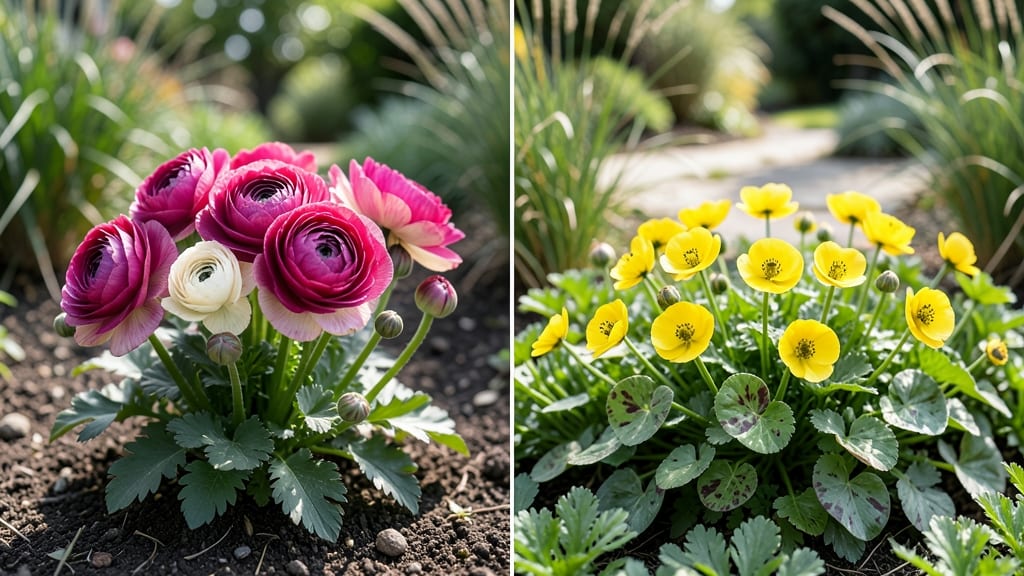
Whether ranunculus are annual or perennial depends on your climate: they're hardy perennials in mild zones but treated as annuals in colder areas where their tubers need winter dormancy to survive.
These delicate blooms thrive as perennials in USDA zones 7-10 where winter temperatures rarely drop below 20°F, allowing their tubers to naturally regenerate each spring. 🌱 In colder climates, gardeners typically replant fresh tubers yearly because the existing ones won't survive freeze-thaw cycles without protection.
The key difference lies in how you handle winter care—mulching heavily in zone 6 or above can sometimes coax perennial behavior, while container growing with lifted tubers works well even in zone 5 if you bring them indoors before frost.
Their growth cycle reveals an interesting adaptation: ranunculus tubers enter dormancy when days shorten and temperatures drop, conserving energy until spring warmth triggers regrowth. This natural rhythm explains why they often bloom so prolifically in their first season—it's their biological strategy for maximizing reproductive success before winter sets in.
💡 In This Article
- Why Ranunculus Tubers Die Back and How Cold Affects Regrowth
- Growing Ranunculus as Perennials: Climate Zones and Care Tips
Why ranunculus tubers die back and how cold affects regrowth
Ranunculus tubers undergo a carefully timed biological process called dormancy, triggered by shortening daylight hours and dropping temperatures. As autumn progresses, the tubers detect these environmental cues through a process called photoperiodism—their growth slows when daylight falls below 12 hours, signaling winter's approach.
This adaptation conserves energy while allowing the plant to survive harsh conditions. The tubers naturally shrivel and retreat underground, entering a state where metabolic activity drops to just 5-10% of normal levels—similar to how a bear's body temperature lowers during hibernation.
The cold itself plays a crucial role in breaking this dormancy. Ranunculus tubers require what's called cold stratification—a period of 4-8 weeks at 35-45°F—to complete their dormancy cycle. This chilling period mimics natural winter conditions and signals the tubers to prepare for regrowth.
Without this cold exposure, the tubers may remain dormant indefinitely or rot if kept too warm. 🌱 What's fascinating is that this process is similar to how many fruit trees need winter chilling to bloom properly—both systems rely on cold to reset their biological clocks.
Moisture retention becomes critical during this phase. The tubers must stay in slightly damp but well-drained soil (around 30-40% moisture content) to prevent dehydration while avoiding waterlogged conditions that cause rot.
In nature, winter rains provide this balance, but gardeners must replicate it by mulching heavily with 3-4 inches of straw or leaves to insulate the tubers. This insulation maintains stable soil temperatures and prevents freeze-thaw cycles that could damage the delicate tuber structure.
What most gardeners don't realize is that ranunculus tubers contain natural antifreeze compounds similar to those in winter wheat. These compounds lower the freezing point of their cellular fluids by 2-4°F, allowing them to survive brief cold snaps.
However, prolonged exposure to temperatures below 20°F will kill the tubers, which explains why they're typically grown as annuals in colder climates. The trade-off is that this cold tolerance also makes them surprisingly resilient in mild winters.
Here's what happens when you try to force regrowth without proper cold treatment: the tubers may sprout weak, leggy stems that quickly collapse—this is called vernalization failure. It's like trying to wake someone from hibernation too early; their systems aren't ready.
The solution is patience: in warmer climates where winters are mild, the tubers often regenerate naturally, while in colder regions, gardeners must either plant fresh tubers each year or create artificial cold stratification conditions.
The science behind this involves a hormone called abscisic acid, which accumulates in the tubers during cold periods. This hormone acts like a natural brake pedal, preventing premature growth until conditions are favorable.
When spring temperatures rise above 50°F consistently, the hormone levels drop and the tubers resume active growth—typically within 2-3 weeks of proper conditions being met. This hormonal response explains why ranunculus often bloom so spectacularly in their first season—they're making up for lost time after winter's dormancy.