
Flowers
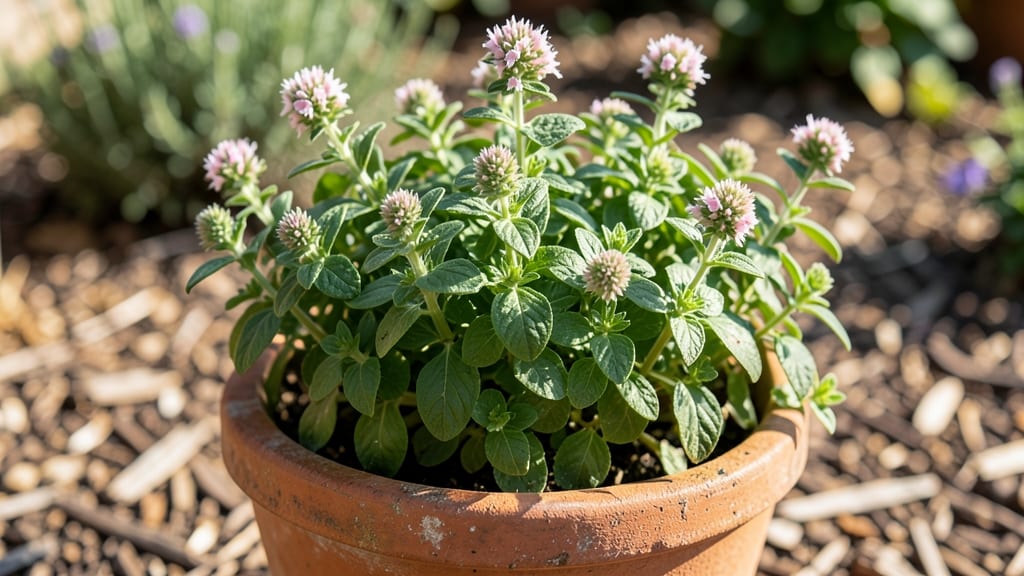
Italian oregano is a perennial in warm climates but behaves as a tender perennial in cold regions, dying back to the ground each winter and regrowing from its roots when temperatures rise above freezing.
This herb thrives as a true perennial in zones 7-10, where it can survive winter's chill without protection. 🌱 In colder regions, its above-ground growth freezes but the root system remains dormant until spring warmth triggers regrowth.
Unlike hardy oregano varieties, Italian oregano's delicate stems can't withstand prolonged freezing, which is why gardeners in northern climates must take extra care during winter months.
What sets Italian oregano apart is its resilience once temperatures climb back above 40°F. The roots store enough energy to fuel rapid regrowth, often producing even more vigorous plants than the previous year. This makes it a rewarding herb to grow, despite its tender nature in colder zones.
💡 In This Article
- Why Italian Oregano Dies Back in Winter
- How to Overwinter Italian Oregano in Cold Climates
Why Italian oregano dies back in winter
Italian oregano (Origanum vulgare subsp. hirtum) is classified as a tender perennial because its above-ground growth freezes when exposed to prolonged temperatures below 20°F.
This dieback occurs because the plant's delicate stems lack the protective bark layers found in hardy perennials like lavender or rosemary. 🌿 The herb's native Mediterranean climate—with mild winters and hot, dry summers—means it evolved without needing frost resistance, unlike its hardier cousins adapted to colder regions.
In USDA hardiness zones 7-10, Italian oregano thrives as a true perennial, surviving winters with minimal protection. However, in zones 6 and below, the roots must endure freezing soil temperatures (as low as 10°F in some cases).
The key to its survival lies in the crown, where the stem meets the root. While the stems die back, this junction contains dormant buds that remain protected by the soil's insulating properties and the plant's stored energy reserves.
The plant's woody root system acts like a biological battery, storing carbohydrates produced during the growing season. These reserves fuel regrowth when temperatures rise above 40°F in spring.
Without this stored energy, the plant couldn't bounce back—making proper winter care critical for gardeners in colder climates. 💫 The process mirrors how tender perennials like dahlias or cannas survive winter, though Italian oregano's roots are less robust than these deep-rooted plants.
What makes Italian oregano unique is its rapid regrowth once winter ends. Unlike slow-to-emerge perennials, it often sends up new shoots within 2-3 weeks of consistent warmth, sometimes even before the last frost.
This speed is due to its shallow but extensive root network, which quickly absorbs moisture and nutrients when conditions improve. However, this vigor depends entirely on the roots' survival—if they freeze solid, the entire plant is lost.
Gardeners in marginal zones (like zone 6b) can push the plant's limits by using protective mulching (adding 4-6 inches of straw or leaves) to shield the crown from extreme cold. The mulch creates an insulating layer that can raise soil temperatures by 5-10°F, often enough to prevent root damage.
Without this protection, the roots may suffer cold injury, leading to stunted or delayed regrowth the following spring.
Interestingly, Italian oregano's winter dieback isn't a sign of weakness—it's an adaptive survival strategy. In its native habitat, the plant experiences dormancy during dry summers, not cold winters.
This means its biological clock is tuned to temperature cues rather than photoperiod (day length), which is why it responds so dramatically to spring warmth. The contrast between its Mediterranean origins and northern climates explains why it behaves like a seasonal herb in colder regions.