
Watering
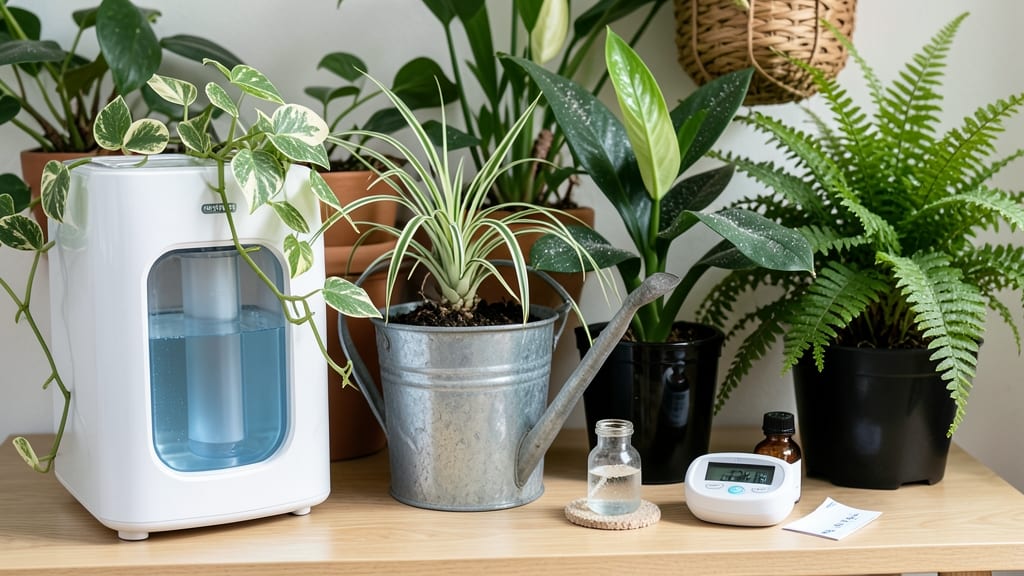
Dehumidifier water is good for plants in moderation, as it contains no chlorine or added minerals but may hold airborne contaminants like dust or mold spores. Use it sparingly and avoid overwatering to prevent root rot or fungal issues.
This water type is actually quite safe for most houseplants because it lacks the harsh chemicals found in tap water. 🌱 The real concern comes from potential contaminants picked up as the air passes through the dehumidifier—think dust particles or even mold spores from humid air.
I've found that using it occasionally for watering works fine, but I always dilute it with filtered water (about 1:1 ratio) for extra safety, especially with sensitive plants like ferns or orchids.
What's interesting is how plants actually respond to this water: the lack of minerals means it won't build up salts in your soil over time, which is great for preventing crusty soil surfaces.
However, the absence of nutrients means you'll need to fertilize regularly if using this as your primary water source. For container plants, I recommend using dehumidifier water no more than 20% of the time to maintain proper nutrient balance.
💡 In This Article
- Chemical Composition of Dehumidifier Water and Plant Safety
- Best Practices for Watering Plants with Dehumidifier Water
Chemical composition of dehumidifier water and plant safety
Dehumidifier water stands out from tap water because it's essentially condensed atmospheric moisture, meaning it contains almost no dissolved minerals like calcium or magnesium that accumulate in tap water over time.
This lack of minerals makes it a gentler option for plants with sensitive root systems, like African violets or calatheas, which can suffer from mineral buildup causing brown leaf tips.
The absence of chlorine is another plus—unlike tap water that often requires waiting 24 hours after chlorination before using, dehumidifier water is immediately plant-safe in this regard.
However, what makes this water unique is its potential cargo of airborne contaminants. As air passes through the dehumidifier's coils, it collects microscopic particles like dust, pollen, and even mold spores from humid environments.
Studies show indoor air can contain up to 10,000 particles per cubic foot in dusty conditions, which get trapped in the collected water.
These contaminants don't harm plants directly but can create a breeding ground for bacteria if left stagnant in the dehumidifier tank—always empty and clean your unit regularly to prevent this. 🌿 The water's neutral pH (around 6.5-7.5) also means it won't acidify your soil like distilled water might over time.
Plants absorb water through osmosis, where water molecules move from higher concentration (the soil) to lower concentration (the plant roots). Dehumidifier water's purity means it moves more efficiently through this process compared to mineral-heavy tap water, which can create osmotic pressure imbalances.
This is why many hydroponic systems actually use reverse osmosis water (similar in purity) for optimal nutrient uptake. The trade-off? Without minerals, your plants rely entirely on whatever you add through fertilizers—so if using this water exclusively, supplement with liquid fertilizer every 4-6 weeks for container plants.
Consider the plant type when evaluating safety. Succulents and cacti, which store water in their tissues, handle dehumidifier water exceptionally well because their natural drought tolerance minimizes contamination risks.
On the other hand, tropical plants like peace lilies or philodendrons have more delicate root systems that may react poorly to any airborne contaminants—these are better suited for filtered or rainwater.
The key factor here is understanding that while dehumidifier water is safer than chlorinated tap water, it's not sterile water, and its quality depends entirely on your indoor air conditions.
For visual learners, imagine this: tap water is like a mineral-rich soup, while dehumidifier water is more like distilled water—clear and clean but lacking flavor. Plants don't need the "flavor" (minerals) but do need proper hydration and nutrient balance.
The science shows that most houseplants can tolerate up to 30% of their water supply coming from dehumidifier sources without noticeable harm, provided you're vigilant about maintaining clean water collection practices. This makes it an excellent supplementary water source when combined with other options.