
Aphids
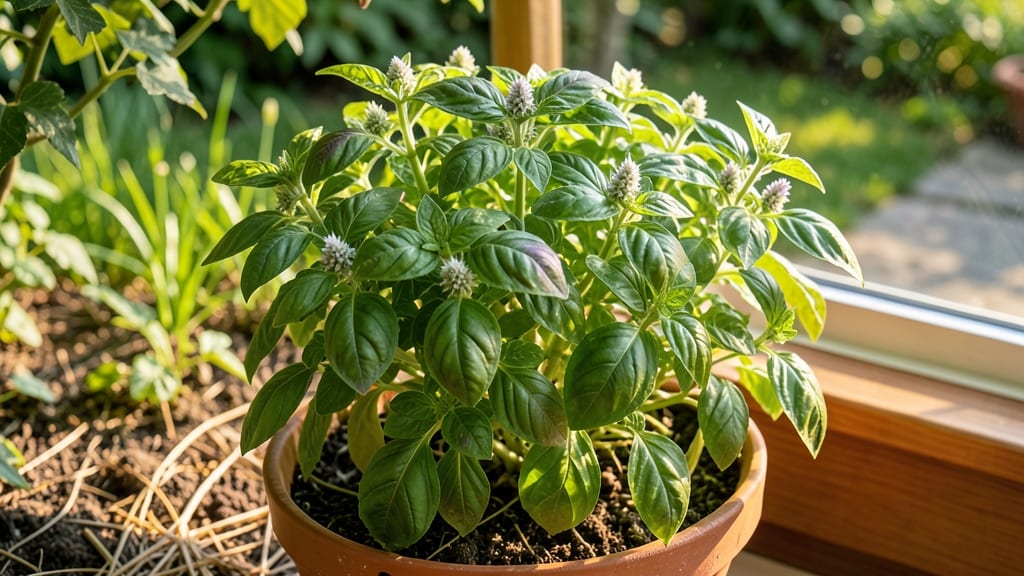
Basil is not a true perennial in most climates, as it dies back with frost but can regrow from seeds or cuttings in warmer zones (USDA 9-11). In colder regions, it’s grown as an annual, while tropical climates may allow it to persist year-round with protection.
Basil's classification as a perennial depends entirely on your climate zone. 🌱 In temperate regions like much of the U.S., frost kills the plant's tender stems, but the roots may survive underground—though they rarely regrow reliably.
This cold sensitivity is why gardeners in zones 2-8 treat basil as an annual, replanting fresh seeds each spring. However, in frost-free areas (USDA 9-11), basil can thrive continuously, producing new growth from the same root system or even self-seeding.
The key difference lies in temperature tolerance: basil's ideal range is 70-80°F, and any prolonged exposure to freezing temps shuts down its growth cycle completely.
What makes this interesting is how gardeners in marginal zones hack the system. Many successfully overwinter basil by bringing potted plants indoors before the first frost, while others use cold frames or mulch heavily to protect root systems.
These methods exploit basil's ability to enter dormancy—similar to how some perennials survive winter—though it never achieves the same hardiness as true perennials like rosemary or thyme.
💡 In This Article
- How Basil’s Growth Cycle Works in Different Climates
- Year-Round Basil Care: Extending Its Life in Cold Climates
How basil’s growth cycle works in different climates
Basil’s behavior as an annual or perennial hinges on its native tropical origins and extreme cold sensitivity. This herb thrives in temperatures between 70-80°F, with growth slowing below 50°F and ceasing entirely when exposed to 32°F or lower.
The plant’s stems contain 50-70% water, which freezes and ruptures cell walls during frost, causing irreversible damage. Unlike hardy perennials (such as rosemary or oregano), basil lacks the biochemical adaptations—like antifreeze proteins or deep root systems—to survive freezing temperatures. 🌡️
The USDA climate zones directly dictate basil’s survival potential. In zones 2-8, where winter temperatures dip below 20°F, basil behaves as an annual because the roots rarely survive long-term exposure to frost. However, in zones 9-11, where winters stay above 30°F, basil can persist year-round.
Here, the plant enters a dormant state during mild winters, resuming growth when temperatures rise again. This dormancy isn’t true hibernation like woody perennials but rather a slowed metabolic state triggered by shorter daylight and cooler temps.
What’s fascinating is how basil’s seed germination ties into its perennial potential. In frost-free climates, basil often self-seeds prolifically, creating new plants from dropped seeds the following season. This natural regeneration mimics perennial behavior, even though the original plant dies back.
The seeds themselves are cold-sensitive, requiring soil temperatures above 60°F to germinate—another reason they struggle in colder regions. 🌱
Botanically, basil’s classification as a "tender perennial" reflects its intermediate status. While it doesn’t survive harsh winters like true perennials, it can regrow from cuttings or seeds in favorable conditions. This makes it a "short-lived perennial" in ideal climates, where it may produce multiple harvests over 2-3 years before declining.
The key difference from annuals is its ability to regenerate from living tissue (roots or cuttings) rather than requiring complete replanting each season.
Comparing basil to other herbs highlights its unique cold sensitivity. Rosemary, for example, survives down to 15°F thanks to its woody stems and resinous compounds that protect tissues. Basil, with its soft, herbaceous growth, simply can’t compete.
Even in protected microclimates, basil’s growth resumes only when daytime temperatures consistently exceed 55°F, making early spring or late fall regrowth unpredictable in colder zones. 🌿