
Companion Plants
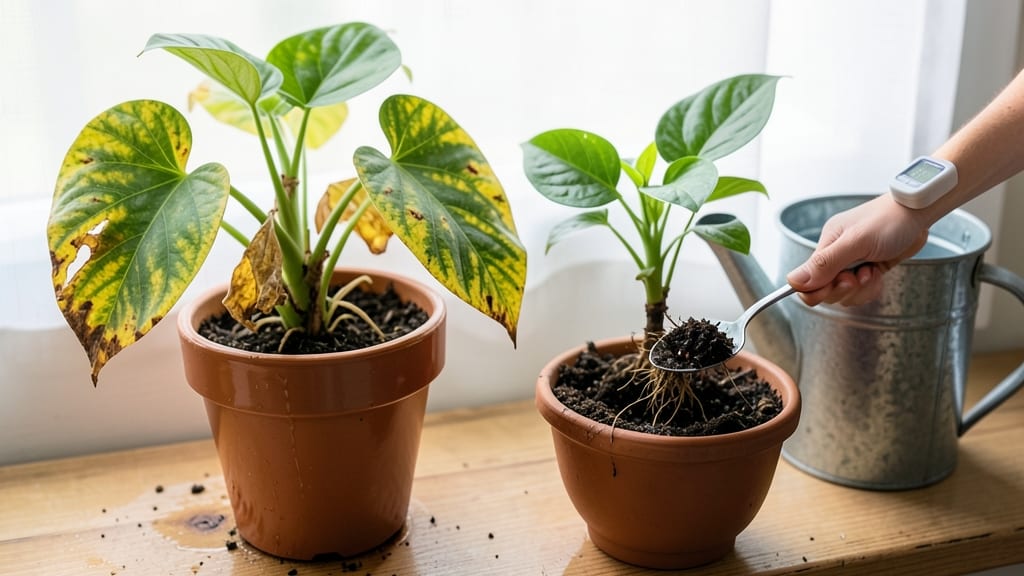
Knowing if a plant is overwatered starts with checking for yellowing leaves, limp stems, or foul-smelling soil, and testing soil moisture—if the top inch stays damp after 24 hours, cut back on watering immediately. Drooping despite saturated soil signals root suffocation.
Overwatering often sneaks up because plants can't tell you they're drowning. 💧 The most obvious clues are leaves turning yellow or brown at the edges while the center stays green—a classic sign of oxygen deprivation in the roots.
I've seen even experienced gardeners overlook the subtle difference between thirsty wilting and waterlogged collapse, which is why I always check soil moisture before watering again. Moldy soil or a sour smell means bacteria are thriving in waterlogged conditions, creating an unhealthy environment for roots.
For container plants, weight matters too—lift the pot and feel how much it weighs. A soggy pot is a red flag. 🌱 Different plants need different care: succulents need bone-dry soil between waterings, while ferns thrive in consistently moist conditions.
The key is matching your watering schedule to your plant's natural habitat and container size.
💡 In This Article
- 5 Visual Signs Your Houseplant Is Drowning
- The Right Way to Test Soil Moisture for Overwatered Plants
5 Visual signs your houseplant is drowning
When plants get too much water, their leaves send distress signals before roots actually rot.
The first clue is leaf yellowing, especially if it starts at the edges and spreads inward—this happens because oxygen deprivation in waterlogged soil prevents roots from absorbing nutrients properly. 🌿 Think of it like a human suffocating underwater: the plant can't breathe, so it starts breaking down its own tissues for energy.
Another red flag is brown, crispy leaf tips, which often appear when excess salts from tap water accumulate in the soil.
Check the stem texture next—healthy stems feel firm, but overwatered ones become mushy or hollow when pressed. This occurs because the plant's cells absorb too much water, bursting their membranes in a process called cytoplasmic swelling.
You might also spot black spots or mold on the soil surface, which indicates fungal growth thriving in consistently damp conditions. These fungi compete with your plant's roots for nutrients, further weakening it.
Root rot is the most severe symptom, and you can often detect it early by lifting the plant gently—healthy roots smell earthy, while rotting roots emit a sour, rotten odor similar to wet cardboard. 🌱 The roots themselves turn from white to brown or black and feel slimy to the touch.
This happens because anaerobic bacteria (which thrive without oxygen) break down root tissues, creating a perfect storm of decay. Even if your plant looks fine above ground, these underground clues reveal the real problem.
Don't overlook leaf drop as a warning sign—sudden leaf loss often means the plant is struggling to maintain its structure due to nutrient deficiencies caused by poor root function.
Some plants, like peace lilies, may also develop drooping despite wet soil, which is their way of signaling they can't absorb enough water because their roots are suffocating. This is the opposite of wilting from thirst, where leaves feel dry and crispy.
For container plants, examine the drainage holes—if water pools there after watering, your plant is at high risk. Without proper drainage, excess water sits at the bottom of the pot, creating an oxygen-free zone where roots can't survive.
Even plants that prefer moist soil, like ferns, will show stress if their roots stay submerged for more than 48 hours. The key is observing these visual cues before the damage becomes irreversible.
One often-missed sign is stunted growth—when a plant stops producing new leaves or flowers despite having enough light and nutrients.
This happens because the energy that should go toward growth is instead used to repair damaged roots. 💡 Pay attention to these subtle changes, as they often appear before more obvious symptoms like leaf drop. Regularly inspecting both the leaves and roots gives you the earliest warning system for overwatering.