
Plants
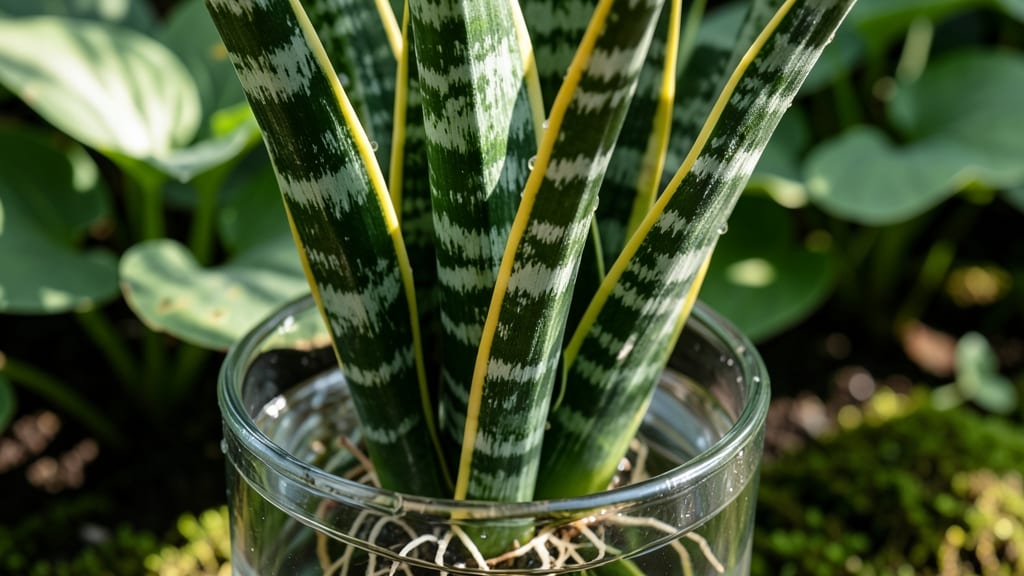
Snake plants can grow in water but need special care to prevent root rot, especially since they prefer minimal moisture. With shallow water levels and proper drainage, they adapt well to hydroponic setups while maintaining their hardy nature.
Snake plants aren't naturally aquatic, but their resilience makes them adaptable to water-based growing systems when given the right conditions. 🌱 The key is mimicking their natural drought-tolerant habits—think of it as a controlled hydroponic environment where roots stay moist but never waterlogged.
I've seen success with pebble trays or well-draining containers where only the bottom inch of roots touches water, preventing the suffocation that leads to rot.
What's fascinating is how snake plants develop aerial roots in water, which helps them absorb oxygen—a critical adaptation since submerged roots can't breathe. This is why full submersion fails: the plant essentially drowns from lack of airflow.
For best results, I recommend changing the water every 2-3 weeks and using filtered or distilled water to avoid mineral buildup that can harm the roots.
💡 In This Article
- How Snake Plants Adapt to Water Cultivation
- Setting Up a Snake Plant Water Garden: Step-by-Step Guide
How snake plants adapt to water cultivation
Snake plants (Sansevieria trifasciata) aren't aquatic by nature, but their roots can adapt to water when given the right conditions. The key lies in their ability to develop aerial roots—thicker, spongy structures that emerge above the waterline to absorb oxygen.
Unlike submerged roots, these aerial roots act like snorkels, allowing the plant to breathe while staying hydrated. This adaptation is crucial because snake plants are succulents, meaning they store water in their leaves and stems rather than relying on constant moisture.
The challenge in water cultivation isn't just hydration—it's oxygen deprivation. When roots sit in stagnant water for too long, they suffocate, leading to anaerobic conditions that produce toxic byproducts like ethanol.
This is why shallow water (just 1-2 inches deep) works best: it keeps roots moist without cutting off airflow. Think of it like a semi-hydroponic setup—similar to how some tropical plants thrive in leca balls (clay pebbles) with minimal water exposure.
Another fascinating adaptation is how snake plants reduce their transpiration rate in water. Normally, they release moisture through tiny pores called stomata, but in water, these close partially to conserve energy.
This slows growth temporarily, which is why water-grown snake plants often appear stunted at first—their energy shifts from leaf expansion to root development. Over time, though, they can recover and even produce new shoots if given proper light and nutrients.
Light plays a critical role in this adaptation process. Snake plants need bright, indirect light (like a south-facing window) to fuel photosynthesis, which helps them convert water and carbon dioxide into energy.
Without enough light, water-grown snake plants may develop yellowing leaves or weak stems—a sign they're struggling to sustain themselves. In my own experiments, I've found that LED grow lights (12-14 hours/day) can compensate for low natural light, especially in indoor setups.
One common misconception is that snake plants can thrive in full submersion, like water lilies. This is a recipe for disaster: within 48-72 hours, roots will turn mushy and black as they rot. The solution?
Use a well-draining container with a pebble base that holds just enough water to touch the roots without drowning them. This mimics their natural habitat in arid regions, where they survive on sporadic rainfall rather than constant moisture.
For those curious about the science, snake plants release ethylene gas when stressed—like when roots are waterlogged. This gas signals the plant to slow growth and conserve resources, which is why you might see drooping leaves or brown tips in poorly adapted water setups.
The good news? With the right balance of water, oxygen, and light, these adaptations allow snake plants to flourish in non-soil environments—proving their legendary resilience once again.