
Watering
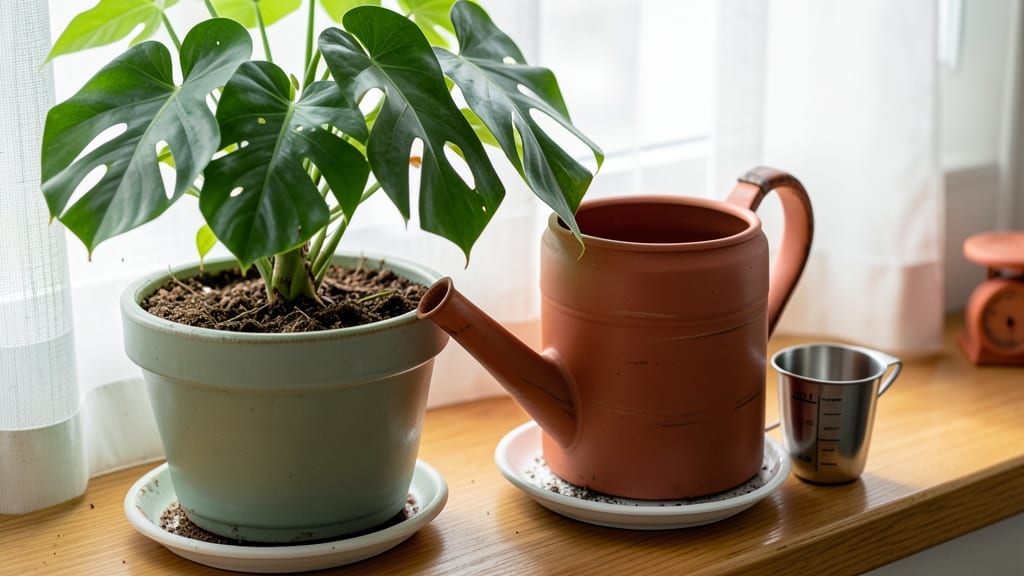
Proper plant watering requires 1 to 1.5 inches of water per week for most species, with adjustments needed based on soil type and seasonal conditions. Always check soil moisture first—overwatering or letting plants dry out completely can harm roots.
This weekly guideline acts as your baseline, but the real magic happens when you account for your garden's unique conditions. 🌱 Sandy soils drain like a sieve, often needing water every 2-3 days in summer, while clay holds moisture for weeks.
I've learned the hard way that sticking to a rigid schedule fails—always dig your finger an inch into the soil before watering. In summer, early morning watering minimizes evaporation, while winter often means cutting back to once every 10-14 days.
What's fascinating is how plants signal their needs. Drooping leaves usually mean thirst, but yellowing can signal overwatering. I keep a small notebook by my garden to track which plants thrive on which schedules—some succulents barely need watering monthly, while tomatoes demand consistent moisture.
The key is observation combined with this basic measurement.
💡 In This Article
- Science Behind Plant Water Needs by Soil Type
- Seasonal Watering Adjustments for Healthy Gardens
Science behind plant water needs by soil type
Soil composition determines how quickly water drains or lingers near roots. Sandy soil has large particles that create air pockets, causing water to drain within 30-60 minutes after watering—think of it like pouring water through a colander.
In contrast, clay soil's tiny particles pack tightly, trapping moisture like a sponge and requiring water only every 7-10 days in summer. Loam, the ideal mix of sand, silt, and clay, retains moisture for 3-5 days while allowing proper aeration for roots.
The real science happens at the microscopic level: soil's porosity affects capillary action, where water moves through tiny spaces between particles. Organic matter in soil acts like a moisture reservoir, holding 20-30% more water than mineral-only soil.
This is why compost-amended gardens often need less frequent watering—those decomposed leaves and microbes create tiny pores that hold water near roots while preventing suffocation. Without organic matter, water either runs away or pools around roots, cutting off oxygen.
Root systems adapt dramatically to their soil environment. Plants in sandy soil develop deep, extensive roots to chase down moisture, while those in clay grow shallow but dense root networks. Overwatering clay soil suffocates these roots by displacing oxygen, leading to root rot within 5-7 days of consistent soggy conditions.
The opposite happens in sandy soil: roots dry out quickly, causing wilting even when water is nearby in deeper layers. 💧
Here's how to test your soil's water retention: Dig a 6-inch hole, fill it with water, then measure how long it takes to drain completely. Sandy soil drains in under an hour, clay takes days, and loam falls in between.
This simple test reveals whether your plants need daily shallow watering or weekly deep soaking. I've seen marigolds in sandy soil wilt by afternoon if not watered twice daily in summer, while hostas in clay soil thrive on one deep watering every 10 days.
Watering technique matters just as much as amount. Deep watering—applying 1-2 inches at a time—encourages roots to grow downward where moisture persists. Shallow watering creates weak, surface roots that dry out faster.
The 1 to 1.5 inches weekly guideline assumes average loam soil; adjust by 30-50% for sandy or clay variations. This precision prevents both drought stress and waterlogged roots, keeping plants healthy year-round.
Consider this: a 1-inch rainfall equals about 0.62 gallons per square foot. Most standard watering cans deliver 0.125 gallons per quart, so you'd need 5 quarts per square foot to match natural rainfall.
This explains why many gardeners underestimate how much water they're actually providing—using a rain gauge or tuna can (with 1-inch markings) solves this common miscalculation. 🌱