
Watering
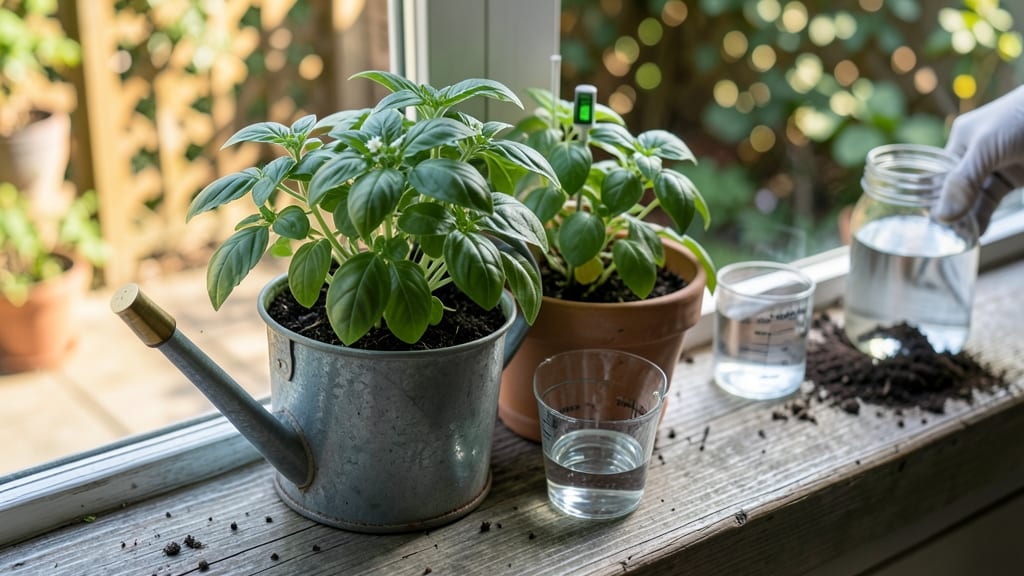
To determine how do you know how much water to give a plant, check soil moisture by inserting your finger 1-2 inches deep—if the soil feels dry, water until it drains freely from the bottom. If it's still damp after 1-2 days, wait before watering again. Most plants suffer more from excess moisture than from too little.
This simple finger test works because plant roots need oxygen to breathe—waterlogged soil cuts off airflow, suffocating them. 🌱 Different plants thrive at different moisture levels, so always check before watering. For example, succulents need bone-dry soil between waterings, while ferns prefer consistently moist conditions.
The key is observing your plant's response: yellowing leaves often signal overwatering, while crispy edges point to thirst.
Remember that factors like pot size, drainage, and seasonal heat affect how quickly soil dries. I've learned the hard way that container plants dry out faster than those in garden beds, so I adjust my watering frequency accordingly.
Always err on the side of underwatering—most plants bounce back faster from a little drought than from soggy roots.
💡 In This Article
- The Science Behind Soil Moisture and Root Health
- Plant-Specific Watering Schedules by Type
The science behind soil moisture and root health
Plant roots rely on oxygen for respiration, and this process becomes impossible when soil pores fill with water. When you water, the top inch of soil dries fastest, but deeper layers hold moisture longer.
That's why checking 1-2 inches deep with your finger gives the most accurate picture of what roots are experiencing. Clay soils retain moisture tightly, while sandy soils drain quickly—this means succulents in sandy mixes may need water every 2 weeks, while tropicals in clay pots might need weekly checks.
The danger of overwatering lies in how quickly roots suffocate. Without oxygen, roots can't absorb nutrients or transport water to leaves, leading to yellowing foliage and root rot within 3-5 days of constant moisture.
Even plants labeled "low-water" like snake plants will show stress if left in soggy soil. The key is balance: aim for soil that feels like a damp sponge—not dripping wet or completely dry. 💧
Different soil types behave dramatically differently. Sandy soil drains in 30 minutes after watering, while clay holds moisture for 5-7 days. Loam—the ideal garden soil—strikes a balance, drying to the touch in 2-3 days.
This is why container plants often need more frequent watering than in-ground ones: their limited soil volume dries out faster. Always check the soil before watering, especially in pots without drainage holes where roots can't escape excess moisture.
Visual cues help distinguish between underwatering and overwatering. Wilting leaves with crispy edges signal thirst, while yellowing leaves that stay soft indicate overwatering. Another telltale sign: mold or fungus growth on soil surfaces.
For container plants, lift the pot—if it feels light, roots likely need water; if heavy, wait another day. The weight difference comes from how much moisture the soil holds, giving you instant feedback.
Seasonal changes dramatically affect watering needs. During summer heat, soil dries 30-50% faster than in spring or fall, while winter dormancy means many plants need half the water. Even humidity plays a role: plants in dry indoor air may need watering 2-3 days sooner than those in a greenhouse.
Pay attention to your environment—your plants' needs change with the seasons, just like ours do.
Here's what's actually happening at the cellular level: when roots sense dryness, they release hormones that trigger wilting as a survival mechanism. This is your plant's way of saying "I need help!"
Conversely, waterlogged roots can't perform photosynthesis efficiently, leading to stunted growth. The solution? Check soil moisture before watering—it's the single best way to prevent both extremes.