
Blooming
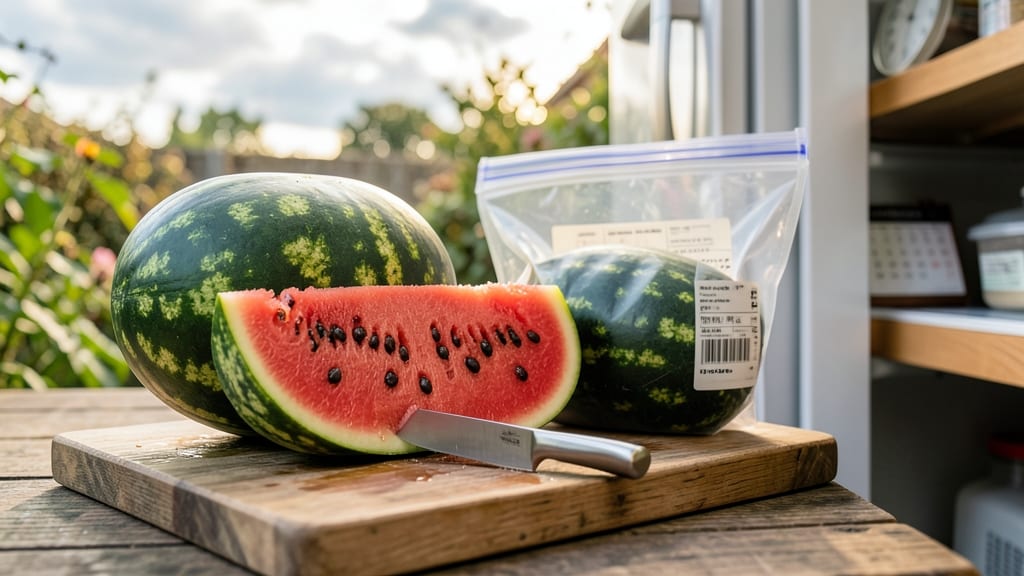
Watermelons stay fresh for 7–10 days whole at room temperature, but once cut, their flesh lasts 2–4 days on the cutting board and 5–7 days refrigerated if sealed properly. Rind storage differs from edible pulp.
Understanding how long watermelons last depends on whether you're storing the whole fruit or cut pieces.
Whole watermelons rely on their tough rind to protect against moisture loss and microbial invasion, which is why they last nearly twice as long as sliced fruit. 🌱 Once cut, the exposed flesh oxidizes quickly, so refrigeration becomes essential to slow bacterial growth.
I've found that wrapping cut watermelons in plastic wrap or storing them in airtight containers significantly extends their lifespan by reducing air exposure. The rind itself can last even longer—up to 2 weeks—if kept in a cool, dry place away from direct sunlight.
For maximum freshness, place whole watermelons in a well-ventilated area like a pantry or fruit bowl, while cut pieces should go in the fridge's crisper drawer. If you notice the rind becoming soft or the flesh developing a slimy texture, it's time to compost—these are clear signs of spoilage.
Pro tip: Freezing watermelon pulp in ice cube trays works great for smoothies, but the texture changes dramatically after thawing.
💡 In This Article
- Watermelon Storage Science: Why Whole vs Cut Melons Spoil Differently
- Maximizing Watermelon Freshness: Best Practices for Whole and Cut Fruit
Watermelon storage science: why whole vs cut melons spoil differently
Watermelon freshness hinges on two key biological factors: its thick rind and high water content (about 92%). The rind acts as a natural barrier against moisture loss and microbial invasion, which is why whole watermelons can last 7–10 days at room temperature.
Inside, the flesh contains enzymes like polyphenol oxidase that accelerate browning when exposed to air—a process called oxidation. Cutting a watermelon exposes these enzymes to oxygen, triggering that familiar grayish discoloration within 30 minutes if left unprotected.
The science gets even more interesting when you consider humidity and temperature. Whole watermelons lose moisture through their rind, but the rate slows dramatically in 50–60% humidity—ideal conditions for preserving their firmness.
Cut watermelons, however, face a different challenge: their surface area increases by 500–1,000% once sliced, making them vulnerable to bacterial growth. At room temperature, these microbes multiply rapidly, cutting shelf life to just 2–4 days.
Refrigeration (34–38°F) slows this process by 70%, which is why sealed cut watermelons last 5–7 days.
Another critical factor is ethylene gas—a natural plant hormone that speeds up ripening and spoilage. Whole watermelons produce minimal ethylene, but cut pieces release it more aggressively, accelerating decay. This is why storing cut watermelons in airtight containers with a paper towel (to absorb excess moisture) works so well.
The paper towel maintains humidity while reducing ethylene buildup, creating an ideal microclimate for preservation.
Texture changes also reveal spoilage progression. A whole watermelon’s rind should remain firm and slightly waxy—if it feels soft or develops mold spots, it’s past its prime. Cut watermelon flesh starts with a crisp, juicy bite but becomes mushy as pectin (the compound that gives it structure) breaks down.
The smell is your best indicator: fresh watermelon has a sweet, clean aroma, while spoiled pieces emit a sour or fermented odor. 🌿 These sensory cues are your early warning system before visible mold appears.
For those who love watermelon but hate waste, understanding these mechanisms helps extend freshness. For example, storing whole watermelons in a cool, dark pantry (not the fridge) preserves their natural sugars longer, while cutting them into cubes and freezing in 1-cup portions prevents freezer burn.
The key takeaway? Whole watermelons rely on their protective rind, while cut pieces need refrigeration and sealing to combat oxidation and microbial growth.
Here’s a quick comparison to solidify the science:
- Whole Watermelon: Rind blocks moisture loss; enzymes stay dormant; lasts 7–10 days at room temp
- Cut Watermelon: Exposed flesh oxidizes; bacteria thrive; lasts 2–4 days unrefrigerated, 5–7 days refrigerated
- Freezing: Pulp loses texture but retains flavor; ideal for smoothies or cooked dishes