
Watering
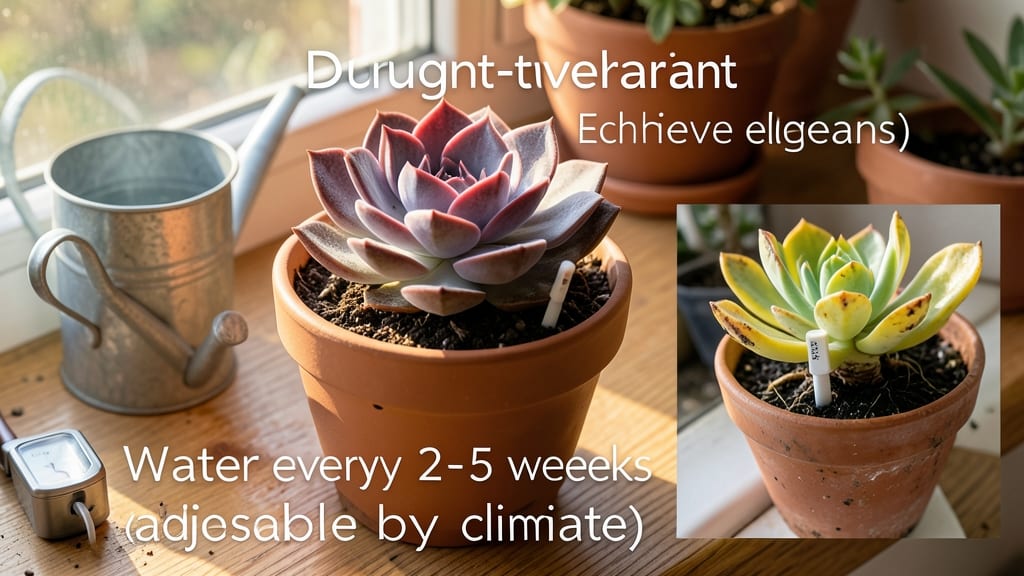
Plants can survive without water for 2 to 14 days, depending on species, soil moisture, and environmental conditions. Succulents may last weeks, while tropical plants wilt within days. Monitor wilting, dry soil, and leaf drop for early signs of distress.
How long your plants can last without water depends entirely on their natural resilience and growing conditions. 🌱 For instance, desert-adapted cacti can stretch their hydration for months thanks to thick, water-storing stems, while ferns or calatheas might show irreversible damage after just 3-5 days.
Even within the same category—like herbs—rosemary often outlasts basil by a full week because its needle-like leaves reduce moisture loss. The key factor is root structure: deep-rooted perennials tap into underground reserves, while shallow-rooted annuals dry out faster.
What I’ve learned from years of gardening is that environmental factors play an even bigger role than the plant type itself.
A humid climate with shady conditions can extend survival by 30-50% compared to hot, dry air, while potted plants dehydrate twice as fast as in-ground ones because their roots can’t spread.
That’s why I always check soil moisture with my finger before watering—top inch dry is the golden rule for most gardeners.
💡 In This Article
- Plant Survival Times Without Water by Type
- Signs Your Plants Need Water Before Permanent Damage
Plant survival times without water by type
At the cellular level, a plant's ability to withstand drought depends on how it stores and conserves water. Succulents like aloe vera or snake plants have specialized parenchyma cells that act as water reservoirs, allowing them to survive 4-8 weeks without water in ideal conditions.
These plants have evolved thick, waxy cuticles that reduce evaporation by up to 90% compared to leafy vegetables. 🌵 The trade-off? Their slow metabolism means growth nearly halts during droughts, but their roots remain viable for months.
Herbs offer a fascinating middle ground. Rosemary, with its needle-like leaves and deep taproot, can endure 10-14 days without water, while basil—with broad leaves and shallow roots—typically lasts only 3-5 days.
The difference lies in leaf surface area: rosemary's leaves have 30% less exposed surface than basil's, dramatically reducing moisture loss. Even within the same family, like mint varieties, the survival window varies by 50% depending on whether the species is native to Mediterranean climates (hardier) or tropical regions (more delicate).
Tropical plants represent the opposite extreme. Philodendrons and ferns, accustomed to high humidity, show wilting after just 2-3 days without water because their thin leaves can't store moisture. The real damage happens at the root level: cells begin to collapse within 48 hours when soil moisture drops below 30%.
What's surprising is how quickly recovery becomes impossible—once leaves turn crispy, the plant's vascular system often clogs with air bubbles, permanently blocking water transport. 🌿 This is why I always keep my tropical collection in humidity domes during dry spells.
Trees and shrubs follow different rules entirely. Mature oak trees can survive 2-3 months without rain because their extensive root systems (spreading up to 50 feet deep) access groundwater. Young saplings, however, mimic annuals in their vulnerability, lasting only 7-10 days without water.
The critical factor here is root-to-leaf ratio: mature trees have 10x more roots than leaves, while seedlings have nearly equal proportions, making them far more sensitive to drought.
Soil type plays an equal role in survival times. Plants in sandy soil (like cacti in desert gardens) dehydrate 30% faster than those in clay or loamy soil because sand doesn't retain moisture.
I've noticed this firsthand with my container gardens—pots with 50% perlite mix dry out in 3 days versus 7 days in standard potting mix. The solution? Always match your soil to the plant's native environment: succulents thrive in gritty mixes, while tropicals need moisture-retentive blends with added organic matter.
What most gardeners overlook is how temperature affects survival times. During 90°F+ days, evaporation rates double, cutting survival windows by half. That's why I schedule my watering based on weather forecasts—plants in full sun during heatwaves may need watering every 2-3 days rather than the usual weekly schedule.
The science here involves transpiration rates: a single leaf can lose 0.1-0.3 grams of water per hour on a sunny day, compared to just 0.02 grams in shade.