
Watering
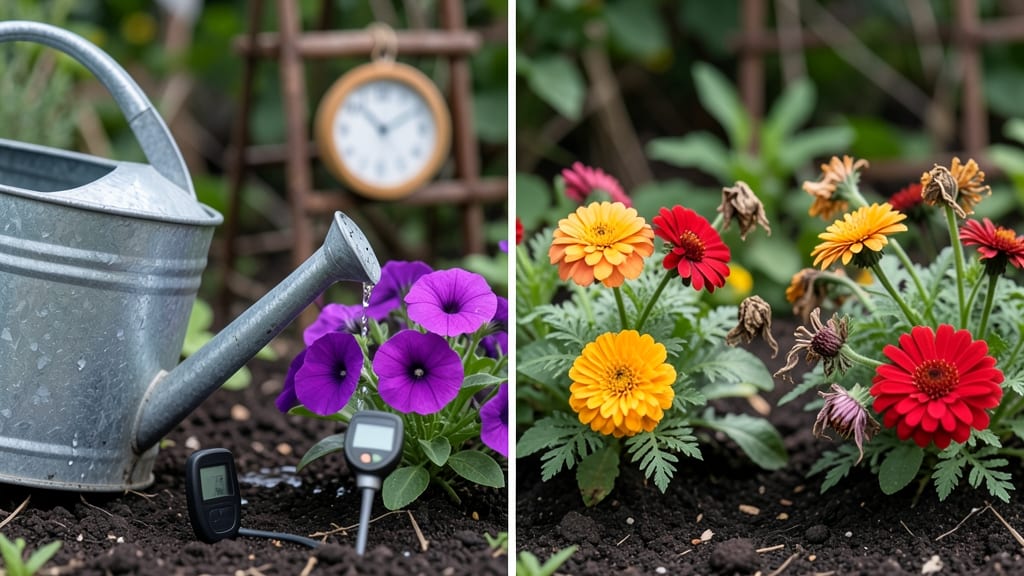
Flowers can survive without water for 6 to 48 hours, depending on type—cut blooms last 6–12 hours, while potted plants may endure 24–48 hours before wilting. Tropical varieties wilt fastest, while succulents and drought-resistant blooms last longer. Check soil moisture and leaf droop for stress signs.
Your flowers' ability to handle dry spells depends entirely on their natural resilience. 🌸 For example, roses—those romantic garden staples—typically show wilting within 6 to 12 hours without water, while desert-adapted blooms like cacti flowers can stretch to 48 hours or more.
The key difference lies in their root systems: deep-rooted perennials store moisture better than shallow-rooted annuals. I've learned to group plants by their drought tolerance when planning garden layouts, which has dramatically reduced my watering stress during busy weeks.
What's interesting is how leaf structure plays a role too. Glossy leaves, like those on hydrangeas, lose moisture faster than waxy-coated succulents.
Even a quick visual check—like pressing a leaf and watching how fast it springs back—can tell you if your plants are thirsty. 💧 For container gardens, I always check the soil's weight: dry soil feels noticeably lighter than moist soil, giving you an instant read on hydration needs.
💡 In This Article
- How Flower Type Affects Water Survival Time
- Reviving Flowers After Forgetting Water: Step-by-Step Recovery Guide
How flower type affects water survival time
At the cellular level, a flower's ability to resist dehydration comes down to its xylem vessels—the plant's plumbing system that transports water from roots to leaves.
Tropical flowers like orchids or fuchsias have wide, efficient xylem vessels that move water quickly but also lose it rapidly through their thin, moisture-loving leaves. 🌺 These varieties can show wilting within 6 hours in dry conditions because their cells lack the protective waxy cuticle found in desert-adapted blooms.
Compare that to a cactus flower, which has a thick cuticle and sunken stomata (pores) that minimize water loss, allowing it to survive 48+ hours without hydration.
The root system plays an equally critical role. Deep-rooted perennials like lavender store moisture in their extensive underground networks, while shallow-rooted annuals like marigolds rely on frequent surface watering.
I've noticed that potted plants with 12-inch roots can last 24-48 hours without water, whereas cut flowers—with no roots at all—typically wilt within 6-12 hours as their cells rapidly lose turgor pressure.
Even the soil type matters: sandy soil drains quickly, forcing plants to drink more frequently, while clay holds moisture longer.
Leaf structure creates another major difference. Glossy-leaved plants like impatiens lose water through a process called transpiration at rates up to 10 times faster than waxy-leaved succulents.
The waxy coating on plants like agave acts as a natural moisture barrier, reducing water loss by 70-80%. 🌵 This is why desert flowers often bloom after rare rains—they're built to handle extended dry periods.
For gardeners, this means grouping plants by their water needs: tropical varieties in shady, humid spots and drought-tolerant species in sunny, well-draining areas.
Even the flower's vascular bundle arrangement matters. Monocots (like lilies) have scattered vascular bundles that distribute water unevenly, making them more susceptible to dehydration. Dicots (like roses) have ringed bundles that create a more stable water transport system.
This is why roses can sometimes recover after short dry spells, while monocots may show permanent damage after just 12 hours without water. The takeaway? Understanding these botanical differences helps you predict which plants will forgive occasional watering lapses—and which ones need constant attention.
Season also affects survival time. In 70-80°F summer heat, flowers lose water 2-3 times faster than in 60°F spring temperatures. Wind exacerbates the problem by increasing transpiration rates. That's why I always check my garden's microclimate: a south-facing bed with afternoon sun will dry out faster than a north-facing one.
Windbreaks made of bamboo or lattice can reduce water loss by 30% in exposed areas. 🌬️
For cut flowers, the story changes dramatically. Once severed from their roots, they rely solely on the water column in their stems. A single rose stem can only hold about 0.5 ounces of water, which evaporates in 6-12 hours—hence why florists recommend changing vase water daily.
The addition of flower food packets (which contain sugar and acidifiers) can extend vase life by 3-5 days by slowing bacterial growth that clogs the xylem vessels. This scientific approach to flower care has saved me countless bouquets that would have otherwise wilted within hours.