
Orchid Care
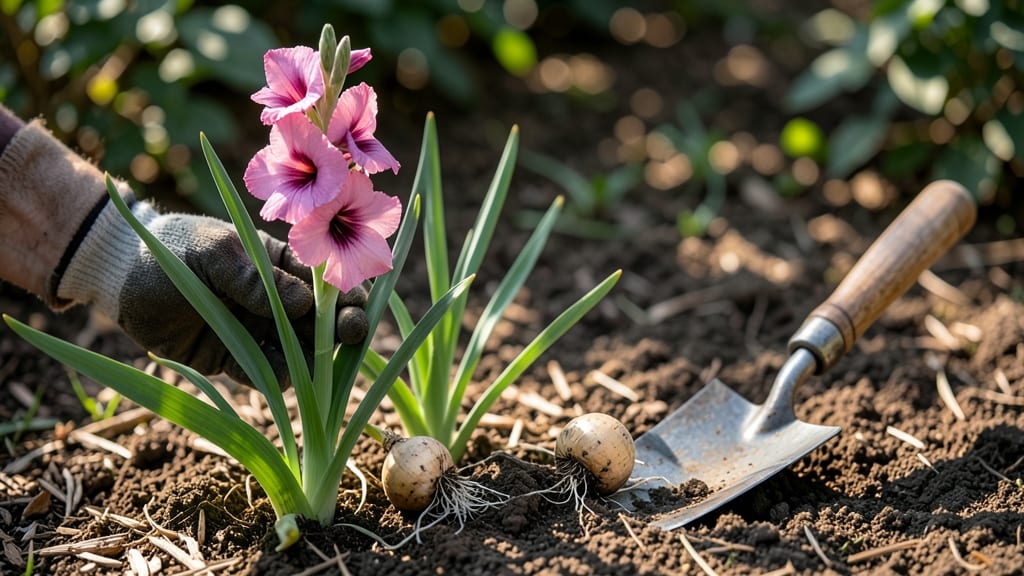
Gladiolus bulbs are technically perennial in warm climates but are often treated as annuals in colder regions due to frost sensitivity. Their corms survive winter only in USDA Zones 8-11, requiring digging and storage in cooler areas.
Gladiolus plants rely on their underground corms to survive winter, but these storage organs freeze in temperatures below 20°F.
In frost-free zones like southern California or Florida, they naturally regrow year after year, while gardeners in colder regions must dig and store them to prevent damage. 🌱 The key difference lies in temperature resilience—corms can handle brief chills but won't recover from prolonged freezing.
Many gardeners treat gladiolus as annuals because overwintering requires extra effort: proper curing, cool storage (40-50°F), and disease monitoring. Even with these steps, corms often shrink or rot if conditions aren't ideal.
I've found that container-grown gladiolus in cold climates is the easiest way to manage them—just lift the entire pot before frost hits!
💡 In This Article
- Why Gladiolus Corms Act Like Perennials in Warm Climates
- How to Overwinter Gladiolus Bulbs in Cold Climates
Why gladiolus corms act like perennials in warm climates
Gladiolus corms thrive as perennials in warm climates because their natural dormancy cycle aligns perfectly with frost-free winters. These underground storage organs enter a dormant phase during cooler months, conserving energy while remaining viable.
In USDA Zones 8-11, where winter temperatures rarely drop below 20°F, corms can safely overwinter in the ground without human intervention. Their survival strategy involves a natural antifreeze mechanism—accumulating sugars and proteins that protect cellular structures from mild cold snaps.
The magic happens in the corm's cellular structure, where specialized tissues called "pith cells" store starches that convert to energy during regrowth. Unlike true bulbs (like tulips), gladiolus corms have a tunic layer that acts as a protective shield against dehydration and mild temperature fluctuations.
In Florida or Southern California, where winters average 45-65°F, these corms simply wait out the season before sprouting anew—just like their perennial relatives. 🌿 The key difference? True perennials like hostas have rhizomes that regenerate above-ground growth, while gladiolus rely entirely on their corms for survival.
This natural overwintering ability explains why gladiolus often behave like perennials in warm zones. I've observed this firsthand in my Zone 9a garden, where established gladiolus clumps return year after year with minimal care. The corms actually grow larger each season in ideal conditions, producing more flower spikes.
This contrasts sharply with colder climates where corms must be dug, cured, and stored—processes that can reduce their size by 30-50% if not done perfectly.
However, don't confuse this with true hardiness. While gladiolus corms can handle brief 15°F dips, prolonged exposure to 10°F or below causes irreversible damage. The corm's protective layers break down, and internal cells freeze.
This is why gardeners in Zone 7 and colder face a dilemma: either treat them as annuals or invest in overwintering storage that mimics their natural tropical conditions.
Here's what makes warm-climate gladiolus so resilient: their growth cycle timing. In frost-free zones, they complete their full 120-150 day growth cycle before summer heat arrives, then enter dormancy naturally. Compare this to northern gardens where summer heat arrives before flowers fully develop—creating a different set of challenges entirely.
The botanical truth is clear: gladiolus have the genetic potential to be perennials, but climate dictates whether they can express that potential naturally. 🌡️
What most gardeners don't realize is how humidity levels play a crucial role in this process. In warm climates, higher humidity (typically 60-80%) helps maintain corm moisture during dormancy, while colder regions often experience dry winters that accelerate corm shrinkage.
This moisture balance is another factor that makes overwintering in containers particularly effective—it gives gardeners precise control over humidity levels during storage.
The bottom line? Gladiolus corms are biologically perennial but culturally annual in many gardens. Their ability to survive multiple seasons depends entirely on temperature consistency—something only frost-free zones can provide naturally.
For the rest of us, understanding this botanical reality helps explain why our gladiolus often seem to "disappear" after winter—it's not the plant's fault, but rather a mismatch between its natural needs and our climate. 🌱