
Orchid Care
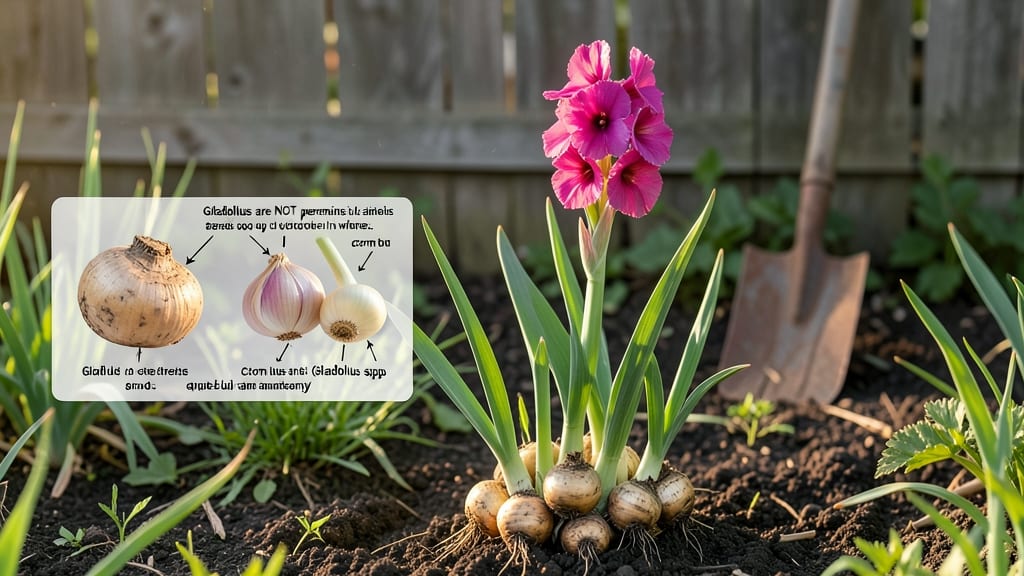
Gladiolus bulbs are not true perennials in most climates—they behave as tender perennials, dying back to the ground each winter and requiring seasonal bulb care to survive. In frost-free zones, they may persist for years, but colder regions need winter storage or replanting annually.
Gladiolus plants rely on corms—thickened underground stems—that store energy but struggle to survive freezing temperatures.
Unlike hardy perennials like peonies, their root systems aren't deep enough to insulate against winter frost. 🌱 In zones 8-10, you can often leave them in the ground, but gardeners in colder areas must dig and store them like dahlias. The key difference?
True perennials regrow from established roots each spring, while gladiolus need their corms protected to restart growth annually.
What makes this tricky is that many gardeners treat them as annuals—planting fresh corms each year—when with proper care, they can live for 3-5 years or more.
The secret lies in timing: lifting corms before the first frost and storing them in a cool, dry place mimics their natural dormancy cycle. In milder climates, heavy mulching can sometimes fool them into thinking winter never arrives!
💡 In This Article
- Gladiolus Bulb Lifespan: Why They Act Like Annuals in Cold Climates
- How to Extend Gladiolus Bulbs’ Life as Perennials in Your Garden
Gladiolus bulb lifespan: why they act like annuals in cold climates
Gladiolus bulbs—technically called corms—store energy in a thickened underground stem rather than true roots. Unlike hardy perennials like hostas or daylilies, these corms contain minimal insulation and can't survive prolonged exposure to temperatures below 20°F.
When frost hits, the corm's cells rupture, releasing stored nutrients and effectively killing the plant. This biological limitation forces gardeners in colder zones to treat them like annuals, even though they're botanically perennials.
The corm's energy storage system is also less robust than true perennials. While a peony root system can sustain 5-10 years underground, gladiolus corms typically last 2-4 years in optimal conditions before their energy reserves deplete.
Their shallow root systems (12-18 inches deep) also make them vulnerable to temperature fluctuations near the soil surface. In USDA zones 5-7, where winters regularly drop below 0°F, even well-mulched corms often fail to regrow.
What most gardeners miss is how dormancy timing affects survival. Gladiolus enter dormancy naturally when daylight shortens, but cold snaps can trigger premature dormancy. If the corm hasn't fully replenished its starch reserves by frost, it won't have enough energy to regrow.
This is why many gardeners in marginal zones (7b-8a) see inconsistent survival—some years they regrow, others they don't. The corm's ability to rebound depends on both temperature exposure and pre-winter nutrition.
Interestingly, gladiolus from warmer climates (like South Africa's native regions) have slightly better cold tolerance than their northern-bred cousins. Some modern hybrids, like 'Romeo' or 'Symphony' series, show improved hardiness, but none approach true perennials.
Even in frost-free zones, their lifespan is limited by disease pressure and corm rot—common issues when corms aren't properly dried between seasons. 🌱
Consider this comparison: A dahlia tuber (another tender perennial) can survive 3-5 years with proper storage, while a gladiolus corm typically lasts 2-3 years before needing replacement. The key difference?
Dahlias store more energy in their tubers, while gladiolus corms are more specialized for rapid above-ground growth rather than long-term storage. This biological trade-off explains why they're often treated as annuals despite their perennial classification.
For gardeners in zone 8, the threshold where gladiolus can sometimes overwinter, the difference between success and failure often comes down to microclimate protection. A south-facing bed with 12+ inches of mulch might protect corms through 20°F dips, while an exposed north-facing area will likely fail.
This local variability is why so many gardeners default to annual planting—it's simpler than gambling on winter survival each year.