
Flowers
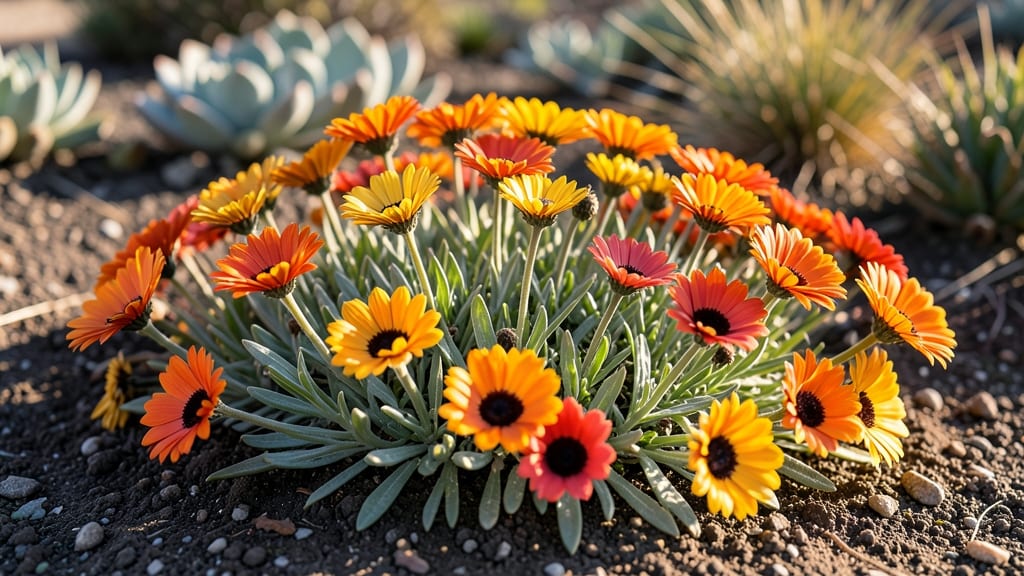
Whether gazania flowers are annuals or perennials depends on your climate: they grow as annuals in most regions but become perennials in USDA zones 10-11, where they survive winter and regrow yearly. Their frost sensitivity determines this behavior.
This distinction comes down to temperature tolerance—gazanias thrive in warm climates where they naturally return each year, while colder winters kill their tender roots. 🌱 In frost-free zones, they establish deep root systems that regenerate annually, but in cooler areas, gardeners must replant them every spring.
The key difference lies in how they handle dormancy: perennials in warm zones, annuals elsewhere.
For gardeners in transitional zones (like zone 9), you can sometimes coax perennial behavior by protecting plants with mulch or overwintering containers indoors. This approach mimics their natural frost-free habitat and may extend their lifespan beyond a single season.
💡 In This Article
- Why Gazanias Die Back in Cold Climates
- Extending Gazania Blooms: Annual vs. Perennial Care Tips
Why gazanias die back in cold climates
Gazanias belong to the Aizoaceae family, native to South Africa where they evolved in regions with hot, dry summers and mild winters. Their root systems are shallow and tender, adapted to absorb moisture quickly in sandy soils but highly sensitive to freezing temperatures.
When exposed to 32°F or below, the cell walls rupture due to ice crystal formation, causing irreversible damage to the root crown—the plant's regeneration center.
The key difference between annual and perennial behavior lies in their dormancy strategy. In USDA zones 10-11, gazanias enter a natural summer dormancy during hot months, then regrow when conditions improve—a survival mechanism perfect for frost-free climates.
However, in colder zones, even light frosts (28-32°F) trigger complete die-back because their roots lack cold-hardiness adaptations found in true perennials like lavender or salvia.
What's fascinating is how gazanias prioritize energy: they allocate resources to rapid above-ground growth during warm seasons rather than developing cold-resistant underground structures.
This explains why they produce 10-15 new blooms per stem in ideal conditions but fail to establish perennial roots in cooler areas. 🌡️ Their bright yellow, orange, or red flowers are essentially a seasonal strategy to maximize reproduction before potential winter threats.
Scientifically, this frost intolerance stems from their C3 photosynthesis pathway, which makes them more vulnerable to temperature fluctuations than C4 plants. While they can tolerate brief 40°F nights, sustained cold triggers a cascade of cellular damage that halts regrowth.
In contrast, true perennials like dahlias or canas store nutrients in thickened roots that survive 15-20°F temperatures.
Here's the botanical paradox: gazanias are technically geophytes (plants that regrow from underground storage organs), but their storage structures are too delicate for perennial survival in most climates. In frost-free zones, they behave like perennials because their roots naturally persist year-round without winter stress.
The moment frost enters the equation, their entire growth cycle resets—hence the annual classification in cooler regions.