
Container Gardens
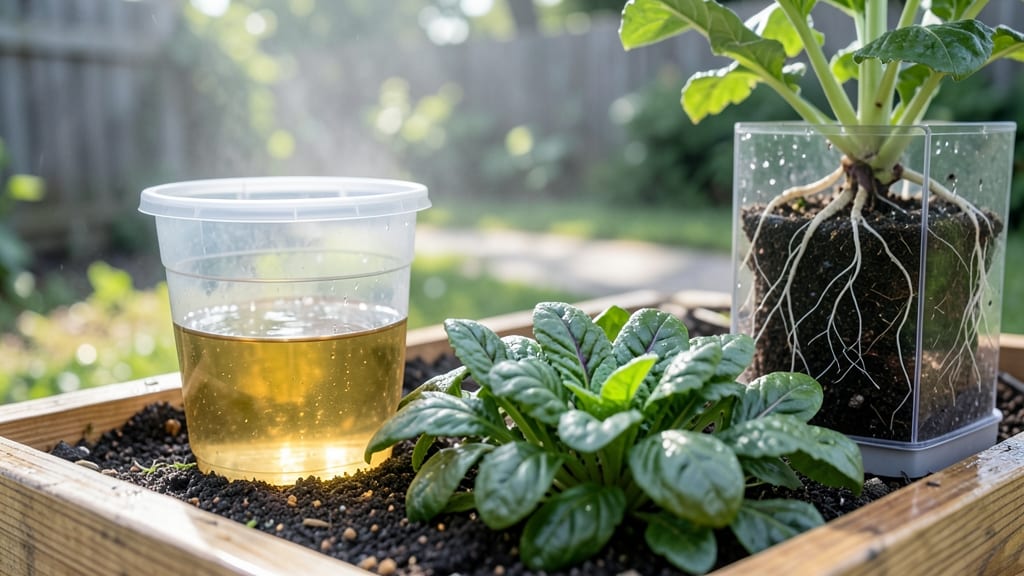
Rainwater does contain nitrogen, but only in minimal dissolved forms like atmospheric nitrogen (N₂) and nitrogen oxides (NOₓ). These trace amounts are far too low to support healthy plant growth on their own, especially for container gardens where nutrient demands are higher.
This nitrogen comes primarily from natural atmospheric processes like lightning and industrial emissions, which convert atmospheric nitrogen into more soluble forms. 🌧️ However, the amounts are often negligible compared to what plants need—think of it as a tiny sprinkle rather than a full glass.
For container gardens where soil volumes are limited, relying solely on rainwater can lead to nitrogen deficiencies, especially for heavy feeders like tomatoes or peppers. That's why gardeners often supplement with compost or balanced fertilizers to meet plant needs.
What's interesting is how regional factors play a role—urban areas with more pollution might see slightly higher nitrogen levels in rainwater, but this comes with trade-offs like increased salt content that can harm plants over time.
The key takeaway is that while rainwater contributes some nitrogen, it's rarely enough to sustain vigorous plant growth without additional inputs.
💡 In This Article
- How Atmospheric Processes Add Nitrogen to Rainwater
- Boosting Rainwater Nitrogen for Gardening Success
How atmospheric processes add nitrogen to rainwater
Rainwater picks up nitrogen through natural atmospheric processes that convert inert nitrogen gas (N₂) into more reactive forms. Lightning is one of the most powerful natural fixators—when bolts strike, they generate temperatures up to 30,000°F, splitting N₂ molecules and allowing them to bond with oxygen, forming nitrogen oxides (NOₓ).
These compounds then dissolve in raindrops, creating a weak nitric acid solution that can deposit nitrogen when the rain falls. 🌩️ This process is most active during thunderstorms, which is why rain following lightning often contains slightly higher nitrogen concentrations.
Industrial activities contribute significantly too, particularly in urban and agricultural areas. Combustion from vehicles and factories releases NOₓ directly into the atmosphere, where it reacts with water vapor to form nitric acid (HNO₃), which dissolves in rainwater.
In some polluted regions, this can increase nitrogen levels by 10-20 times compared to remote areas.
Biological sources also play a role—ammonia (NH₃) from decomposing organic matter or livestock operations can volatilize into the air and dissolve in raindrops, though this typically occurs closer to ground level and affects local precipitation more than widespread rainfall.
Geological activity adds another layer to this process. Volcanic eruptions release nitrogen oxides and sulfur compounds that react with atmospheric water, while windblown soil dust carries trace minerals that can include nitrogen compounds.
In coastal areas, sea spray contributes ammonium (NH₄⁺) from marine organisms, creating a subtle but measurable nitrogen presence in rainwater. These natural and anthropogenic sources combine to create a complex nitrogen cycle, where rainwater acts as both a transporter and a diluter of nitrogen compounds.
The challenge lies in these processes producing nitrogen in forms that plants can't easily absorb. Most of the nitrogen in rainwater exists as dissolved gases or weakly acidic compounds, rather than the readily available nitrates (NO₃⁻) or ammonium ions (NH₄⁺) that plants need for growth.
For example, while a single rainstorm might deposit 0.5-5 pounds of nitrogen per acre, this is typically spread so thinly across large areas that individual plants receive negligible amounts—often less than 0.1% of their annual nitrogen requirements. 🌧️
Regional variations make this even more complex. In rural areas with minimal pollution, rainwater nitrogen levels might measure in parts per billion (ppb), while urban areas can reach parts per million (ppm).
This urban advantage comes with trade-offs, as higher nitrogen levels often correlate with increased acidity and other pollutants that can harm plant roots. The delicate balance between natural nitrogen inputs and potential contaminants makes rainwater a double-edged sword for gardeners.
What's particularly fascinating is how these atmospheric processes mirror what happens in nature's nitrogen cycle. Just as bacteria in soil convert atmospheric nitrogen into usable forms through fixation, lightning and industrial emissions perform a similar function—but on a much larger scale.
The difference is that these atmospheric processes create nitrogen in forms that are often less immediately accessible to plants than what soil microbes produce. This is why gardeners need to understand both the science behind rainwater nitrogen and how to supplement it effectively.