
Flowers
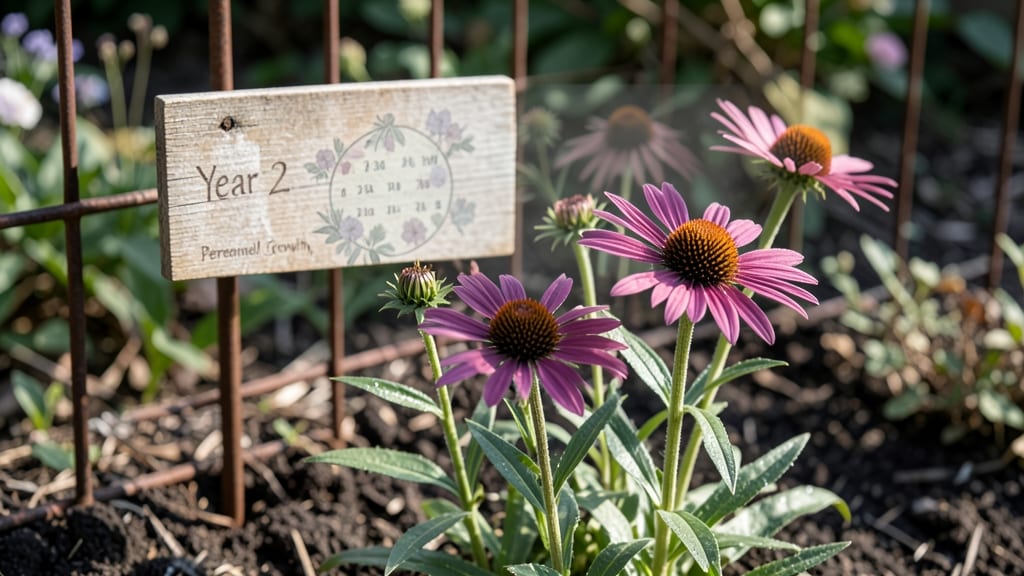
Perennial flowers do come up every year, but their foliage often retreats into the ground during winter or dormancy—this isn't death, just a survival strategy where roots and crowns remain alive beneath the soil to sprout fresh growth when conditions warm up.
This seasonal retreat is actually a smart survival tactic.
Many perennials, like peonies or hostas, store energy in their underground rhizomes during cold months, conserving resources until spring. 🌱 The key difference from annuals is that perennials have persistent root systems that regenerate foliage year after year, while annuals complete their entire life cycle in one season.
What looks like death in winter is often just the plant conserving energy for its next blooming phase.
Some gardeners worry when their perennials disappear completely, but this is normal behavior for hardy varieties like coneflowers or black-eyed Susans. The real test comes in early spring when you'll see new shoots pushing through the soil—proof that the plant's survival mechanisms worked perfectly through the dormant period.
💡 In This Article
- Understanding Perennial Flower Dieback and Survival Mechanisms
- How to Care for Perennials During Dieback and Revival Seasons
Understanding perennial flower dieback and survival mechanisms
Perennial flowers rely on a sophisticated survival strategy called dormancy, where they intentionally reduce metabolic activity during harsh conditions. This process is triggered by environmental cues like temperatures below 40°F or reduced daylight hours.
The plant's roots and crown (the base where stems emerge) contain specialized cells that store starches and sugars—essentially a natural battery pack.
For example, peonies store enough energy in their thick rhizomes to sustain themselves for months without sunlight, while daylilies use their fibrous root systems to access moisture deep underground.
The degree of dieback varies by species and climate zone. Some perennials like beard tongue (Penstemon) may lose all above-ground foliage, while others like heuchera (coral bells) keep their evergreen leaves through winter.
This difference comes down to their native habitats—plants from colder climates (like Siberian bugloss) evolved to handle complete dormancy, while Mediterranean natives (like lavender) often retain some foliage. The key measurement is the plant's hardiness zone rating, which determines how extreme the winter conditions must be before dieback occurs.
Water stress plays a crucial role in this process. During dormancy, perennials actively reduce water loss by thickening their cell walls and producing protective compounds.
You'll notice how the foliage of coneflowers turns crispy and brown in fall—this is the plant's way of minimizing water evaporation while its roots remain hydrated.
Some species even produce antifreeze proteins similar to those in cold-water fish, preventing ice crystals from forming in their cells at temperatures as low as 14°F.
What makes this system so remarkable is the timing mechanism. Perennials use a biological clock called vernalization that requires exposure to cold temperatures before they'll bloom in spring. This ensures they don't waste energy flowering too early.
For instance, lupines need at least 6-8 weeks of temperatures below 40°F before they'll produce their signature flower spikes. Without this cold period, many perennials would bloom at the wrong time, risking frost damage to their flowers.
The crown is the plant's lifeline during dormancy. Located just above the roots, it contains meristem cells that can quickly regenerate new growth when conditions improve. Even if the crown appears blackened or shriveled, these cells often remain viable.
For example, black-eyed Susans can regrow from crowns that look completely dead, as long as the roots are still intact. This is why gardeners should never remove dead foliage in early spring—it provides some insulation and protects the emerging shoots.
Some perennials take this survival strategy to an extreme by producing bud scales that act like natural insulation. These tightly packed leaf structures form a protective layer around the growing points, similar to how a pinecone protects its seeds.
In species like hostas, you can see these bud scales forming at the base of the plant in late summer, preparing for winter. The scales contain antioxidant compounds that prevent cell damage from freezing temperatures, allowing the plant to survive winters as cold as -15°F in some varieties.