
Companion Plants
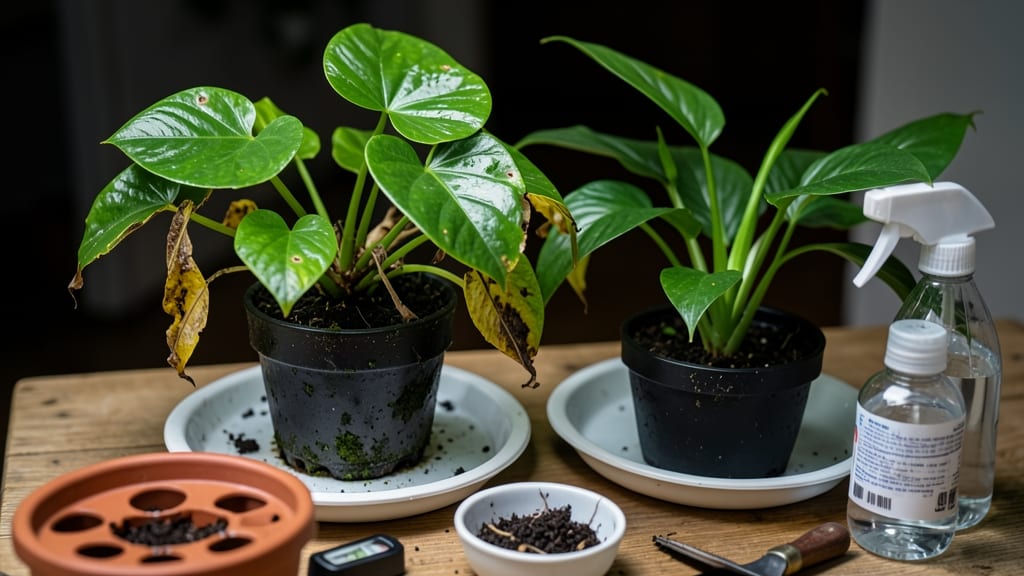
Yes, you can save a plant that has been overwatered by immediately stopping watering, repotting to dry soil, pruning yellowed leaves, and improving drainage to restore root health and prevent rot.
Saving the plant that has been overwatered depends on catching the problem early—within 24-48 hours gives you the best chance. 🌱 The key is addressing root suffocation, which cuts off oxygen and triggers fungal growth.
I've seen houseplants like ferns and peace lilies bounce back when you act fast, but succulents often face irreversible damage if their roots stay waterlogged too long.
Start by removing the plant from its pot and examining the roots: healthy ones are firm, while mushy or blackened roots need trimming before repotting.
After repotting into fresh, well-draining soil, place the plant in bright, indirect light and avoid watering for at least 3-5 days. This gives roots time to recover without compounding the stress.
I've found that adding perlite or orchid bark to the soil mix helps prevent future waterlogging. For severe cases, you might need to propagate healthy stems while the roots recover.
💡 In This Article
- How Overwatering Damages Plant Roots and Leaves
- Step-by-Step Overwatered Plant Recovery Checklist
How overwatering damages plant roots and leaves
When plants receive too much water, their roots suffocate because excess moisture displaces oxygen in the soil pores. This creates an anaerobic environment where roots can't respire properly, leading to cellular stress and eventual death.
Think of it like drowning—roots deprived of oxygen start to break down within 24-48 hours. The first visible sign is often yellowing leaves, which occur when the plant can't transport nutrients and water upward through the vascular system.
The damage goes deeper than just oxygen deprivation. Overwatering triggers fungal growth like Phytophthora or Pythium, which thrive in soggy conditions and attack root tissues.
These pathogens release enzymes that break down cell walls, turning healthy roots black and mushy. 🌱 In severe cases, the fungus can spread to stems, causing wilting even when soil appears dry.
Nutrient uptake also suffers because excess water washes away essential minerals like nitrogen and potassium, leaving the plant starved even if it's surrounded by moisture.
Leaves show the next stage of decline. Yellowing (chlorosis) starts at the leaf edges and moves inward as chlorophyll breaks down. This happens because the plant's energy shifts from growth to survival—it prioritizes keeping essential organs alive over maintaining foliage.
In extreme cases, leaves develop brown, crispy patches where cells have died from oxygen starvation or fungal invasion. The texture becomes papery and brittle, signaling irreversible cellular damage if not addressed quickly.
What most gardeners miss is how soil structure changes with overwatering. Compacted soil loses its air pockets, creating a waterlogged "soup" that smothers roots. This is why plants in heavy clay or poorly draining containers suffer more—they can't recover without intervention.
The root zone's pH also shifts toward acidity, which further stresses microbial activity needed for decomposition and nutrient cycling. Even after you stop watering, it can take weeks for the soil ecosystem to rebound.
Consider this comparison: A healthy root system has 20-30% air space in the soil, while waterlogged soil drops to just 5-10% oxygen availability.
This drastic reduction forces roots to switch from aerobic respiration (efficient energy production) to anaerobic pathways, which produce toxic byproducts like ethanol. 💫 That's right—your overwatered plant is essentially fermenting in its own pot, creating conditions similar to a wine barrel but with deadly consequences for the roots.
The good news is that most plants can recover if you act within 3-5 days of initial symptoms. The critical window closes when roots turn black and emit a foul odor—this indicates advanced rot where new growth is unlikely.
Even then, some resilient species like peace lilies or snake plants can regenerate from healthy stem cuttings while the roots recover.