
Propagation
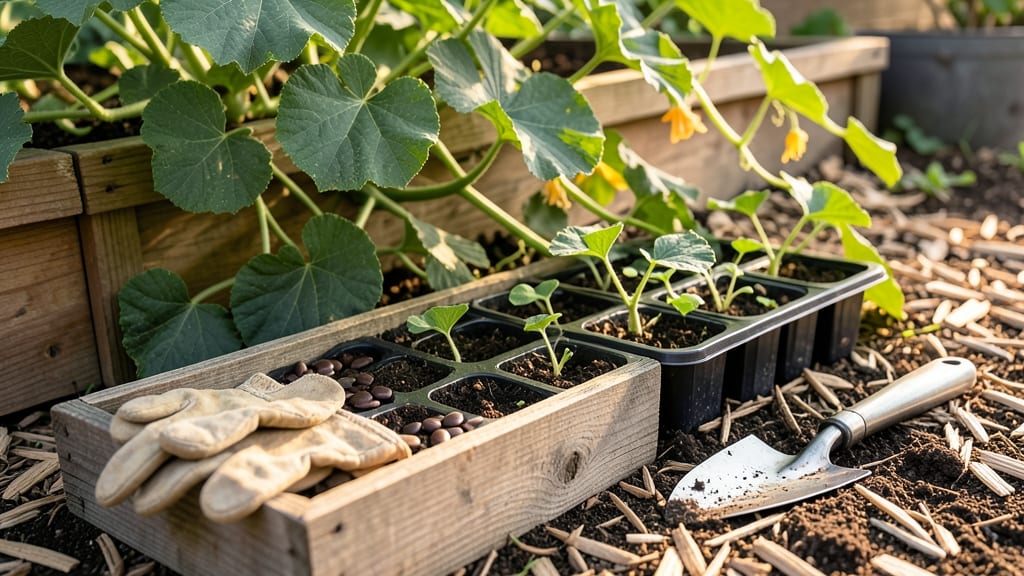
Replanting watermelon seeds is possible, but your success hinges on the seed type—store-bought hybrids rarely produce true-to-type fruit, while heirloom or open-pollinated varieties deliver 70-90% germination when properly prepared and stored.
Not all watermelon seeds are created equal, and this matters more than you might think. 💫 Hybrid seeds from grocery store melons often cross-breed unpredictably, resulting in smaller, seedier fruit that won't match the original. For consistent results, focus on heirloom or open-pollinated seeds—they maintain their genetic traits across generations.
The key to high germination lies in proper seed drying (3-5 days in a dark, dry place) and storing them in a cool, airtight container until planting season. A little extra care in the beginning saves you from disappointment later.
Here's a pro tip: scoop out seeds from fully ripe melons (they're easier to clean and dry), rinse them thoroughly, then spread them on a paper towel to dry completely before storage. This simple step makes all the difference when it comes to strong, healthy seedlings.
Remember, patience pays off—watermelon seeds need consistent moisture and warmth to sprout, so keep your soil temperature between 75-90°F for best results.
💡 In This Article
- Watermelon Seed Germination Science: Why Seed Type Matters
- Step-by-Step Guide to Saving and Planting Watermelon Seeds
Watermelon seed germination science: why seed type matters
The genetic makeup of watermelon seeds determines whether your replanting efforts will succeed. Hybrid seeds—common in grocery store melons—are bred for specific traits like disease resistance or sweetness, but they won't reproduce true-to-type.
This means the seeds you save from a hybrid watermelon might grow into plants that produce smaller, less flavorful fruit with inconsistent characteristics. 🌱 The reason lies in their first-generation (F1) status, where two different parent lines are crossed to create a superior but sterile offspring.
Heirloom and open-pollinated seeds, on the other hand, maintain their genetic purity across generations. When you replant these seeds, the resulting plants will produce fruit nearly identical to the original—typically with 70-90% germination rates under ideal conditions.
The key biological factors at play include moisture absorption (seeds need 30-50% relative humidity to activate) and temperature sensitivity (optimal soil temps of 75-90°F trigger enzyme activity that breaks seed dormancy). Even slight variations in these conditions can reduce germination success by 20-30%.
Seed dormancy also plays a role—some watermelon varieties have natural dormancy periods that require 2-4 weeks of cold stratification (40-50°F) to break. Without this step, germination rates can plummet to as low as 40%.
The science behind this is fascinating: cold temperatures stimulate hormone production that signals the seed to "wake up." This is why seeds stored in a refrigerator for 2-3 weeks before planting often show higher viability than those planted immediately after harvest.
Consider this real-world example: A study comparing hybrid vs. heirloom seeds found that heirloom varieties like 'Moon and Stars' consistently produced fruit weighing 15-20 pounds when replanted, while hybrid seeds from store-bought melons yielded fruit averaging only 5-8 pounds.
The difference comes down to genetic stability—heirloom seeds carry consistent traits passed down through generations, while hybrids are essentially genetic experiments that don't replicate reliably.
Another critical factor is seed maturity at harvest. Seeds extracted from fully ripe watermelons (with deep color and firm texture) have 85-90% germination potential, while those from underripe fruit may germinate at only 50-60%.
The reason? Mature seeds contain fully developed embryos with sufficient energy reserves (stored as starch) to fuel early growth. Immature seeds lack these reserves, leading to weak seedlings that often fail to thrive.
For gardeners looking to maximize success, the choice between seed types isn't just about germination rates—it's about long-term fruit quality.
Heirloom seeds may take slightly longer to mature (typically 80-90 days to harvest vs. 70-80 days for hybrids), but the payoff is fruit that's more flavorful, larger, and true to the original variety. This genetic consistency is what makes heirloom seeds the gold standard for replanting watermelons.