
Pests and Diseases
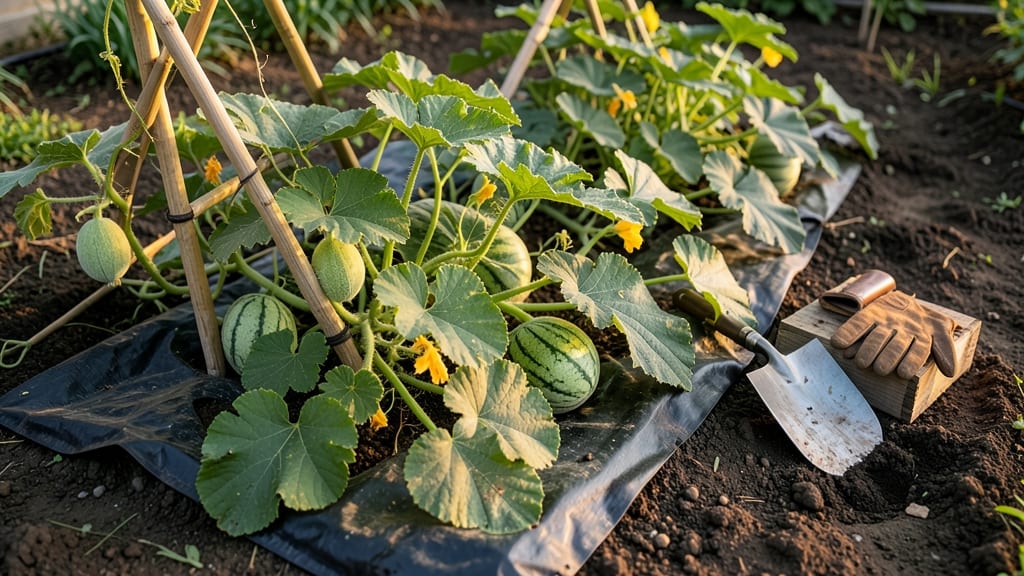
You can plant watermelon and cantaloupe together, but they need careful spacing and monitoring to thrive. These melons share similar pest risks, soil needs, and sunlight requirements while competing aggressively for space and nutrients, so keep vines at least 3–4 feet apart for best results.
Watermelons and cantaloupes belong to the same botanical family (Cucurbitaceae) and demand identical growing conditions—warm soil, full sun, and consistent moisture. 🌱 The challenge lies in their sprawling vines, which can quickly overtake each other if planted too close.
I’ve found that giving each plant its own dedicated space (or using vertical trellises) prevents competition while still allowing them to benefit from shared pest control measures like companion planting with marigolds.
Just remember: their rapid growth means you’ll need to monitor for powdery mildew or cucumber beetles more closely when growing them side by side.
For optimal yields, rotate your planting location annually to avoid soil depletion, and consider staggering their planting times by 2–3 weeks. This lets you extend your harvest season while reducing competition for resources during peak growth phases.
💡 In This Article
- Growing Conditions for Watermelon and Cantaloupe Compatibility
- Spacing, Trellising, and Crop Rotation Tips for Dual Planting
Growing conditions for watermelon and cantaloupe compatibility
Watermelons and cantaloupes thrive under identical growing conditions because they share the same botanical family (Cucurbitaceae) and environmental needs. Both require warm soil temperatures (70°F+) to germinate and grow, making them perfect companions in regions with hot summers.
Their roots prefer well-drained, sandy loam soil with a pH between 6.0 and 7.0—similar to what tomatoes or peppers need.
The key advantage of planting them together is their shared vulnerability to pests like cucumber beetles and diseases such as powdery mildew, which means you can implement unified pest control strategies.
However, their competitive nature stems from their sprawling vines, which can spread 10–20 feet in a season. Watermelons develop long, trailing vines that spread horizontally, while cantaloupes produce shorter, bushier vines that still require ample space.
This competition for sunlight and nutrients becomes critical during their rapid growth phase (3–4 weeks after germination), when both plants demand 6–8 hours of direct sunlight daily. Without proper spacing, one plant may shade the other, reducing fruit quality or yield.
Their shared soil and sunlight needs make them ideal candidates for intercropping, but their aggressive growth habits require strategic planning. For example, watermelons need 12–18 inches of soil depth for their extensive root systems, while cantaloupes prefer slightly shallower roots (6–12 inches).
This difference means you’ll need to ensure both plants have access to nutrient-rich topsoil without crowding. 🌿 The trade-off is worth it, though, as their combined presence can deter pests like squash bugs, which are less likely to attack a mixed cucurbit patch.
One critical factor often overlooked is their watering needs. Both melons require 1–2 inches of water weekly, but cantaloupes are more sensitive to overwatering, which can lead to blossom-end rot. Watermelons, on the other hand, need consistent moisture to develop their thick rinds.
This means you’ll need to monitor soil moisture closely, especially during fruit development (6–8 weeks after planting), when both plants compete for hydration. Mulching with straw can help retain moisture while reducing weed competition.
Another shared challenge is their susceptibility to powdery mildew, a fungal disease that thrives in humid conditions. Both plants exhibit similar symptoms—white powdery spots on leaves—so early intervention with neem oil or sulfur sprays is essential.
The good news is that their proximity allows for uniform treatment, making it easier to spot and address issues before they spread. 💫 This shared vulnerability also means you can use the same companion plants, like marigolds or basil, to repel pests for both crops simultaneously.
Despite their competitive traits, watermelons and cantaloupes can coexist harmoniously when planted with their growth habits in mind. For instance, cantaloupes mature faster (70–90 days) than watermelons (80–100 days), so staggering their planting times by 2–3 weeks can help manage resource competition.
This approach lets you extend your harvest season while ensuring neither plant feels overcrowded during its peak growth phase.