
Pests and Diseases
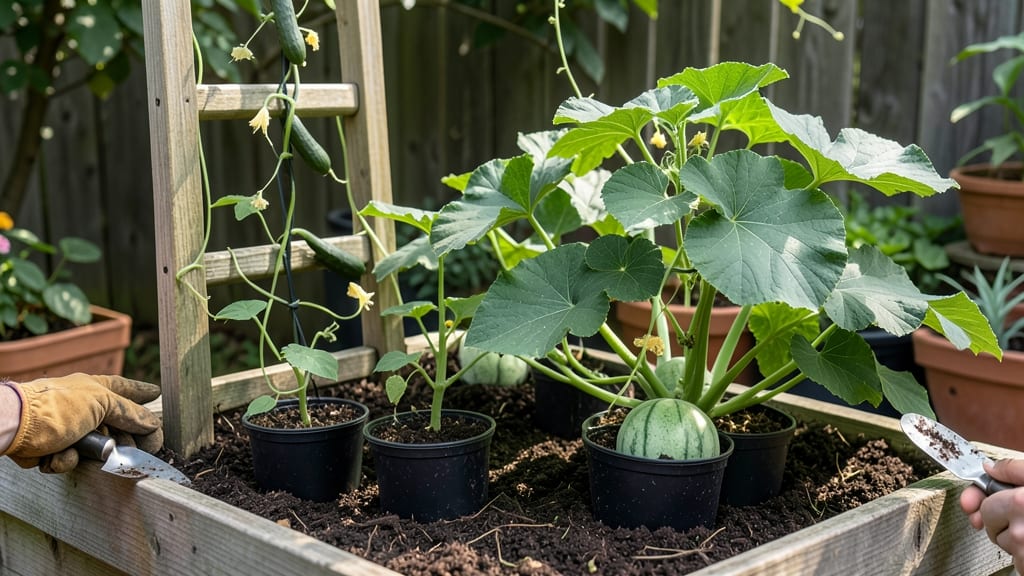
You can plant cucumbers and watermelon together, but they need careful spacing and monitoring since both are heavy feeders and vining plants that compete for sunlight, water, and nutrients. Raised beds or trellises help maximize space and yield.
Both cucumbers and watermelons thrive in warm climates and share similar growth habits, which makes them compatible but competitive neighbors in the garden. 🌱 The key challenge lies in their sprawling vines—if left unchecked, they'll crowd each other, reducing airflow and increasing disease risks like powdery mildew.
I've found that using raised beds with 3-4 feet between plants or training them vertically on trellises solves this by elevating the fruit off the ground while keeping vines separated.
Watermelons need more space (6 feet apart) than cucumbers (2-3 feet), so plan accordingly if you want both in the same plot.
Another critical factor is soil fertility. Since both plants are heavy nitrogen users, I recommend enriching the soil with compost before planting and using mulch to retain moisture. Drip irrigation helps prevent overwatering, which can lead to blossom-end rot in watermelons or powdery mildew in cucumbers.
Monitoring their progress weekly ensures you catch competition issues early—like watermelon vines shading out cucumbers or cucumber vines stealing nutrients meant for melons.
💡 In This Article
- Why Cucumbers and Watermelon Compete in the Garden
- Best Spacing and Trellis Strategies for Dual Planting
Why cucumbers and watermelon compete in the garden
The root of the problem lies in their shared botanical traits—both cucumbers and watermelons are Cucurbitaceae family members, meaning they have sprawling vines that spread aggressively. A single watermelon vine can stretch 15-20 feet while cucumber vines reach 10-15 feet, creating a dense canopy that blocks sunlight.
This competition for light triggers a physiological response called etiolation, where plants grow weak, leggy stems and produce smaller fruit due to insufficient photosynthesis.
Water needs add another layer of complexity. Both plants require 1-2 inches of water weekly during fruiting, but their shallow root systems compete for moisture in the same soil layer.
Watermelons, with their sprawling habit, often outcompete cucumbers for water, leading to cucumber vines drying out at the edges while watermelon vines thrive. The soil's moisture content drops unevenly, creating stress points where cucumbers may drop blossoms or develop bitter fruit.
Nutrient absorption presents its own challenges. Both plants are heavy nitrogen feeders, but watermelons also demand higher phosphorus levels for root development.
When planted together, the soil's nitrogen gets depleted faster, causing cucumbers to develop yellowing leaves (a classic nitrogen deficiency symptom) while watermelons may produce smaller, less sweet fruit. This imbalance occurs because watermelons have larger root systems that absorb nutrients more aggressively.
Disease risk escalates when these plants grow too close. The dense foliage creates high humidity microclimates that perfect conditions for powdery mildew, a fungal disease that appears as white, powdery patches on leaves. Cucumbers are particularly susceptible, while watermelons can act as reservoirs for spores.
I've seen cases where watermelon vines, being taller, shade cucumber leaves for extended periods, creating ideal conditions for this fungus to spread rapidly.
Shading effects go beyond disease prevention. Watermelon vines, when allowed to sprawl, can cast 70-80% shade on cucumber plants below, reducing their ability to photosynthesize. This light deprivation causes cucumbers to produce smaller, misshapen fruit with thinner skins.
The reverse can also happen—if cucumbers climb trellises above watermelon vines, they may block sunlight needed for watermelon ripening, delaying harvest by 1-2 weeks.
Here's what actually happens at the cellular level: When sunlight is limited, both plants prioritize vine growth over fruit development. The hormone ethylene production increases in stressed plants, leading to premature fruit drop.
This is why you might see watermelons developing but not ripening fully when planted too close to cucumbers.