
Pests and Diseases
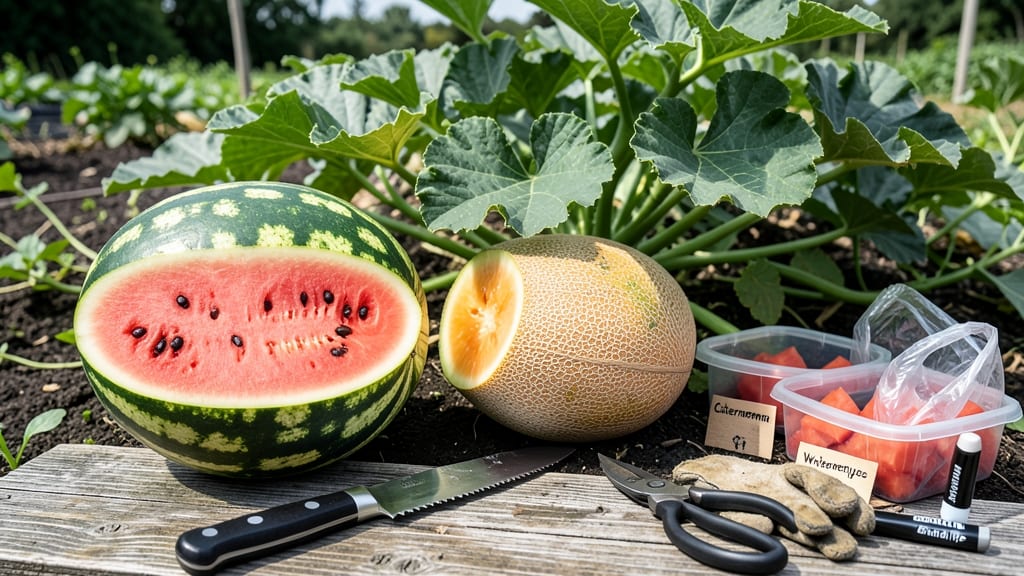
You can freeze watermelon and cantaloupe, but their raw texture and flavor will degrade significantly. Cut into cubes, remove seeds, and blanch for 1-2 minutes before freezing in airtight containers for up to 8 months. Avoid freezing whole melons or for fresh consumption.
Freezing watermelon and cantaloupe works best when you plan to use them in cooked dishes like smoothies, soups, or baked goods. 🔥 The freezing process breaks down the delicate cell structure, causing the melons to become mushy when thawed.
Blanching helps preserve some color and texture, but the results won't match fresh fruit. For best storage, use airtight containers or heavy-duty freezer bags, and label them with the date—this prevents freezer burn and keeps your melons tasting their best for months.
When thawing, let the melons defrost in the fridge overnight for even cooking. While not ideal for fresh eating, frozen melons shine in recipes where texture isn't critical. Think of them as a budget-friendly, nutrient-preserving alternative to fresh fruit when you're stocking up for summer's end.
💡 In This Article
- How Freezing Affects Watermelon and Cantaloupe Quality
- Best Ways to Prep and Store Frozen Melons
How freezing affects watermelon and cantaloupe quality
The freezing process transforms watermelon and cantaloupe at a cellular level. When you freeze these fruits, the water inside their cells expands as it crystallizes, physically rupturing the delicate cell walls. This causes the flesh to become grainy and lose its natural juiciness.
Watermelon's crisp texture turns mushy, and cantaloupe's tender sweetness develops a slightly fermented aroma after thawing. The ice crystals also disrupt the fruit's natural enzymes, accelerating flavor degradation over time.
Blanching—dipping the fruit in boiling water for 1-2 minutes before freezing—helps slow this damage. The heat briefly deactivates enzymes that cause browning and softening, preserving some color and texture.
For watermelon, a quick blanch maintains a slightly firmer bite, while cantaloupe benefits from a 30-second dip in ice water afterward to halt the cooking process. Without blanching, both fruits develop off-flavors within 2-3 months of freezing, even in ideal conditions.
The nutritional impact is more nuanced. Freezing preserves most vitamins (like vitamin C), but some water-soluble compounds leach out during thawing. Watermelon's lycopene content—responsible for its red hue—remains stable, though the fruit's natural sugars concentrate slightly, making it sweeter but less refreshing.
Cantaloupe's vitamin A levels hold up better than its vitamin C, which drops by about 10-15% after 6 months of frozen storage. The trade-off? Frozen melons retain 90%+ of their original vitamin content for the first 3 months.
Color changes are one of the most noticeable effects. Watermelon's vibrant red turns dull grayish-pink, while cantaloupe's creamy orange fades to a muted yellow. This happens because the freezing process oxidizes the fruit's pigments. The good news?
These color shifts don't affect safety or taste—just visual appeal. For recipes where appearance matters (like fruit salads), frozen melons won't cut it, but they work perfectly in smoothies or baked desserts where texture isn't critical.
Temperature fluctuations in your freezer also play a role. If your freezer cycles between 0°F and 10°F, the repeated thawing and refreezing accelerates cell damage. For best results, maintain a consistent -10°F to 0°F temperature.
A freezer thermometer is your best friend here—most household freezers run warmer than we realize, which is why melons stored for 8 months often taste significantly different from fresh.
What most people overlook is how freezing alters the fruit's aroma profile. Fresh cantaloupe releases volatile compounds that give it that signature sweet, floral scent. After freezing, these aromatics dissipate, leaving a flatter taste.
Watermelon loses its crisp, clean scent too, replacing it with a slightly artificial sweetness. This is why frozen melons work better in cooked applications—the heat from baking or blending masks these flavor changes.
Here's the silver lining: freezing extends the shelf life of these seasonal fruits by 6-8 months, letting you enjoy their nutrients long after summer ends. For optimal results, freeze melons within 24 hours of cutting to minimize enzyme activity.
The key takeaway? Freezing isn't about preserving perfection—it's about preserving possibility for recipes where texture isn't the star of the show. 💫