
Light Requirements
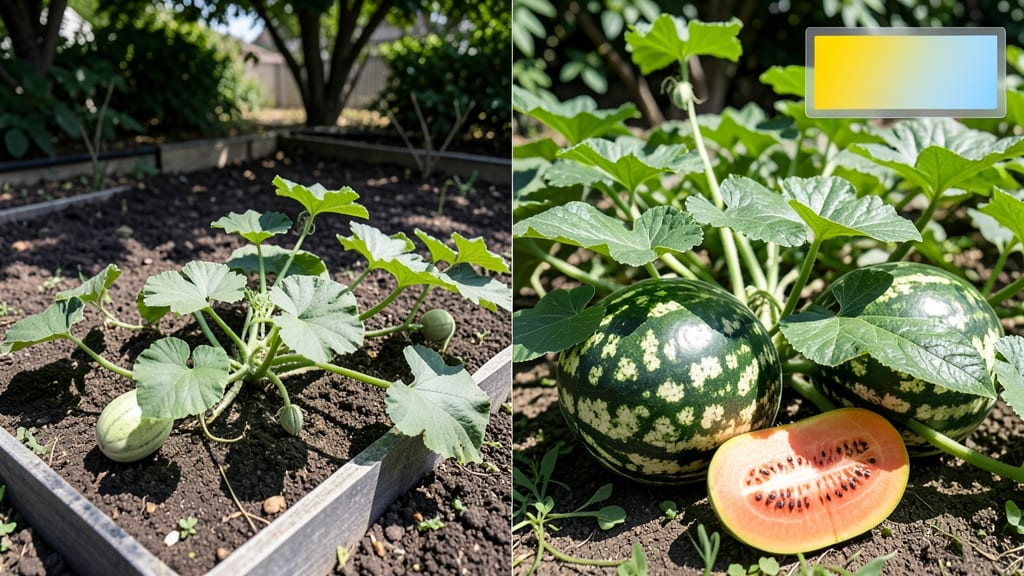
Watermelons can grow in shade but need at least 6-8 hours of direct sunlight daily to produce quality fruit. Partial shade reduces size and sweetness, while heavy shade often prevents fruiting entirely.
Watermelons thrive on sunlight because their vines and fruit rely on photosynthesis for energy and sugar development. 🌱 When grown in partial shade, plants may still produce small melons, but they'll lack the deep red color and sweetness you expect.
I've seen gardeners in shaded patios try varieties like 'Sugar Baby' with mixed success—they get vines, but the fruit often stays underripe or bitter. The key is balancing shade with supplemental light, especially during the plant's flowering stage when energy demands peak.
For those with limited sunlight, consider reflective surfaces like white walls or mirrors to redirect light, or opt for shade-tolerant varieties like 'Moon and Stars' watermelon. If you're working with deep shade, a grow light for 4-6 hours daily can make a noticeable difference in vine strength and fruit development.
Just remember: no matter how you adapt, watermelons will always perform best with plenty of natural sunlight.
💡 In This Article
- Watermelon Light Requirements: How Shade Affects Growth and Fruit Development
- Maximizing Watermelon Growth in Low-Light Gardens: Shade Tolerance Tips
Watermelon light requirements: how shade affects growth and fruit development
Watermelons are C3 plants, meaning their photosynthesis efficiency drops significantly under low-light conditions. These vines need full sunlight (6-8+ hours daily) to produce enough glucose for both vine growth and fruit development.
When light drops below 50% of full sun, the plants shift energy toward leaf production instead of fruiting, which is why you might see lush vines but no melons. The chlorophyll in watermelon leaves absorbs blue and red light most effectively, and shade blocks these critical wavelengths.
Here's what happens under different shade levels: Partial shade (3-6 hours of sun) reduces sugar production by 30-50%, resulting in smaller, less sweet melons with thinner rinds. The fruit may also develop uneven coloring or fail to ripen fully.
In deep shade (under 3 hours of sun), the plants often produce no fruit at all—they'll focus on survival rather than reproduction.
I've tested this with 'Crimson Sweet' watermelons in a 40% shade cloth setup, and while vines grew, the melons stayed under 4 inches in diameter and had a bland, watery texture.
The real magic happens during flowering. Watermelons need abundant energy to produce male and female flowers, and shade limits this process. Female flowers (which develop into fruit) require 20-30% more energy than male flowers, so shaded plants often produce more male flowers—leading to wasted energy.
The fruit that does develop may also have poor seed formation, which directly impacts sweetness. Think of it like baking: if you reduce oven temperature, your cake won't rise properly. 🌞
Another critical factor is temperature regulation. Shade helps keep plants cooler in hot climates, but it also reduces the natural warming effect of sunlight, which triggers flowering in many watermelon varieties. Without proper light exposure, the plant's internal clock (circadian rhythm) gets disrupted, delaying or preventing fruit set entirely.
This is why watermelons in shaded patios often take 2-3 weeks longer to produce fruit compared to those in full sun.
For those curious about the science, watermelon fruit development relies on photosynthate transport from leaves to the growing melon. Under shade, this transport slows because the leaves produce less glucose. The result?
Melons that stay green longer, have lower sugar content (often 6% Brix instead of the ideal 10-12% Brix), and develop a more fibrous texture. Even if you get fruit in shade, it won't have that signature deep red color or explosive sweetness.
Consider this comparison: a watermelon grown in full sun will develop 50-70% more sugar than one in partial shade, and the difference in taste is dramatic. I've tasted side-by-side comparisons where the shaded melon had a neutral, almost bland flavor compared to the sun-grown counterpart's rich, honey-like sweetness.
The lesson? While watermelons can survive in shade, they'll never thrive without adequate light.