
Watering
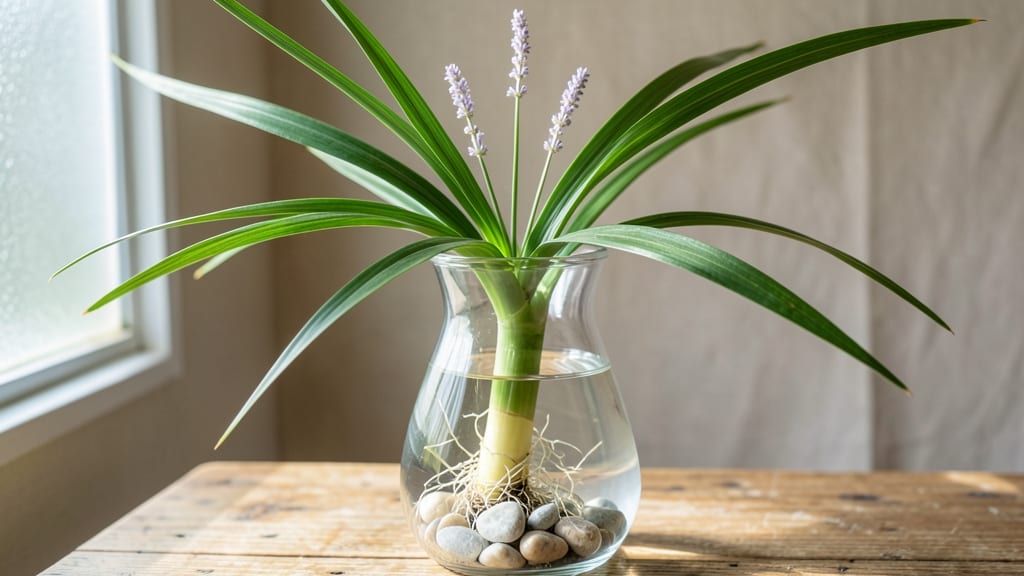
Yes, lemongrass can grow in water using hydroponic propagation, where its roots develop in nutrient-rich water, though yields and growth rates may differ from soil cultivation. Start with healthy stalks and change water every 2-3 days for optimal results.
This hydroponic method works because lemongrass roots adapt surprisingly well to water, absorbing nutrients directly through their fibrous network. 🌱 The key is maintaining clean, oxygenated water—stagnant water can lead to root rot or stunted growth.
I’ve found that younger stalks with fresh, white roots establish faster in water than mature ones, though both can thrive with proper care. The trade-off? While water-grown lemongrass may produce slightly fewer stalks than soil-grown, its leaves often develop a more intense citrus aroma, making it ideal for cooking.
For best results, use a clear container to monitor root development and add a splash of diluted aquarium salt or liquid fertilizer every week. Sunlight is critical—place your setup near a bright window or under grow lights for at least 6 hours daily.
If your water turns cloudy or smells off, it’s time for a refresh, even if it’s only a day early.
💡 In This Article
- Hydroponic Lemongrass Root Development Process
- Maximizing Lemongrass Yield in Water Cultivation
Hydroponic lemongrass root development process
When lemongrass grows in water, its roots undergo a fascinating transformation. Unlike soil-grown roots that spread horizontally, hydroponic roots develop a dense, fibrous network that maximizes surface area for nutrient absorption. This adaptation is driven by the plant's need to compensate for the lack of soil's natural microbial ecosystem.
The roots begin as small white nodules that quickly elongate, forming a web-like structure within 7-10 days when submerged in nutrient-rich water at 70-75°F. 🌱
The key difference lies in how these roots absorb nutrients. In soil, lemongrass relies on mycorrhizal fungi to break down organic matter, but in water, it must absorb dissolved minerals directly.
This requires a balanced hydroponic solution containing 100-150 ppm nitrogen, 20-30 ppm phosphorus, and 150-200 ppm potassium. Too much of any nutrient can lead to root burn, while deficiencies cause yellowing leaves—a clear sign your water isn't providing enough micronutrients like iron or magnesium.
Water temperature plays a crucial role in this process. Ideal temperatures between 68-78°F accelerate root development, while cooler water (60°F) slows growth and may cause roots to turn brown.
The roots also need constant oxygen, which is why using a shallow container (4-6 inches deep) with a small air stone helps prevent anaerobic conditions that lead to rot.
I've noticed that roots grown in aerated water develop a slightly pinkish hue—this is perfectly normal and indicates healthy oxygen uptake.
One surprising adaptation is how lemongrass roots handle water changes. Unlike many hydroponic plants that suffer from root shock, lemongrass roots recover quickly when water is refreshed every 2-3 days.
This resilience comes from their natural ability to regenerate—even if some roots die back, new growth emerges within 5-7 days when conditions are optimal. The trade-off? Roots grown in water tend to be 20-30% shorter than soil-grown counterparts, but they compensate by becoming thicker and more robust.
For visual learners, watch how the roots change color as they mature. New roots appear translucent, gradually turning white as they strengthen, then developing a faint yellowish tint when they're ready to support new stalk growth.
This color progression is your best indicator of root health—any darkening or blackening signals root rot from bacterial growth or stagnant water. 💫
The biological mechanism behind this adaptation lies in lemongrass's evolutionary history as a tropical plant. Its ancestors thrived in waterlogged soils where roots developed aeration tissues (aerenchyma) to survive oxygen-poor conditions. This ancient trait makes lemongrass uniquely suited for hydroponics compared to many other herbs that struggle in water-based systems.