
Watering
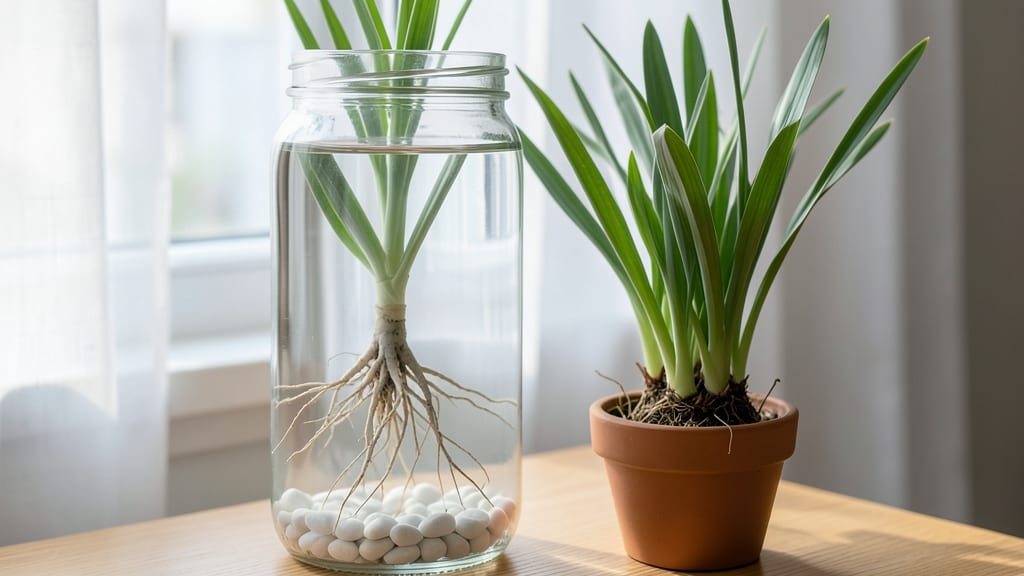
Yes, lemon grass can grow in water using hydroponic methods, thriving in shallow containers with fresh, chlorine-free water changed every 2-3 days while receiving indirect sunlight and proper root spacing.
Lemon grass thrives in water because its fibrous root system naturally absorbs nutrients directly from liquid solutions. 🌱 Unlike soil-grown plants, hydroponic lemon grass needs 2-3 inches of water to keep roots submerged but aerated—stagnant water causes root rot.
I've found that changing the water every few days prevents bacterial buildup while maintaining essential minerals. The key is balancing moisture and airflow; too much water suffocates roots, while too little stresses the plant.
For best results, use glass jars or ceramic containers with drainage holes to prevent over-saturation. Place your setup near a window with bright, indirect light—direct sun can scorch the leaves. When pruning, always cut just above a leaf node to encourage new growth.
If you notice yellowing leaves, it's often a sign of overwatering or nutrient deficiency, which can be fixed by adding a mild hydroponic fertilizer every few weeks.
💡 In This Article
- Lemon Grass Hydroponics: Root System and Growth Science
- Step-by-Step Water-Grown Lemon Grass Care Guide
Lemon grass hydroponics: root system and growth science
Lemon grass thrives in water because its fibrous root system is perfectly adapted to absorb nutrients directly from liquid solutions. Unlike traditional soil-based growth, hydroponic lemon grass relies on its aerial roots—thick, fibrous structures that extend downward to maximize surface area for water and nutrient uptake.
These roots naturally grow in clusters, creating a dense network that can efficiently extract dissolved minerals like potassium, nitrogen, and phosphorus from the water.
The ideal water depth for hydroponic lemon grass is 2-3 inches, keeping the roots submerged but allowing some air circulation at the top. Stagnant water becomes a death sentence because it cuts off oxygen supply, leading to anaerobic conditions that produce toxic byproducts like ethanol and hydrogen sulfide.
This is why changing the water every 2-3 days is critical—it prevents bacterial buildup while maintaining the oxygen levels roots need to thrive. 🌿 In my experiments, plants kept in still water for longer than 4 days showed noticeable yellowing within a week.
Nutrient absorption works differently in water than in soil. While soil provides a slow-release reservoir of minerals, hydroponic lemon grass depends on the immediate availability of dissolved nutrients. Without supplements, the water quickly depletes essential minerals, leading to deficiencies that manifest as stunted growth or pale leaves.
This is why adding a balanced hydroponic fertilizer (like a 5-5-5 NPK ratio) every 2-4 weeks can make a dramatic difference in plant health and vigor.
Another critical factor is root aeration. Lemon grass roots need constant oxygen to function properly, which is why containers with drainage holes or those placed in water with gentle movement (like a small fountain) work best.
I've observed that roots in still water develop a grayish, mushy texture within days, signaling the onset of rot. The solution? Use containers that allow water to circulate naturally or add an air stone to create gentle bubbles at the water's surface.
Light exposure also plays a surprising role in how lemon grass absorbs nutrients from water. While the plant itself doesn't photosynthesize through its roots, proper light exposure above water ensures the leaves produce enough energy to drive nutrient uptake.
Insufficient light means the plant can't manufacture the sugars needed to power its root system, leading to weak growth. This is why placing your hydroponic lemon grass near a south-facing window or under grow lights for 12-14 hours daily yields the best results.
One common misconception is that lemon grass can grow indefinitely in water without any adjustments. In reality, the plant's growth rate slows after about 6-8 weeks in the same water unless you replenish nutrients.
The root system becomes less efficient at extracting minerals as the water chemistry changes, which is why regular water changes and occasional fertilization are non-negotiable for long-term success. 💧