
Plants
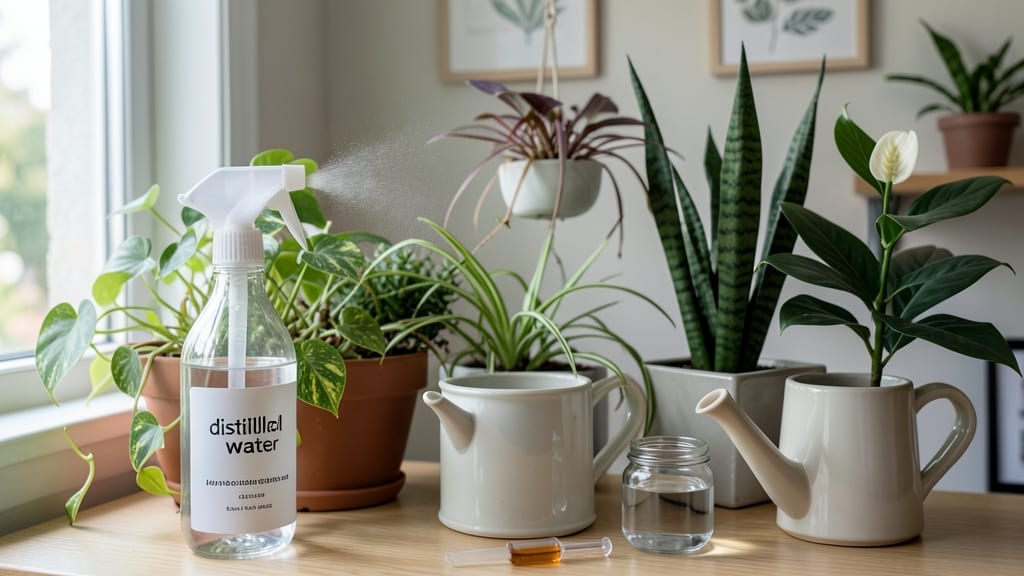
You can distilled water be used to water plants short-term, but long-term use removes essential minerals that roots need to absorb, causing nutrient deficiencies like yellow leaves and poor growth. While hardy plants may tolerate it briefly, sensitive varieties like tomatoes or citrus will suffer over time. Tap water or rainwater usually provides better mineral balance for most garden plants.
Distilled water lacks the dissolved minerals that plants rely on for healthy growth, particularly calcium, magnesium, and potassium. 🌱 Without these, roots struggle to function properly, leading to weakened stems and reduced flowering. The good news?
If you must use distilled water, you can add a pinch of epsom salt or a diluted fish emulsion to replenish lost nutrients. For most houseplants and garden varieties, tap or rainwater is the safer choice—just let rainwater sit for 24 hours first to reduce chlorine levels.
For sensitive plants like orchids or succulents, distilled water can actually be beneficial if you're careful to supplement minerals regularly. The key is understanding your plant's specific needs—some thrive in mineral-free environments, while others absolutely require them. Always observe your plants' reaction to their water source and adjust accordingly.
💡 In This Article
- How Distilled Water Affects Plant Nutrient Uptake
- Best Alternatives to Distilled Water for Houseplants and Gardens
How distilled water affects plant nutrient uptake
Plants absorb essential minerals through their roots primarily from dissolved ions in water. Distilled water has undergone a purification process that removes 99.9% of minerals and contaminants, leaving behind only H2O molecules.
This means roots miss out on critical nutrients like calcium (Ca), which strengthens cell walls, magnesium (Mg), vital for chlorophyll production, and potassium (K), which regulates water balance. Without these, roots can't maintain proper osmotic pressure, leading to poor nutrient absorption from the soil.
The problem becomes visible over weeks, not days. For example, tomatoes deprived of calcium develop blossom-end rot—black, leathery spots on fruit—while magnesium deficiency causes interveinal chlorosis, where leaves turn yellow between veins. 🌿 Citrus trees show similar symptoms with stunted growth and weak branches.
Even hardy plants like succulents may develop mushy stems when denied these minerals long-term. The root zone becomes imbalanced, as distilled water creates an environment where beneficial microbes struggle to thrive alongside the plant.
Compare this to tap water, which typically contains 10-50 ppm of dissolved minerals, or rainwater that collects trace elements from the atmosphere. A standard municipal water supply might provide 20-30 ppm calcium and 5-10 ppm magnesium, while distilled water offers near-zero levels.
Even filtered water that removes only chlorine (not minerals) is safer than distilled for most plants. The key difference lies in the electrical conductivity of the water—higher conductivity (from minerals) means better nutrient availability for roots.
What happens at the cellular level? Roots rely on these minerals to maintain their selective permeability, allowing them to absorb water and nutrients while blocking toxins. Distilled water forces roots to work harder to extract what little is available from the soil, creating an energy drain.
Over time, this leads to reduced root mass and weaker vascular systems, making plants more susceptible to disease and environmental stress. The lack of trace elements like iron and zinc also disrupts enzyme function, slowing metabolic processes.
For plants adapted to mineral-poor environments (like bog plants or some epiphytes), distilled water might be less harmful—but even they benefit from occasional mineral supplementation. The critical factor is water quality consistency.
If you switch between distilled and mineral-rich water, roots experience nutrient shock, causing fluctuations in growth patterns. This inconsistency is often why plants show sudden decline when their water source changes.
One exception is hydroponic systems, where growers deliberately use remineralized distilled water to control nutrient levels precisely. But even there, they add hydroponic nutrient solutions to replicate what soil would normally provide.
The takeaway? Distilled water isn't inherently "bad" for plants, but it requires active supplementation to prevent long-term deficiencies that manifest as visible stress symptoms.