
Orchid Care
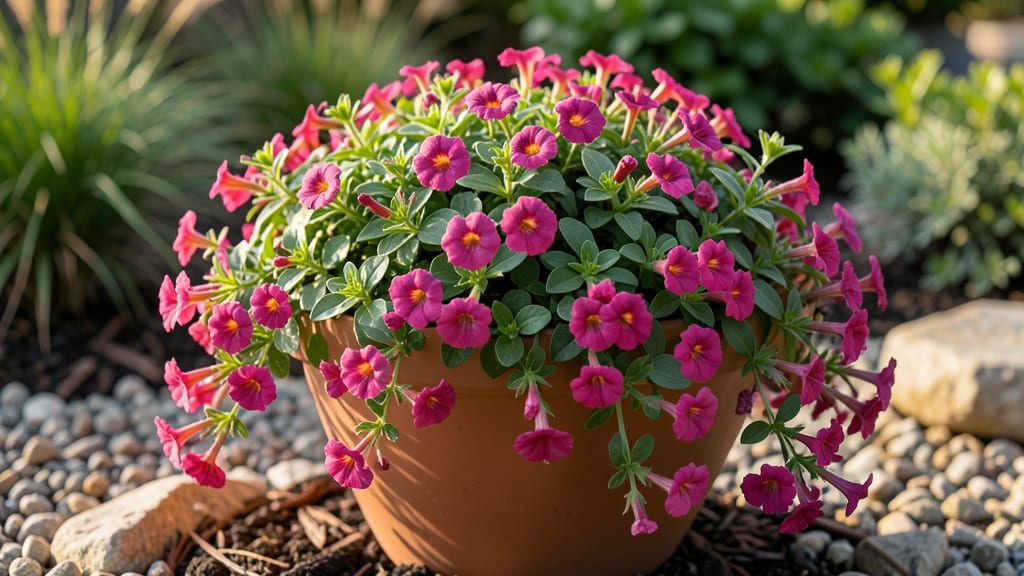
Whether calibrachoa is a perennial or annual depends on your climate: it thrives as a perennial in USDA Zones 10-12 but dies back to the ground in cooler zones, often returning from seed or roots in warmer springs. Gardeners in colder areas typically grow it as an annual to prevent frost damage.
This tropical-looking plant makes the call based on winter temperatures.
In frost-free zones like Florida or Southern California, calibrachoa's fibrous roots and shallow rhizomes let it survive dormant periods underground, then burst back to life when temperatures warm. 🌱 The key difference is that in colder climates, even light freezes can kill the plant's top growth, forcing gardeners to replant each spring.
I've seen it regrow from self-seeded volunteers in Zone 9 after mild winters, proving how resilient these plants can be when given the right conditions.
For those in cooler regions, strategic overwintering techniques like moving potted plants to sheltered spots or using thick mulch can sometimes coax a second season of blooms. The trade-off? More effort for potentially shorter-lived plants.
If you're in Zone 8 or colder, treating calibrachoa as an annual might actually save you headaches while still giving you that signature trailing beauty each summer.
💡 In This Article
- How Calibrachoa Survives Winter in Warm Climates
- Extending Calibrachoa’s Life in Cold Zones
How calibrachoa survives winter in warm climates
Calibrachoa's ability to act as a perennial in USDA Zones 10-12 comes down to its native tropical adaptations. This plant evolved with shallow, fibrous root systems that spread horizontally just below the soil surface, allowing it to access moisture during dry periods while still protecting its core from extreme heat.
The key mechanism is its dormancy response—when temperatures drop below 50°F but stay above freezing, calibrachoa enters a semi-dormant state where growth slows dramatically, conserving energy in its roots and rhizomes.
The magic happens when winter temperatures rarely dip below 32°F for extended periods. In these frost-free zones, calibrachoa's roots remain viable underground, protected by the soil's insulating properties.
Studies show that calibrachoa can survive soil temperatures as low as 28°F if the ground stays frozen for less than 2-3 weeks, though top growth will inevitably die back.
What makes this plant remarkable is its ability to regenerate from just 1-inch root fragments when spring warmth returns, often producing new shoots within 4-6 weeks of consistent temperatures above 60°F. 🌱
This survival strategy contrasts sharply with true perennials like hostas, which store energy in thick underground tubers. Calibrachoa's approach is more like annuals that self-seed—it relies on its root system's resilience rather than specialized storage organs.
The plant's natural habitat in South America's temperate regions explains why it thrives in these conditions, where winter is mild enough to preserve its root structure but cold enough to signal dormancy.
In Florida or Southern California, you'll often see calibrachoa volunteers popping up year after year from these surviving roots.
What most gardeners don't realize is that calibrachoa's regrowth timing depends on both temperature and daylight hours. The plant won't break dormancy until it receives 12+ hours of daylight combined with consistent soil temperatures above 55°F.
This dual trigger explains why you might see new growth in late winter in Zone 10 but wait until spring in Zone 9, even though both areas experience mild winters. The plant's internal clock is finely tuned to these environmental cues, making it surprisingly adaptable within its preferred climate range.
Consider this comparison: in Zone 11 (like Miami), calibrachoa might show new growth as early as January, while in Zone 10 (like Los Angeles), you're more likely to see it emerge in March.
The difference comes down to those critical 50°F soil temperature thresholds and the cumulative effect of daylight exposure. This precise timing is why calibrachoa can appear to be a reliable perennial in these zones while still requiring careful management in cooler areas.
The plant's ability to regenerate from seed also plays a role in its perennial-like behavior. Even if the original plant dies back completely, calibrachoa produces thousands of tiny seeds that can remain viable in the soil for 2-3 years.
When conditions are right, these seeds germinate, creating the illusion of a self-sustaining perennial population. This dual strategy—root survival plus seed germination—is what gives calibrachoa its persistent presence in frost-free gardens. 💫