
Advice
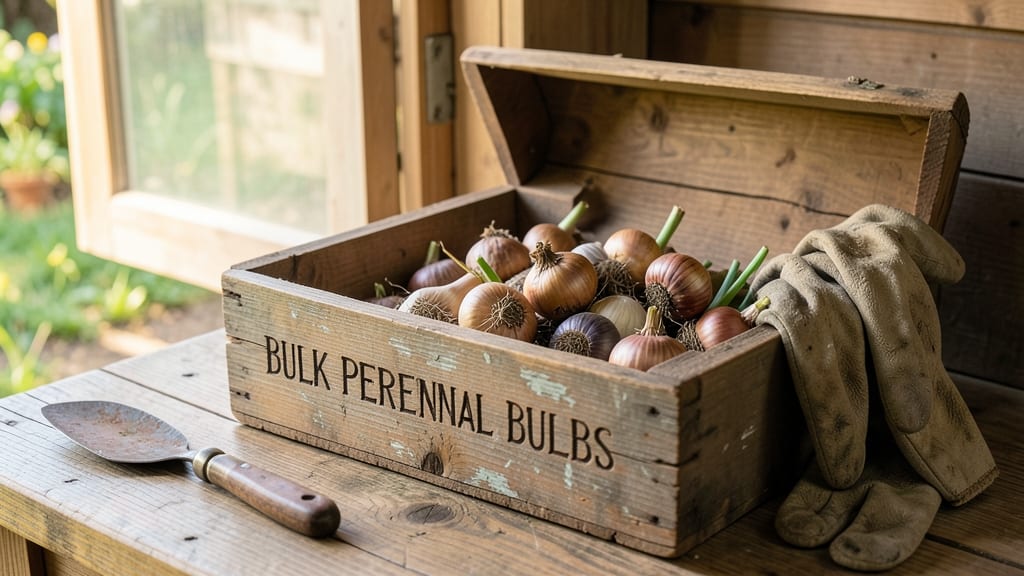
Storing bulk perennial bulbs for next year requires dry, cool conditions (35–45°F) with good airflow, like a paper bag or mesh container, and checking monthly for mold or rot. Avoid plastic or moisture to prevent spoilage before replanting in spring.
Perennial bulbs enter dormancy naturally when temperatures drop, but their survival depends on mimicking those conditions properly. 🌱 The key is balancing moisture control—too much air circulation prevents rot, while too little traps humidity that encourages fungal growth.
I've learned that even hardy bulbs like daffodils benefit from this careful storage, as their papery skins need to breathe. For tender varieties, I add an extra layer of dry peat moss in the container to absorb any accidental moisture during winter months.
One common mistake I see is storing bulbs in sealed plastic bags—this creates a sauna effect that dries them out prematurely. Instead, opt for breathable materials like burlap sacks or cardboard boxes with ventilation holes.
Labeling each container with the bulb type and harvest date helps track which varieties need special care when replanting time arrives. Most bulbs will last 3-5 years this way, but I always check for soft spots or musty smells during monthly inspections.
💡 In This Article
- Ideal Storage Conditions for Perennial Bulbs
- Step-by-Step Bulk Perennial Bulb Storage Guide
Ideal storage conditions for perennial bulbs
Perennial bulbs thrive in storage when you replicate their natural dormancy state. The 35–45°F temperature range triggers metabolic slowdown, conserving energy while preventing premature sprouting. At these temperatures, enzymatic activity drops to minimal levels—similar to how refrigeration preserves food—while maintaining just enough moisture in the bulb tissues to prevent desiccation.
Hardy varieties like tulips and alliums can handle slightly cooler 32–40°F conditions, while tender types such as dahlias need the warmer end of the spectrum (40–45°F) to avoid chilling injury.
Humidity control is equally critical because bulbs absorb moisture through their protective skins. The optimal relative humidity should stay between 40–60%—any higher risks fungal growth, while lower levels cause the outer layers to dry out and crack.
I've noticed that bulbs stored in unconditioned basements often suffer from humidity swings, especially during spring thaw when condensation forms on container walls.
This is why I always place a small silica gel packet or a handful of uncooked rice in the storage container—these absorb excess moisture without creating a plastic-like environment.
Airflow prevents stagnant air pockets that trap ethylene gas—a natural plant hormone that accelerates aging. A gentle breeze through mesh containers mimics natural wind patterns in their native habitats, where bulbs would experience intermittent airflow.
For example, storing daffodil bulbs in a paper bag with multiple small holes punctured (about 1/8-inch diameter) creates micro-ventilation while maintaining structural integrity. The key is avoiding still air—bulbs stored in sealed plastic bins develop musty odors within weeks due to trapped ethylene and condensation.
Light exposure matters too, though it's often overlooked. Bulbs should be stored in complete darkness—even indirect sunlight triggers chlorophyll production, which depletes stored nutrients meant for next year's growth. I've seen gardeners keep bulbs in sunny basements where they develop green shoots prematurely.
The solution? Use opaque containers or wrap them in black plastic sheeting if natural darkness isn't available. This darkness preservation method works because bulbs rely on stored starches rather than photosynthesis during dormancy.
Monitoring these conditions requires simple tools: a thermometer/hygrometer combo ($15–$25) placed near the bulbs gives real-time data, while a monthly visual inspection reveals early signs of trouble. Look for shriveled skins (too dry), soft spots (rot), or white fuzz (mold)—all indicators that conditions need adjustment.
For example, if you notice condensation on container walls during winter, increase airflow immediately by adding more ventilation holes or switching to a larger container.
What most gardeners don't realize is that bulb storage isn't one-size-fits-all. Tender bulbs like cannas need 50–60°F temperatures and higher humidity (60–70%) because they originate from tropical climates. These require a different approach—often stored in sphagnum moss kept barely moist rather than completely dry.
The science behind this is that tropical bulbs have thinner protective layers that can't withstand the dry conditions hardy bulbs tolerate.