
Plants
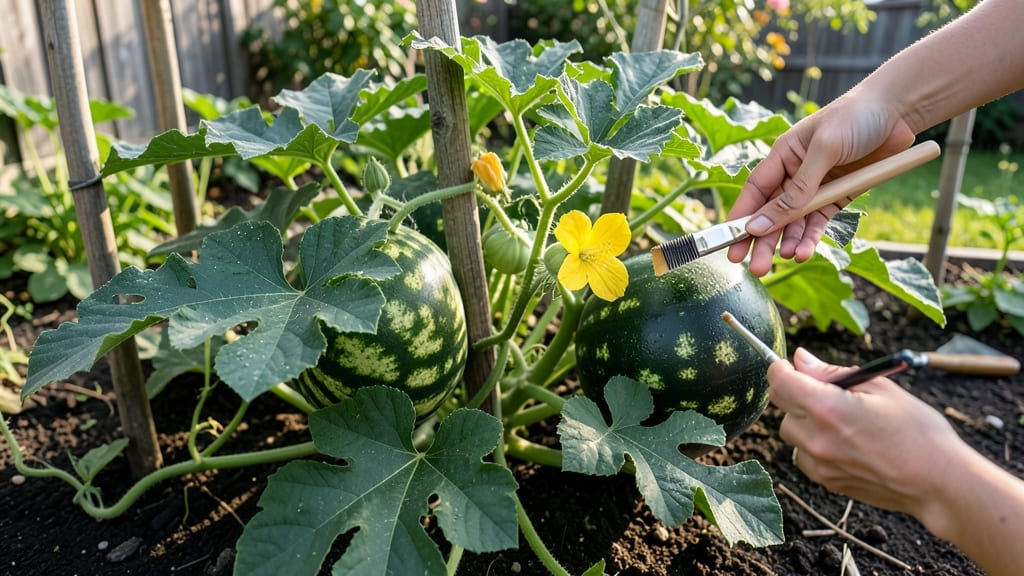
Watermelon plants aren't fully self-pollinating—they need pollen transfer between male and female flowers for full-sized fruit, though some varieties may set small fruit without it. Bees and hand-pollination both boost yields dramatically.
Watermelon plants rely on cross-pollination because their male and female flowers grow on separate vines—this means pollen must physically move from one to the other. 🌱 While some varieties can produce small fruit through self-pollination, the process is inefficient and rarely yields marketable melons.
The key difference lies in fruit size and quality: cross-pollinated watermelons develop thicker rinds and sweeter flesh, making them far more desirable for harvest.
Natural pollinators like bees handle most of the work in outdoor gardens, but gardeners in enclosed spaces or areas with low bee activity often need to step in.
Hand-pollination is simple: use a small brush or cotton swab to transfer pollen from male flower anthers to female flower stigmas on warm, dry mornings when flowers are open. This mimics what bees do naturally, ensuring better fruit set and larger melons.
💡 In This Article
- How Watermelon Pollination Works Naturally
- Boosting Watermelon Fruit Production: Pollination Tips
How watermelon pollination works naturally
Watermelon plants exhibit monoecious flowering, meaning each vine produces separate male and female flowers. Male flowers appear first as small, yellow blossoms with no fruit at the base, while female flowers have a tiny, round ovary beneath the petals.
The key to successful pollination lies in transferring pollen from male anthers to female stigmas—a process bees handle with remarkable efficiency in natural settings. 🌸 Without this transfer, female flowers may drop off or produce only small, seedless fruit.
The biological mechanism involves pollen grains landing on the sticky stigma of female flowers, where they germinate and travel down the style to fertilize the ovules. This cross-pollination between different plants (or even different vines of the same plant) triggers a hormonal response that stimulates fruit development.
Studies show cross-pollinated watermelons can weigh 2-3 times more than self-pollinated ones, with thicker rinds and sweeter flesh due to increased sugar accumulation. The pollen itself contains proteins that signal the plant to allocate more resources to fruit growth.
Natural pollinators play a crucial role in this process. Bees, particularly bumblebees and honeybees, are the primary agents, but wind can also carry pollen over short distances. However, watermelon pollen is relatively heavy and sticky, making wind pollination less effective than with lighter crops like corn.
The optimal conditions for bee activity—70-85°F temperatures and calm winds—directly correlate with higher pollination rates in watermelon fields. 🐝 In areas with limited bee activity, pollen may fail to transfer efficiently, leading to poor fruit set.
Here's what happens when pollination succeeds: The fertilized ovary begins expanding within 24-48 hours, and the fruit's genetic material combines to produce seeds. Each seed contains a miniature plant embryo, while the surrounding flesh develops from the ovary wall.
This is why cross-pollinated melons often have more uniform seed patterns and better flavor—diverse genetic input creates a more balanced fruit chemistry. The plant's energy shifts from vegetative growth to reproductive development, resulting in larger vines and heavier fruit loads.
For gardeners observing their plants, successful pollination shows up as female flowers developing into small green fruits within 5-7 days. The first signs are a slight swelling at the base of the flower and a change in color from pale green to deeper green.
In contrast, unpollinated flowers typically wilt and drop off within 3-5 days. This visual cue helps identify which flowers received pollen and which need assistance. The timing matters because early pollination leads to larger fruit with more time to mature.
What most people don't realize is that watermelon plants can actually produce both male and female flowers on the same vine throughout the growing season. Early in the season, male flowers dominate to ensure pollen availability, while female flowers become more prevalent as the plant matures.
This sequential flowering pattern maximizes the plant's reproductive success by creating an environment where pollinators can efficiently transfer pollen from abundant male flowers to emerging female flowers. 🌱