
Pests and Diseases
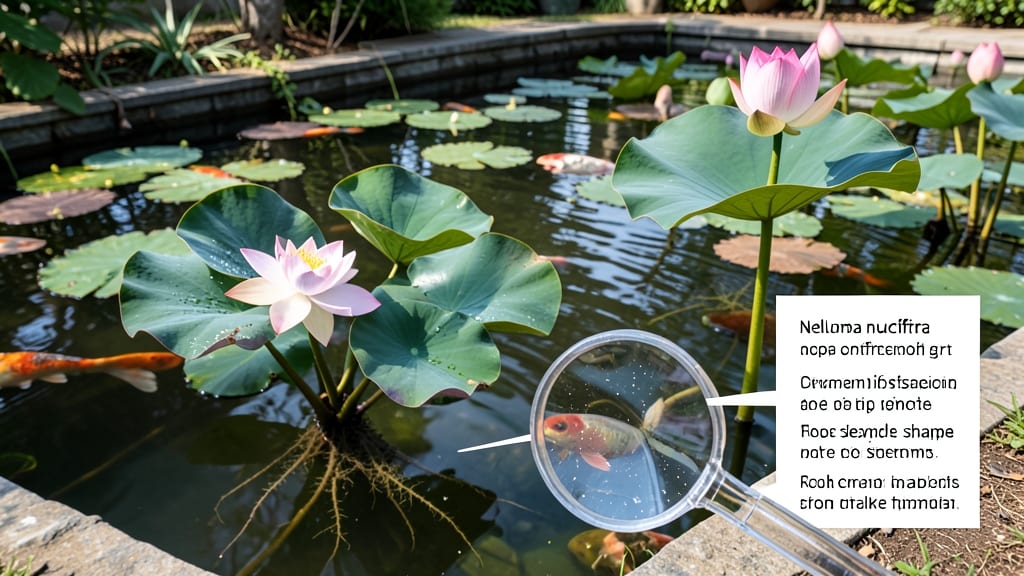
Water lily and lotus are not the same: these aquatic plants belong to different botanical families, grow in distinct ways, and serve unique purposes in gardens and cultures worldwide.
While both thrive in ponds, water lilies (family Nymphaeaceae) float on the surface with broad, rounded leaves and daytime-blooming flowers, while lotus plants (family Nelumbonaceae) emerge from muddy roots with vertical stems and fragrant night-blooming blossoms. 🌿 The lotus also produces edible rhizomes and seeds, whereas water lilies are primarily ornamental—though their rhizomes can be used in traditional medicine.
These differences extend to their ecological roles, with lotus plants often serving as habitat for aquatic wildlife due to their sturdy root systems.
Their cultural significance also varies dramatically: lotus symbolizes purity in Buddhism and was revered in ancient Egypt, while water lilies appear in European art and folklore as symbols of beauty and mystery.
In gardening, lotus requires deeper water and more sunlight, while water lilies adapt to shallower ponds and partial shade. Understanding these distinctions helps gardeners and chefs choose the right plant for their needs—whether for pond aesthetics or culinary uses.
💡 In This Article
- Botanical and Biological Differences Between Water Lilies and Lotus Plants
- Practical Uses of Water Lilies vs Lotus in Gardening and Culinary Applications
Botanical and biological differences between water lilies and lotus plants
At the core, these aquatic plants belong to entirely separate botanical families: water lilies thrive in Nymphaeaceae, while lotus plants belong to Nelumbonaceae. This classification isn't just academic—it reflects fundamental differences in their biology.
Water lilies develop from floating rhizomes that spread horizontally just below the water's surface, creating a network of roots that anchor them without emerging above the water.
Lotus plants, however, grow from thick, vertical rhizomes buried deep in the mud, with stems that push upward through the water column to reach the surface.
Their growth habits create distinct ecological niches. Water lilies form dense mats on the water's surface, providing shade that suppresses algae growth and creates microhabitats for amphibians and insects. Their leaves, often 12-24 inches wide, are waxy and slightly cupped to shed water effectively.
Lotus plants, meanwhile, grow in deeper water (typically 3-6 feet deep) and develop circular leaves that float horizontally on the water's surface, creating a different type of habitat that supports fish and aquatic birds.
The lotus's vertical growth habit also allows it to thrive in areas where water levels fluctuate seasonally.
Flowering patterns reveal another key difference. Water lilies typically bloom during daylight hours, with flowers that open wide to attract pollinators like bees and butterflies. These flowers often have 4-12 petals and can range from 3-10 inches in diameter, depending on the species.
Lotus flowers, however, are nocturnal pollinators—they open in the evening and close by midday, emitting a sweet, honey-like fragrance that attracts moths and beetles. Their flowers are more complex, often with 8-16 petals arranged in multiple layers, creating a three-dimensional appearance that's quite different from the flatter water lily blooms.
Their reproductive strategies also differ significantly. Water lily seeds develop within the flower's receptacle and remain attached to the plant until they mature. Lotus plants, however, produce seeds in spiky seed heads that float away from the parent plant, allowing for wider dispersal.
This difference in seed dispersal explains why lotus often forms dense colonies in suitable environments, while water lilies tend to spread more gradually through their rhizome networks. The lotus's seed heads can contain hundreds of seeds, each capable of germinating when conditions are right.
One of the most striking biological differences lies in their leaf structure. Water lily leaves are typically heart-shaped with smooth edges, while lotus leaves have a distinctive round, fan-like shape with pronounced veins that create a pattern resembling a spiderweb.
This structural difference affects their buoyancy—water lily leaves are designed to float with minimal water displacement, while lotus leaves have a denser, more rigid structure that allows them to maintain their position even in moving water.
The lotus's leaves also have a unique ability to repel water due to their microscopic surface structures, which helps keep them clean and functional in aquatic environments.
Understanding these biological distinctions helps explain why these plants serve different ecological roles. Water lilies often act as natural water filters, absorbing excess nutrients that would otherwise fuel algae blooms. Lotus plants, with their deeper root systems, help stabilize pond bottoms and prevent erosion.
Their different growth habits also mean they respond differently to environmental changes—water lilies may struggle in very deep water, while lotus plants can thrive in conditions that would be too challenging for their floating counterparts. 🌊