
Watering
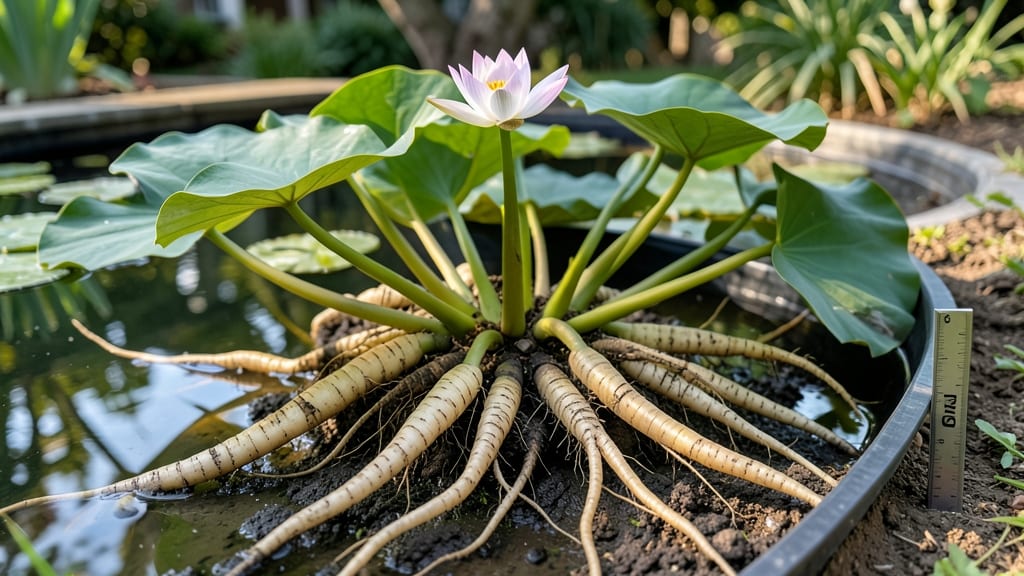
Water lily roots look like thick, knobby tubers or elongated, fibrous rhizomes, depending on the species. Hardy water lilies develop gnarled, potato-like tubers, while tropical varieties produce smooth, stringy rhizomes buried in mud or shallow water.
Water lily roots vary dramatically between species, with hardy varieties like yellow water lilies (Nymphaea odorata) forming dense, gnarled tubers that store energy for regrowth.
These tubers often develop rough, knobby surfaces from years of seasonal dormancy. 🌿 Tropical species, such as the giant Victoria amazonica, grow long, stringy rhizomes that spread horizontally through pond sediment, anchoring the plant while allowing rapid expansion.
The key difference lies in their growth habits—tubers prioritize energy storage, while rhizomes focus on spreading and colonizing new areas.
When planting, you'll notice these structural differences matter for survival. Tubers need partial burial in nutrient-rich soil, while rhizomes should rest just below the surface to encourage new shoots. Always inspect roots for signs of rot or damage before replanting—healthy roots feel firm and emit a fresh, earthy scent.
💡 In This Article
- Identifying Water Lily Root Structures by Species
- How to Prepare and Plant Water Lily Roots Correctly
Identifying water lily root structures by species
The root systems of water lilies reveal fascinating adaptations shaped by climate and survival needs. Hardy species like the fragrant Nymphaea odorata grow thick, potato-like tubers that can reach 2-4 inches in diameter.
These tubers develop rough, knobby surfaces from annual growth rings, much like tree trunks, storing starches to endure cold winters. 🌿 In contrast, tropical giants such as Victoria amazonica produce smooth, fibrous rhizomes that stretch 3-6 feet long, allowing rapid horizontal spread across pond floors.
Climate plays a crucial role in these structural differences. Hardy water lilies (Nymphaea genus) prioritize energy storage in tubers to survive freezing temperatures, while tropical species (Victoria genus) invest in rhizome expansion to colonize warm, nutrient-rich waters.
The tuberous varieties often develop 1-3 main growth points per tuber, while rhizomes produce multiple lateral shoots every 6-12 inches along their length. This explains why tropical water lilies spread aggressively in ideal conditions.
Seasonal changes dramatically alter root appearance. In autumn, hardy water lily tubers shrink and develop protective bark-like layers, while tropical rhizomes remain active but slow growth. Spring brings rapid regeneration—tubers swell with new shoots, and rhizomes develop fine root hairs to absorb nutrients from pond sediment.
The texture difference is striking: tubers feel dense and woody when mature, while rhizomes remain soft and stringy, almost like thick vines.
These structural adaptations directly impact how each species thrives in its environment. Hardy tubers can remain dormant underwater for months, while tropical rhizomes require consistent warmth and moisture. The growth patterns also explain why some water lilies need partial winter protection while others flourish year-round in tropical climates.
Understanding these differences helps gardeners select the right species for their pond conditions.
For visual identification, examine the root's attachment point. Tuberous varieties show clear stem scars where leaves once emerged, while rhizomes display numerous small buds along their length.
The size difference is also telling: a mature Nymphaea tuber might weigh 1-2 pounds, while a Victoria rhizome section could stretch 2 feet but weigh only 4-8 ounces. These characteristics make species identification straightforward for experienced growers.