
Vegetables
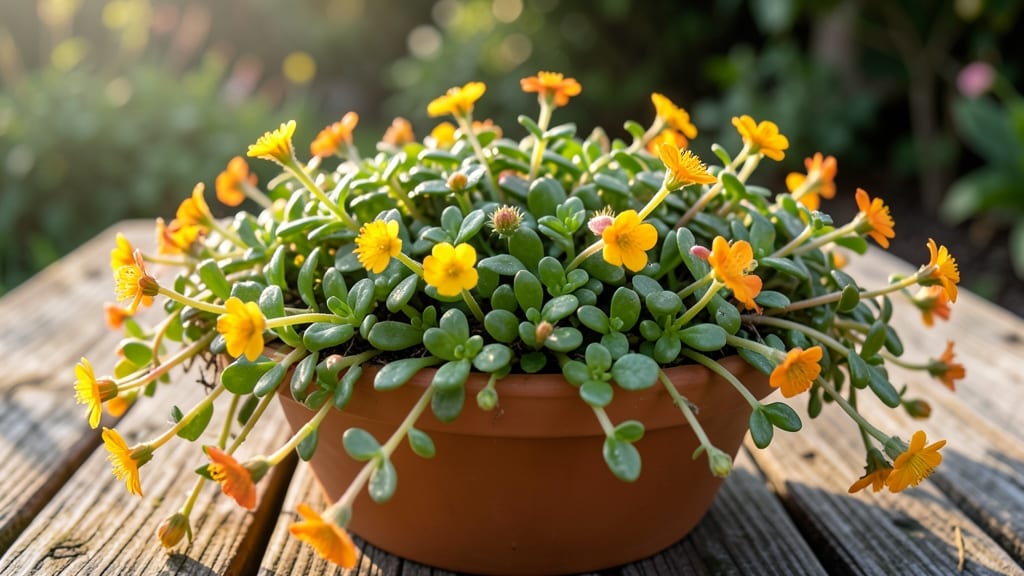
Purslane is not a perennial—it grows as an annual succulent that completes its life cycle in one season before frost kills it back. Yet its seeds spread aggressively, often reappearing each year in warm regions as if it were a persistent weed.
Purslane's annual nature comes down to its tropical origins—it evolved to thrive in short, hot growing seasons rather than endure cold winters. 🌱 The plant's thick, water-storing leaves help it survive drought but can't protect it from freezing temperatures below 28°F.
What makes it seem perennial is its prolific seed production: a single plant can drop thousands of seeds that lie dormant until conditions warm up again.
In warmer climates like USDA zones 9-11, you can treat purslane almost like a perennial by harvesting seeds from mature plants in late summer. Simply let some plants bolt and collect the seeds to replant next season, creating your own self-seeding cycle.
This mimics how it naturally recolonizes garden beds year after year.
💡 In This Article
- Why Purslane Dies Back in Cold Weather
- How to Grow Purslane Year-Round in Warm Climates
Why purslane dies back in cold weather
The key reason purslane behaves as an annual lies in its tropical ancestry—it evolved in regions where frost never occurs. Its cellular structure lacks the hardiness mechanisms of true perennials.
While its thick, jelly-like leaves store water (up to 90% moisture content), they can't withstand freezing temperatures below 28°F. When frost hits, the cell walls rupture from ice crystal formation, killing the plant instantly.
What's fascinating is how its survival adaptations work against it in cold climates. Purslane's shallow root system (6-12 inches deep) thrives in heat by quickly absorbing surface moisture, but this same trait makes it vulnerable to winter dieback.
Unlike perennials that develop deep taproots or insulating woody stems, purslane's entire energy goes into rapid leaf production during its short growing window.
The plant's lifecycle is perfectly timed for warm-season growth. Seeds germinate at soil temperatures above 60°F, and within 30-60 days, plants reach maturity and produce thousands of seeds.
This rapid cycle explains why it disappears after frost—it completes its entire life cycle before winter arrives, leaving only dormant seeds behind.
Interestingly, purslane's annual nature creates a paradox: while it's not truly perennial, its seed persistence makes it behave like one in mild winters. In zones where temperatures dip to 30°F but don't stay there, some plants may survive briefly, only to regrow from seeds when conditions warm again.
This creates the illusion of perennial behavior when it's actually just a new generation emerging.
Scientifically, purslane lacks the physiological adaptations of perennials like:
- Cold hardiness proteins: Compounds that protect cell membranes in freezing temps
- Bud dormancy: Specialized growth points that remain viable through winter
- Anti-freeze compounds: Natural chemicals that lower freezing points in plant tissues
Instead, purslane relies entirely on its seed bank—a survival strategy that works beautifully in frost-free climates but leaves it vulnerable when temperatures drop. The trade-off between rapid growth and cold tolerance explains why this resilient plant still can't survive winter's chill.