
Orchid Care
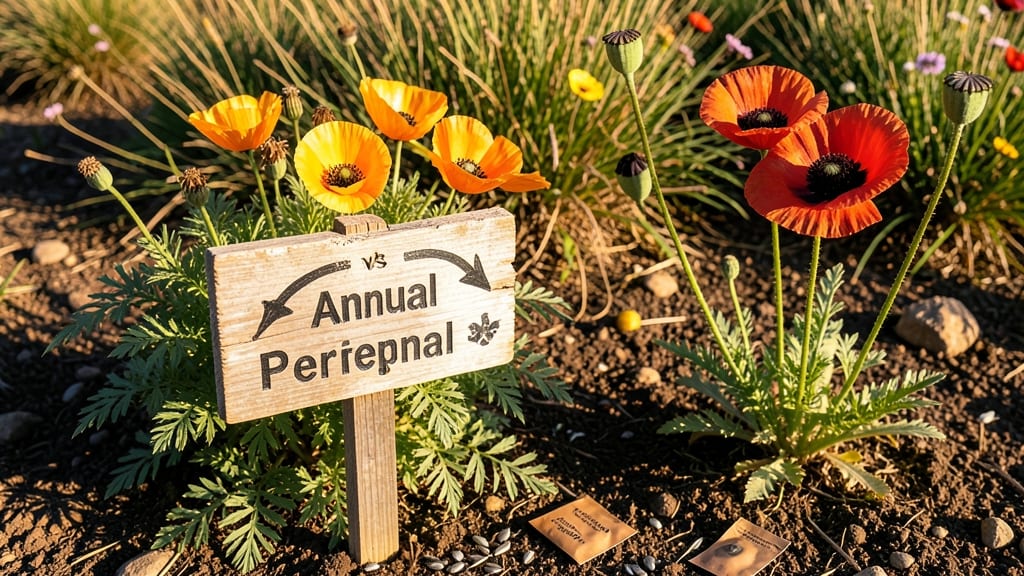
Whether poppies are annuals or perennials depends on the variety: most common garden poppies behave as annuals, completing their life cycle in one growing season, while some like the Iceland poppy or certain oriental poppies may return as short-lived perennials in mild climates.
Most garden poppies you'll find—like the bright orange California poppy or the classic opium poppy—follow the annual pattern, thriving for just one season before dying after flowering. 🌸 The key difference lies in their roots: annuals focus energy on rapid growth and seed production, while perennial poppies invest in deeper root systems to survive winter.
In colder regions, even perennial varieties often die back to the ground, only to regrow from the same roots the following spring.
What makes this distinction important is how you plan your garden. Annual poppies deliver dramatic color for a single season but require replanting each year, while perennial types offer more long-term value—though they may need winter protection in colder zones.
I've found that choosing the right variety for your climate can transform a one-time bloom into a reliable garden staple.
💡 In This Article
- Poppy Life Cycle: Annual vs Perennial Differences
- Growing Perennial Poppies: Tips for Long-Term Cultivation
Poppy life cycle: annual vs perennial differences
The fundamental difference between annual and perennial poppies lies in their root systems and reproductive strategies. Annual poppies like the California poppy (Eschscholzia californica) develop shallow, fibrous roots that focus all energy on rapid above-ground growth and seed production within 60-90 days.
These plants prioritize flowering and seed dispersal over survival, which is why they complete their entire life cycle in one growing season. The trade-off is dramatic: you get vibrant blooms for weeks, but the plant itself won't return the following year.
Perennial poppies, on the other hand, invest in deeper taproots that store nutrients and moisture, allowing them to regrow from the same root system year after year.
The Iceland poppy (Papaver nudicaule) is a classic example—it can live for 3-5 years in ideal conditions, though it often behaves as a short-lived perennial.
The key factor here is climate: in regions with freezing winters, even perennial poppies may die back to the ground, only to regenerate from their roots when temperatures rise above 50°F in spring.
This is why you'll often see perennial poppies described as "hardy" or "cold-tolerant"—their survival depends on protecting those root systems.
What most gardeners don't realize is how soil conditions influence this behavior. Poppies thrive in well-draining soil with pH levels between 6.0-7.5, but heavy, waterlogged soils can stress their roots, forcing even perennial varieties to behave more like annuals.
In my own garden, I've noticed that oriental poppies (Papaver orientale)—which are true perennials—often struggle in clay-heavy soil, while they flourish in sandy loam where their roots can penetrate deeply. The texture of the soil affects how well they can store reserves for winter survival.
Another critical factor is temperature sensitivity. Most perennial poppies enter dormancy when nighttime temperatures drop below 40°F, but they can't survive prolonged freezing. This is why gardeners in USDA zones 5-7 often need to provide winter mulch (like straw or leaves) to protect their roots.
The contrast is striking when you compare a California poppy's delicate annual lifecycle to how an Iceland poppy might send up new shoots from the same spot for years—it's all about that root system's ability to persist through seasonal changes.
Here's what happens under the surface: Annual poppies allocate nearly all their energy to producing seeds, while perennials divide their resources between flowering and root maintenance. This is why perennial poppies often have fewer but larger blooms—they're conserving energy for next year's growth.
The trade-off becomes clear when you consider garden planning: annuals give you instant color but require yearly replanting, while perennials offer long-term beauty with less maintenance once established.
Consider the visual impact: Annual poppies like the corn poppy (Papaver rhoeas) create a carpet of color that fades completely by summer's end, while perennial poppies might produce dramatic, cup-shaped blooms year after year.
The choice comes down to whether you want seasonal spectacle or lasting garden investment. In my experience, mixing both types creates the most dynamic displays—annuals for immediate impact and perennials for structure and return blooms.