
Orchid Care
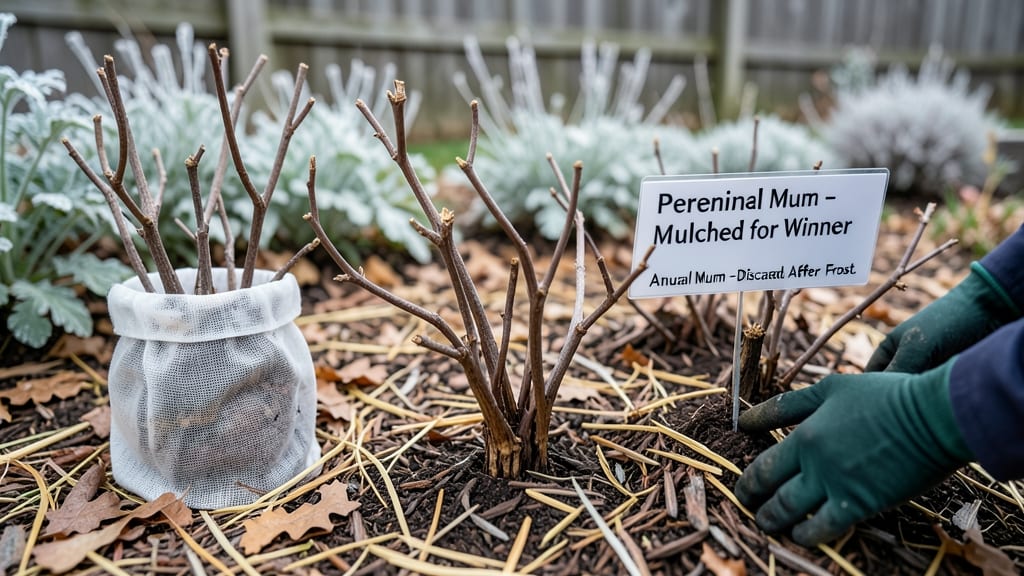
Whether mums are annuals or perennials for winter depends on your climate: they thrive as perennials in mild zones but are typically treated as annuals in colder regions due to frost-sensitive roots. Hardy varieties like 'Autumn Joy' can survive winters in USDA zones 5-9 with proper protection.
Mums' winter fate hinges on your hardiness zone and how well you shield their roots. 🌱 In warmer areas (zones 8-11), these plants naturally return year after year, but colder climates force gardeners to either dig up and store tubers or provide heavy mulch.
The key difference lies in root hardiness—tender varieties bolt when temperatures dip below 20°F, while cold-resistant types like 'Autumn Joy' handle 10°F with mulch protection. Even in cold zones, with proper overwintering techniques, you can coax these vibrant bloomers back each spring.
For gardeners in zones 3-5, the solution often involves division and storage—lifting plants before frost and keeping them in dry, cool conditions until spring. This mimics their natural dormancy cycle while preventing root damage.
The trade-off? Annual treatment means replanting each year, but it preserves your favorite varieties and extends their lifespan when stored correctly.
💡 In This Article
- Why Mums Die in Winter: The Science of Cold Sensitivity
- Winterizing Mums: Step-by-Step Survival Guide for Cold Climates
Why mums die in winter: the science of cold sensitivity
The root of the problem lies in mums' (Chrysanthemum spp.) delicate underground structure. Their fibrous roots contain high moisture content that freezes at 32°F, causing cell walls to rupture.
Unlike woody perennials, mums store minimal starch reserves in their roots, leaving them vulnerable to winter dieback when temperatures drop below 20°F for extended periods. This is why gardeners in zones 3-5 often treat them as annuals—the roots simply can't withstand prolonged frost.
Hardy mum varieties like 'Autumn Joy' (zone 5) have evolved thicker root crowns that can tolerate 10°F with proper mulching, but even these struggle when moisture gets trapped in the soil. Frost heaving—when soil freezes and expands—can lift roots out of the ground, exposing them to drying winds.
The science gets even more interesting when you consider that mums' flowering mechanism is triggered by shorter daylight hours, but their roots need consistent moisture to support this energy demand. In winter, frozen soil creates a paradox: roots can't access water but still lose moisture through transpiration.
What most gardeners don't realize is how quickly damage occurs. A single hard freeze (25°F) can kill tender mum roots within 24 hours, while hardy varieties may survive 10°F for short periods. The damage isn't just about temperature—it's about the rate of temperature change.
Rapid drops cause ice crystals to form in root cells, physically rupturing their membranes. This is why mulching with 4-6 inches of straw or leaves creates an insulating barrier that moderates temperature fluctuations by 10-15°F.
There's also a genetic component to winter hardiness. Tender mum varieties (like 'Mammoth' or 'Coca-Cola') were bred primarily for their vibrant fall blooms rather than cold tolerance. Their root systems lack the deep taproots found in wild chrysanthemums, which can penetrate 12-18 inches deep to access warmer soil layers.
This evolutionary trade-off explains why gardeners in warmer climates can grow mums as perennials—they've adapted to milder winters where roots can remain active year-round.
One fascinating adaptation in hardy mums is their ability to produce anti-freeze proteins similar to those found in winter wheat. These proteins bind to ice crystals, preventing them from growing large enough to damage cell walls.
However, this protection only works down to about 10°F—any colder, and even the hardiest varieties will suffer root damage. This biological limitation is why gardeners in zone 5 must combine mulching with other protective measures like row covers or cold frames to push survival limits.
The good news is that even in cold climates, you can preserve mum varieties through division. When you lift and store tubers at 35-40°F with 50-60% humidity, you're essentially putting the plant into artificial dormancy—mimicking how wild chrysanthemums survive harsh winters in their native Asia.
The key is maintaining this balance: too dry, and roots desiccate; too moist, and they rot. This storage method transforms what would be a winter casualty into a reliable perennial for the next growing season. 🌱