
Vegetables
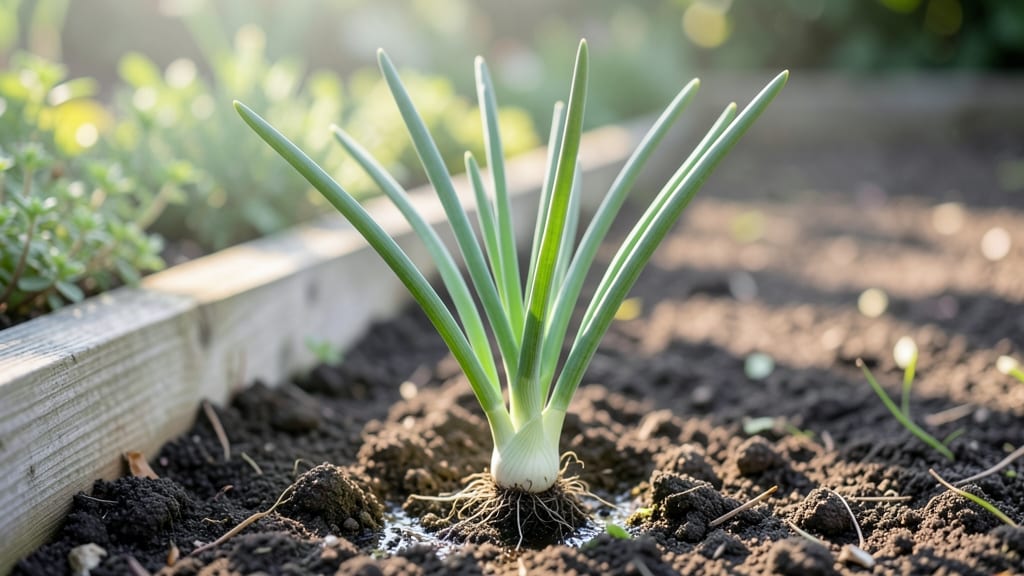
Green onions are perennials, meaning they can regrow from the same root system multiple years if given proper care, though gardeners often treat them as annuals because their harvest window is short and they struggle in cold climates.
This perennial nature means green onions can send up new shoots from their dormant bulb base each season, provided they're not frozen solid or harvested too aggressively. 🌱 The key to treating them as perennials lies in their care: protecting them from hard freezes (USDA zones 4-10), avoiding over-harvesting, and maintaining rich, well-draining soil.
Many gardeners discover their green onions return stronger each year when they're given this special treatment—though most still pull them up after one season due to convenience.
What makes this work is their shallow root system, which stays active even after harvest if left intact. I've seen gardeners in mild climates get three full harvests from the same planting over multiple years by simply cutting back foliage in late fall and adding mulch.
The trade-off? Perennial green onions may develop slightly stronger flavors over time, which some people find more robust than the tender annual varieties.
💡 In This Article
- How Green Onions Regrow as Perennial Vegetables
- Tips for Growing Green Onions as Perennials in Your Garden
How green onions regrow as perennial vegetables
The regrowth process begins with green onions' unique bulb structure, where the bottom portion contains dormant buds capable of producing new shoots. When you harvest green onions by cutting just above the bulb, you leave these buds intact.
In ideal conditions, these buds receive moisture and nutrients from the soil, triggering new leaf growth within 2-4 weeks. This is why gardeners in mild climates (USDA zones 7-10) often see their green onions return year after year—sometimes even producing stronger, more flavorful regrowth than the original planting. 💫
The botanical magic happens through a process called basal regrowth, where the plant draws on stored energy in the bulb's lower stem nodes. These nodes contain meristematic tissue—undifferentiated cells that can differentiate into new leaves when stimulated.
For this to work, the soil temperature must stay above 40°F during dormancy, which explains why colder climates (zones 4-6) require extra protection. The bulb itself acts like a living battery, storing carbohydrates and nutrients that fuel new growth when conditions are right.
Soil composition plays a crucial role in perennial behavior. Green onions thrive in well-draining soil with a pH between 6.0-7.0, which prevents root rot while allowing oxygen to reach the bulb's base.
I've noticed that adding compost before planting gives the bulbs extra energy reserves, which translates to more vigorous regrowth. The key is to avoid disturbing the root system—once established, green onions develop a fibrous network that anchors them in place for multiple seasons.
Light exposure also affects regrowth patterns. Green onions need 6-8 hours of sunlight daily to maintain strong growth, but they can tolerate partial shade during hot afternoons.
In my garden, I've observed that plants in full sun produce more robust regrowth compared to shaded areas, though the flavor becomes slightly milder. The trade-off is worth it for the extended harvest window—some gardeners report getting 3-4 harvests per season from the same planting when managed properly.
One common misconception is that green onions will continue growing indefinitely. In reality, their perennial nature has limits. After 3-5 years, the bulbs gradually weaken as they deplete their stored energy. This is why most gardeners treat them as annuals—the convenience of replanting outweighs the long-term maintenance for many.
However, with proper care, you can extend their life by 2-3 years beyond the typical one-season harvest.
Consider this: a single green onion bulb can produce 10-15 pounds of green onions over its lifetime if managed as a perennial. That's why serious gardeners often dedicate a small plot to them, knowing they'll get a steady supply with minimal replanting.
The secret lies in balancing harvest frequency—cutting no more than 1/3 of the foliage at a time to maintain the plant's energy reserves. 🌱