
Vegetables
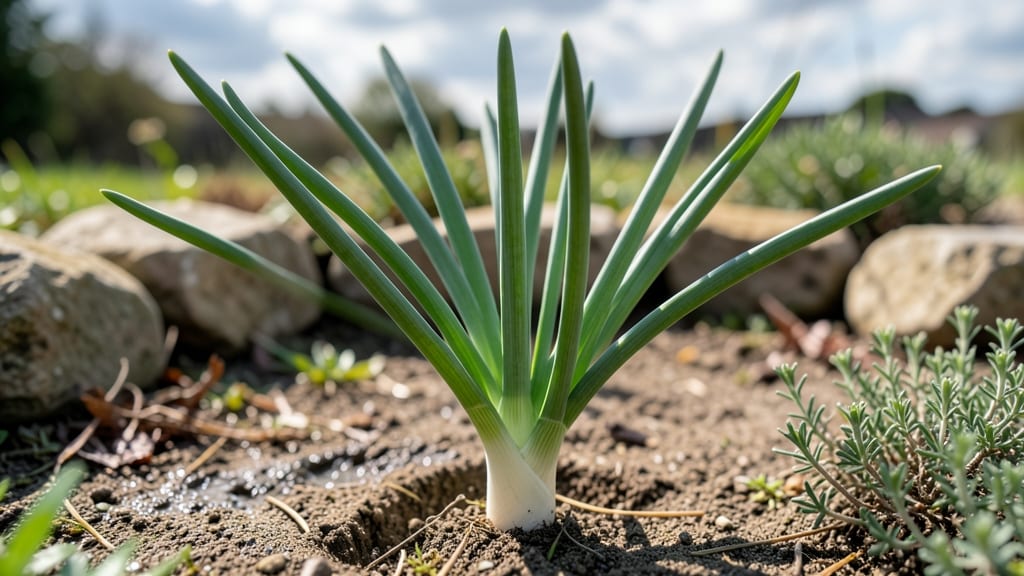
Yes, bunching onions are perennial plants that regrow each year from their base when grown in suitable climates with proper care. These hardy vegetables thrive in USDA zones 3-10, though they may die back during frost before returning in spring.
This perennial behavior comes from their unique growth structure—bunching onions develop a small bulb at the base that stores energy, allowing them to regenerate even after cutting. 🌱 Unlike annual onions that die completely after harvest, bunching onions simply go dormant in cold weather, making them ideal for gardeners who want a low-maintenance green onion supply.
The key to their success lies in protecting their roots during winter and providing consistent moisture throughout the growing season.
For best results, I recommend leaving at least 4-6 inches of the green tops after harvest to maintain the plant's energy reserves. In colder zones, adding 3-4 inches of mulch before frost helps insulate the roots, while in warmer climates, they may continue producing year-round with regular watering.
This hardiness makes them one of the most forgiving perennial vegetables for home gardens.
💡 In This Article
- How Bunching Onions Survive as Perennials
- Tips for Encouraging Year-Round Bunching Onion Growth
How bunching onions survive as perennials
Bunching onions, also called green onions or scallions, survive as perennials thanks to their specialized underground structure. Unlike annual onions that develop a large bulb for storage, bunching onions form a small, shallow bulb—often just 1-2 inches in diameter—that serves as their energy reserve.
This bulb contains meristematic cells capable of regenerating new shoots when conditions improve, even after multiple harvests. 🌱 The key difference from annual onions lies in their growth focus: bunching onions prioritize leaf production over bulb development, allowing them to regrow from the same base year after year.
Their perennial nature also depends on temperature tolerance. Bunching onions can handle light frosts down to 20°F, though prolonged exposure below 15°F may kill the tops.
What makes them resilient is their ability to enter dormancy—a survival mechanism where growth slows dramatically in cold weather while the bulb maintains its viability. This dormancy cycle explains why they "die back" in winter but return in spring.
In warmer climates (zones 8-10), they may continue growing year-round with minimal care, producing new leaves continuously.
This regrowth ability stems from their botanical classification as Allium fistulosum, a species that evolved to thrive in temperate regions. The plant's shallow root system (typically 6-12 inches deep) allows it to quickly absorb moisture and nutrients, supporting rapid regrowth after cutting.
Unlike annual onions that exhaust their energy reserves, bunching onions maintain a delicate balance between leaf production and root storage, making them self-sustaining perennials. 💛 The trade-off is smaller bulbs compared to storage onions, but this adaptation enables their perennial lifestyle.
One fascinating aspect is how bunching onions handle multiple harvests. When you cut the greens, the plant responds by redirecting energy from the bulb to regenerate new leaves—a process called compensatory growth.
This explains why they can produce harvestable greens for 2-3 years with proper care, unlike annual onions that decline after one harvest. The small bulb acts like a biological battery, storing just enough energy to fuel regrowth while prioritizing leaf production for continuous harvests.
However, this perennial behavior isn't automatic—it requires specific conditions. In colder climates (zones 3-6), the bulb must survive winter temperatures, which is why mulching becomes critical. Without protection, the bulb may freeze and fail to regenerate.
The science shows that temperatures consistently below 10°F for more than 2 weeks can be fatal to the bulb's meristematic cells, explaining why some gardeners treat them as annuals in harsh winters. This temperature sensitivity creates a natural boundary for their perennial performance.
What most gardeners don't realize is that bunching onions actually benefit from being harvested lightly throughout the growing season. Frequent cutting stimulates new growth by preventing the plant from diverting too much energy to bulb development.
This is why commercial growers often harvest them at 10-12 inch heights—keeping the plant in a perpetual state of regrowth. The result is a continuous supply of fresh greens with minimal maintenance, making them one of the most efficient perennial vegetables for home gardens. ✨